Using VBT to Autoregulate and Individualize Resistance Training
Available in:
EN
Autoregulation is a long-standing practice of adjusting training in response to acute changes in athlete performance, whether directed by practitioner recommendation, informed by objective testing or initiated intuitively by the athlete.
Although athletes and practitioners have used autoregulation consistently, velocity-based training (VBT) technologies, such as GymAware, add an objective measure to this process by quantifying how an athlete performs against a given external load. This creates opportunities to individualize loading, monitor performance and manage training quality without turning every training session into a testing session.
Using Velocity to Inform Programming
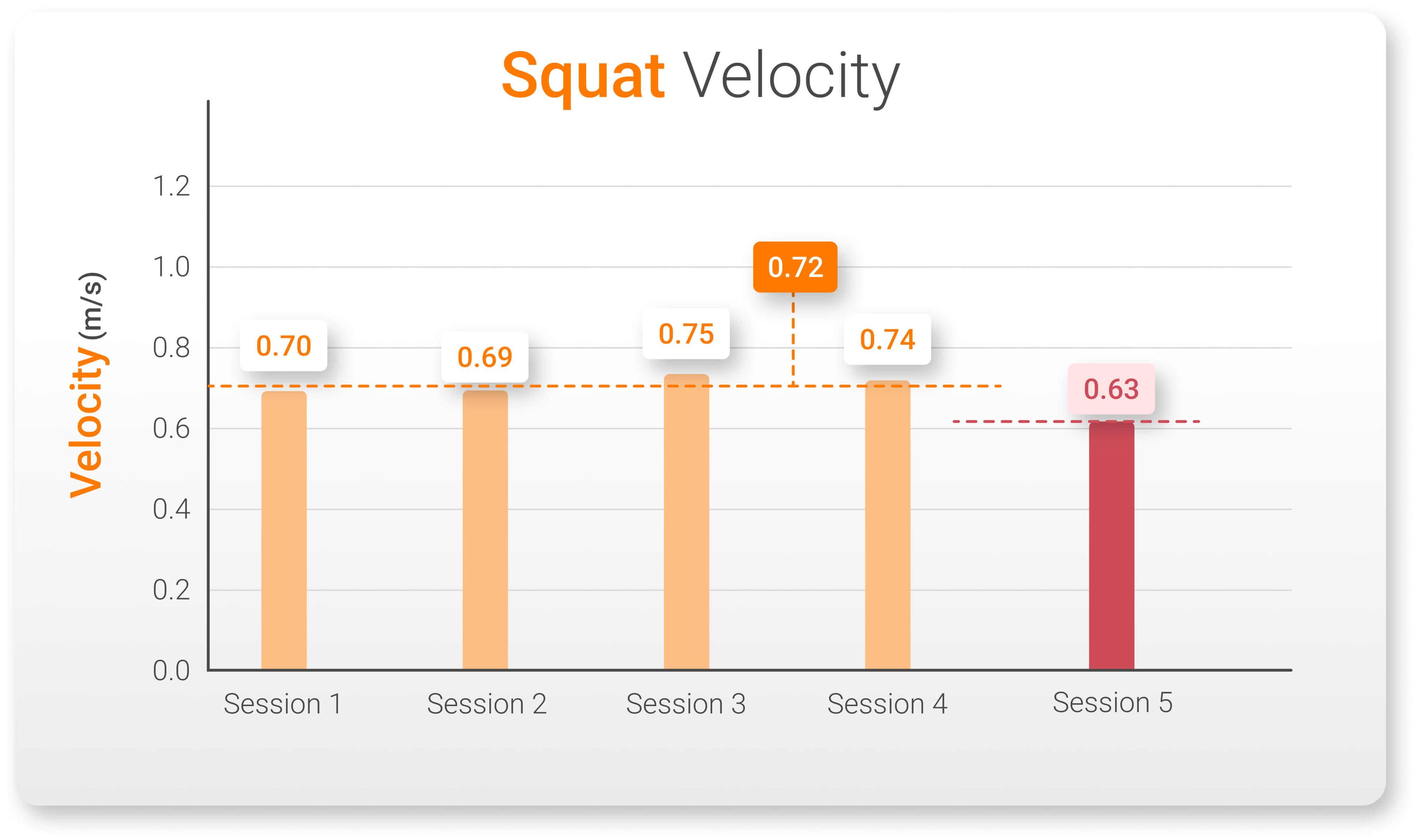
Consider an athlete who regularly performs a 100kg (220lb) squat during their warm-up. Across the previous four sessions, the athlete’s mean velocity at this load was 0.72m/s, but during the current session, the same load moved at 0.63m/s. This represents a substantial change in task performance, which may be indicative of a temporary reduction in capacity. However, not all changes in velocity are a direct reflection of performance change.
Previous training, competition, travel, fatigue, technique and normal measurement variability may all contribute to an observed deficit in movement velocity. Therefore, practitioners can combine the velocity result with other information about the athlete or their training context to determine whether the change warrants a training adjustment. This information may include:
- Athlete feedback and wellness
- Recent training and competition exposure
- Other objective measures, including countermovement jump (CMJ) performance
- Normal variability for the athlete and exercise
- The objective and timing of the current training session
…not all changes in velocity are a direct reflection of performance change…practitioners can combine the velocity result with other information about the athlete or their training context…
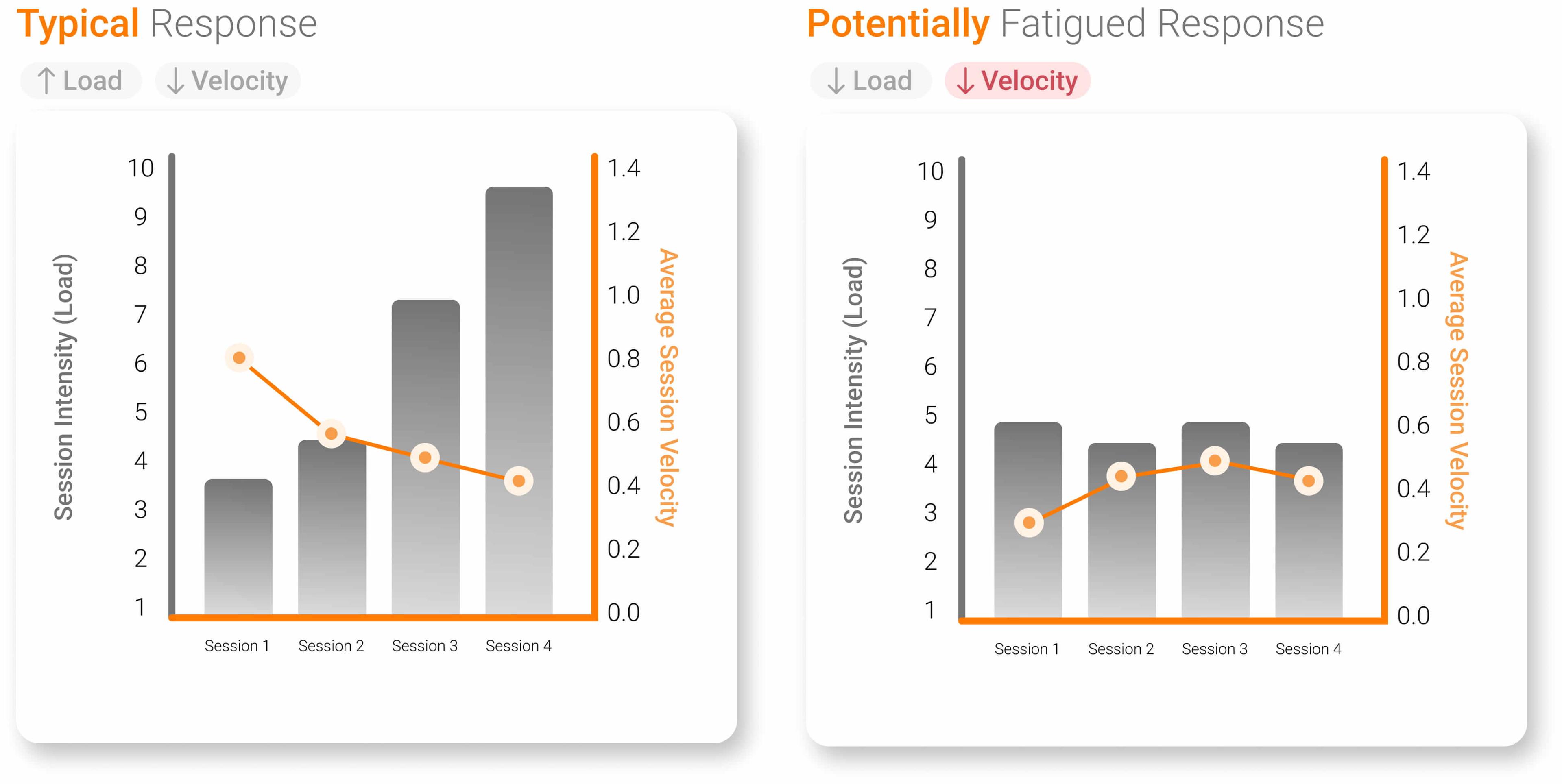
Rather than providing an exact prescription for change, objective performance feedback from systems such as GymAware offers a helpful signal for practitioners to review the athlete and their program.
VBT as a Readiness Indicator
Programming changes in the context of VBT are often discussed as strategies to reduce training when performance is suppressed. However, the same information can also identify opportunities to progress training when an athlete is performing above expectations.
Using the previous athlete as an example, instead of squatting 100kg below their typical 0.72m/s, they record an average velocity of 0.79m/s under their normal conditions. This increase in velocity may indicate greater performance capacity on that day.
Depending on the athlete, training phase and session objective, increases in velocity may be used as an indicator to increase load, change the session structure or aim for a new personal best. This allows practitioners and athletes to communicate better and adapt a training session to match the athlete’s performance capacity on a given day.
…increases in velocity may be used as an indicator to increase load, change the session structure or aim for a new personal best.
VBT as a Tool for Athlete Empowerment
Many practitioners are familiar with autoregulation, in which training variables are adjusted within a session based on the intended training stimulus and the athlete’s performance capacity on that day (Greig et al., 2020). Common programming strategies for autoregulation include using subjective feedback such as rate of perceived exertion (RPE) or repetitions in reserve (RIR) to guide training intensity. However, these feedback mechanisms have limitations in reliability and granularity of the feedback they provide to athletes and practitioners.
By incorporating a VBT device, such as GymAware, into training, a practitioner can prescribe a given velocity zone rather than a fixed load or percentage of one-repetition maximum (1RM) to guide training intensity. Therefore, whether an athlete feels fresh and prepared or fatigued, they can adjust the loads they are using to stay within the same velocity zone so the intended stimulus is achieved.
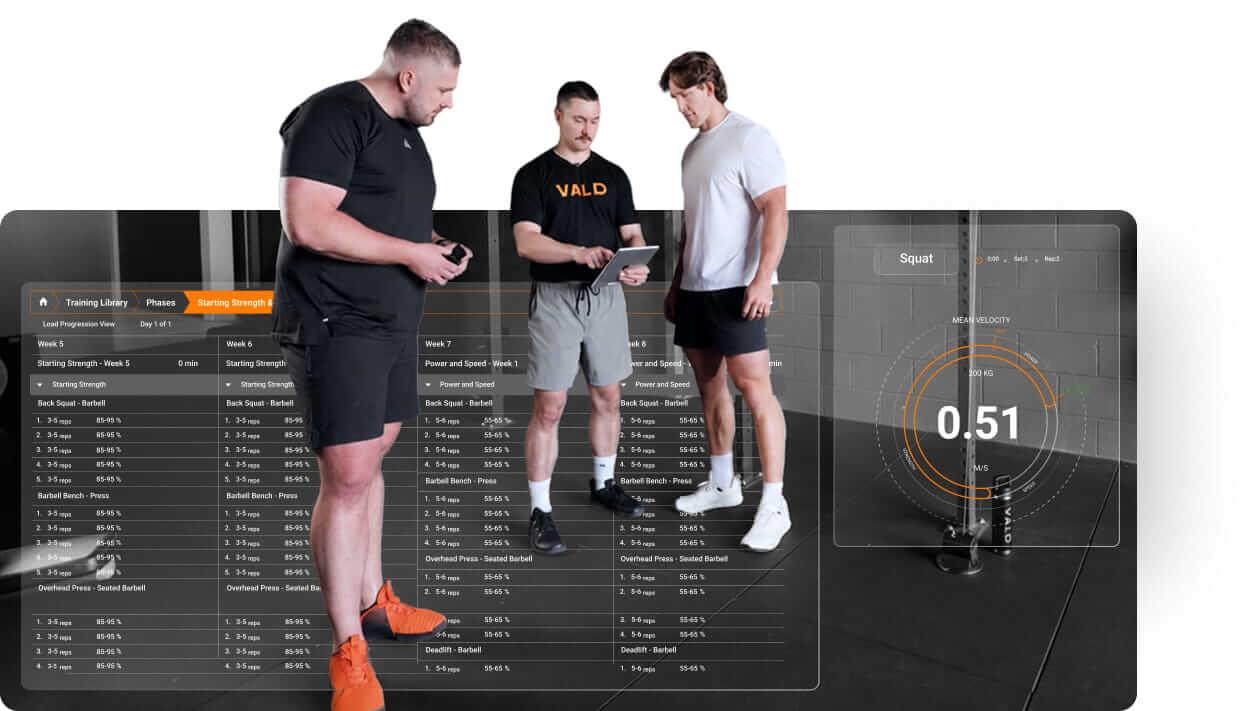
Practitioner showing athletes their training prescriptions based on velocity zones to support autoregulated loading decisions.
Not only do these prescription options enable practitioners to ensure the athlete continues to adapt alongside improvements in training performance over time, but they also empower athletes to make their own adjustments during training, helping improve autonomy at an individual level.
Using Velocity Loss to Manage Training
Velocity loss describes the reduction in repetition velocity that occurs across a set as fatigue accumulates. It is typically calculated by comparing the fastest repetition in a set with subsequent repetitions, providing practitioners with an objective measure of how performance changes within the set.
Practitioners can use velocity-loss thresholds to help determine when a set has accumulated sufficient fatigue for the intended training stimulus. As a general heuristic, lower thresholds can be used when maintaining movement velocity and power is the priority, while progressively greater velocity loss can be permitted when the training goal requires greater fatigue or volume:
- Power (~10% Velocity Loss): Prioritizes high movement velocity and repetition quality.
- Strength (~20% Velocity Loss): Allows moderate fatigue while maintaining relatively high force and velocity outputs.
- Hypertrophy (~30% Velocity Loss): Permits greater within-set fatigue and repetition volume.
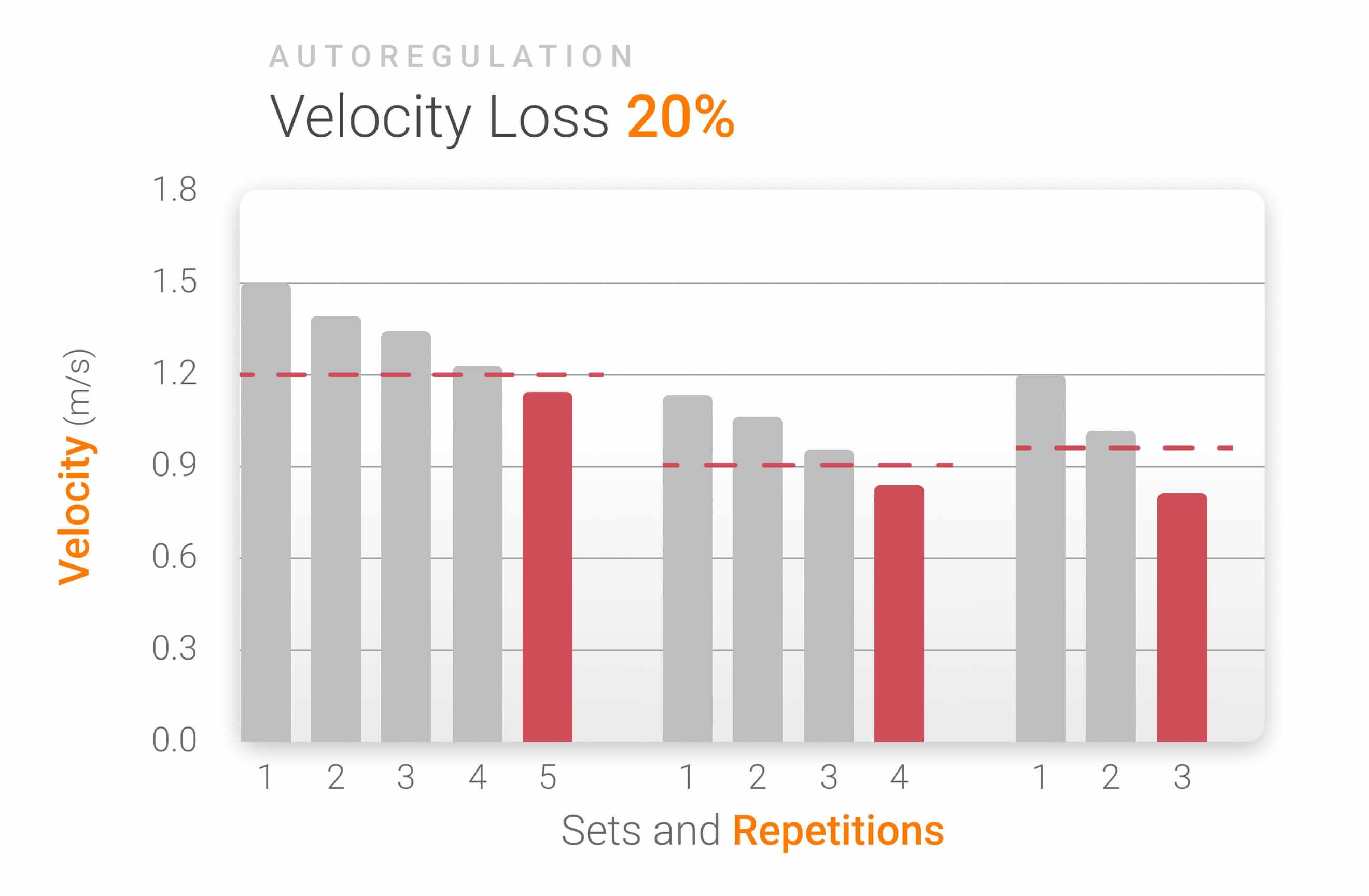
For example, if an athlete’s fastest repetition is 0.70m/s, a 20% velocity-loss threshold would correspond to approximately 0.56m/s. Once repetition velocity approaches or falls below this threshold, the practitioner can educate the athlete to end the set rather than prescribing a predetermined number of repetitions.
These thresholds should be considered general starting points rather than fixed rules. Appropriate velocity loss depends on the exercise, athlete, loading strategy and intended adaptation. However, monitoring velocity loss provides practitioners with a practical way to align within-set fatigue with the objective of the training session.
Appropriate velocity loss depends on the exercise, athlete, loading strategy and intended adaptation.
Monitoring to Inform Program Adjustments
Monitoring provides practitioners with an ongoing feedback loop to determine whether training is producing the intended adaptation and when programming may need to change. VBT supports this process by enabling performance to be monitored within resistance training that is already taking place.
For example, BridgeAthletic allows practitioners to prescribe resistance training using both percentage-based intensities and target velocity zones. Rather than prescribing a fixed load, a practitioner may prescribe an exercise at a percentage of 1RM alongside an intended velocity range, giving athletes a defined intensity target while allowing the load to be adjusted based on their performance that day.
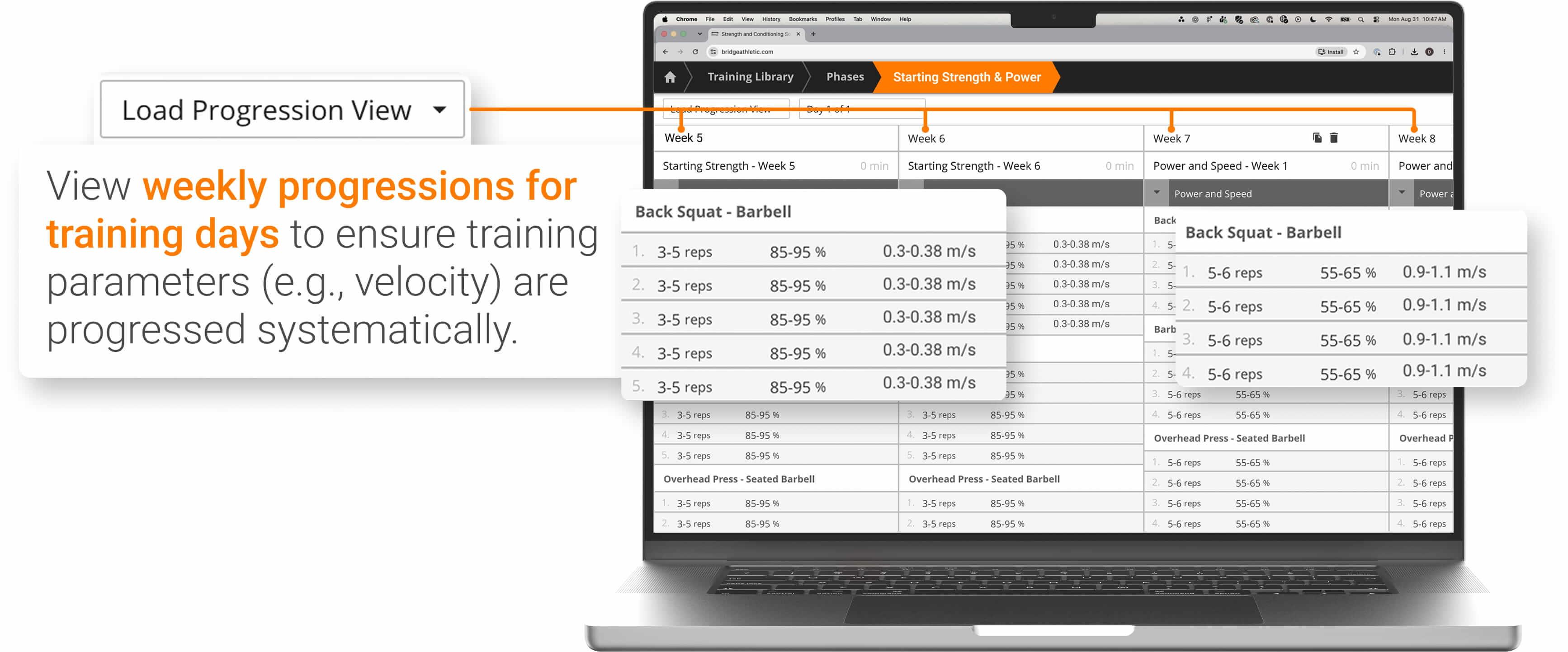
Using VBT technologies such as GymAware, practitioners can then determine whether the prescribed load produces the intended movement velocity. If an athlete moves faster or slower than the target range, practitioners can adjust the load while maintaining the intended training stimulus.
These trends can then inform programming decisions. Improvements in velocity may support progression in load, volume or exercise complexity, while stable or declining performance may prompt practitioners to review training load, recovery or the current training stimulus.
Standardized exercises and loads also lessen the need to separate testing from training. When collected consistently, repetitions already included within the program can serve as a form of invisible monitoring for athletes. This reduces testing fatigue for athletes while still providing practitioners with longitudinal data to help evaluate training response and make more informed adjustments over time.
[VBT] reduces testing fatigue for athletes while still providing practitioners with longitudinal data to help evaluate training response and make more informed adjustments over time.
Integrating VBT Into the Training Process
VBT is a measurement, monitoring and prescription tool that can sit within an existing approach to program design. Exercise selection, progressive overload, training specificity, athlete development and coaching remain fundamental. VBT provides additional information about how the athlete performs within that process.
By establishing reliable baseline data, monitoring standardized loads and interpreting velocity alongside the athlete’s broader context, practitioners can use VBT to better understand daily performance and adjust training when appropriate.
The objective is not to allow velocity to dictate the program but to reduce the gap between the training that was planned and the training that is appropriate for the athlete on that day.
To learn how GymAware and BridgeAthletic can help you integrate VBT into your training process, get in touch with our team.
References
- Greig, L., Stephens Hemingway, B. H., Aspe, R. R., Cooper, K., Comfort, P., & Swinton, P. A. (2020). Autoregulation in resistance training: Addressing the inconsistencies. Sports Medicine, 50(11), 1873–1887. https://doi.org/10.1007/s40279-020-01330-8
