Velocity-Based Training 101
Available in:
EN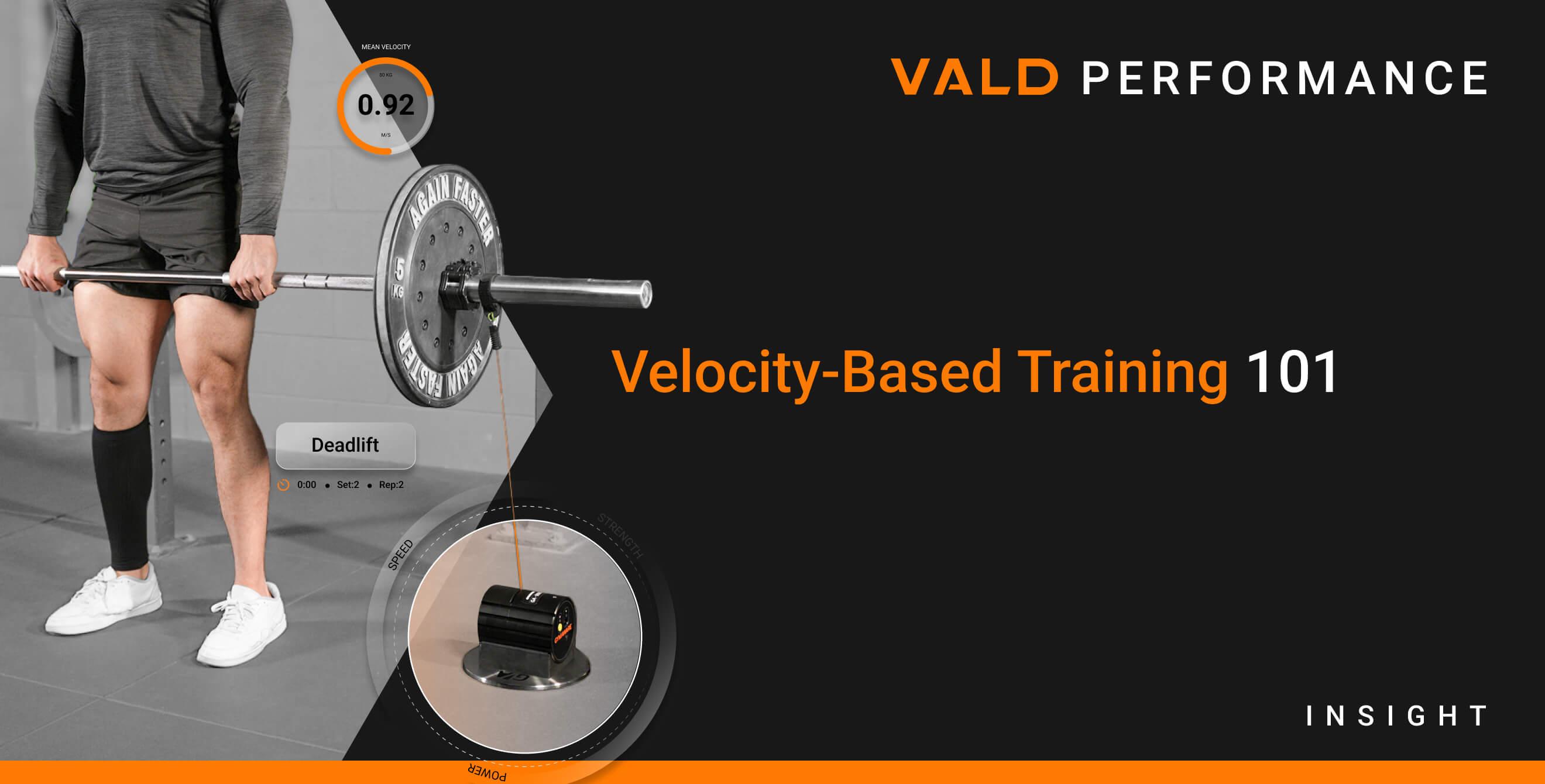
Velocity-based training (VBT) is a method of measuring and prescribing strength training based on velocity. By measuring movement speed, VBT provides feedback that is both objective and precise.
For a video overview, watch the free VBT webinar with Dr. Bryan Mann.
VBT Overview
VBT is a feedback method commonly applied in resistance training where movement velocity is used to inform training intensity and track weight-room progress.
In practice, a VBT device measures bar or movement velocity during resistance exercise, providing real-time performance feedback. Coaches and athletes can use this feedback to adjust training prescriptions on the fly or review stored data to inform longer-term programming and coaching decisions.
Basic VBT implementation with Travis Mash. Watch the full video for a deeper overview.
VBT vs. Percentage-Based Training
Velocity measures can complement or replace traditional percentage-based strength prescriptions (e.g., percentage of one-repetition maximum [%1RM]), providing a technology-enabled method for prescribing and monitoring training intensity.
There are multiple benefits to integrating VBT into practice, one of the most common being the prescription of training intensity using velocity zones. Traditionally, intensity has been prescribed as a %1RM, requiring periodic maximal strength testing to establish or update training loads. However, one-repetition maximum (1RM) testing can be fatiguing, may not be appropriate in all populations and provides only a static reference point despite day-to-day fluctuations in performance.
VBT uses movement velocity to prescribe and adjust training loads in real time. Because movement velocity decreases as load increases, practitioners can target specific strength qualities by prescribing velocity zones rather than fixed percentages of 1RM.
[VBT] allows training intensity to reflect the athlete’s performance on the day while reducing the reliance on repeated maximal testing...
This allows training intensity to reflect the athlete’s performance on the day while reducing the reliance on repeated maximal testing, which may be most relevant in strength-focused sports such as weightlifting. However, practitioners and athletes should note that this assumes a consistent, often maximal, effort across all conditions.
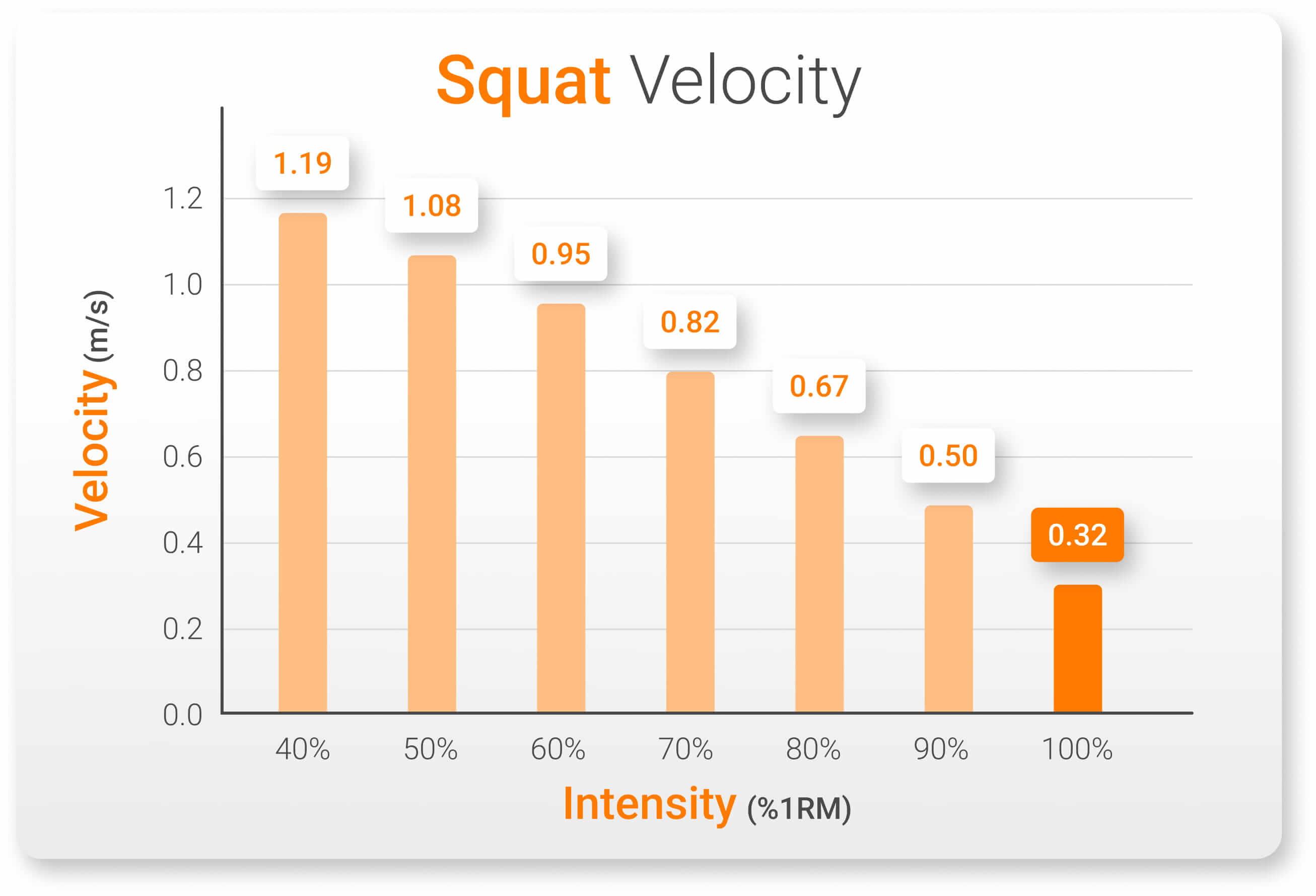
Due to the linear load-velocity relationship, velocity can be used as a measure of intensity.
Percentage-based training relies on a previously established 1RM and does not account for day-to-day fluctuations in performance. Instead, VBT provides continuous feedback, allowing training intensity to be adjusted to an athlete’s readiness on the day.
…VBT provides continuous feedback, allowing training intensity to be adjusted to an athlete’s readiness on the day.
Rather than prescribing 80% of a previous 1RM, practitioners prescribe a target velocity zone (e.g., 0.6-0.7m/s). This allows athletes to autoregulate training loads while still targeting the desired strength quality, as movement velocity naturally decreases with both increasing load and accumulating fatigue.
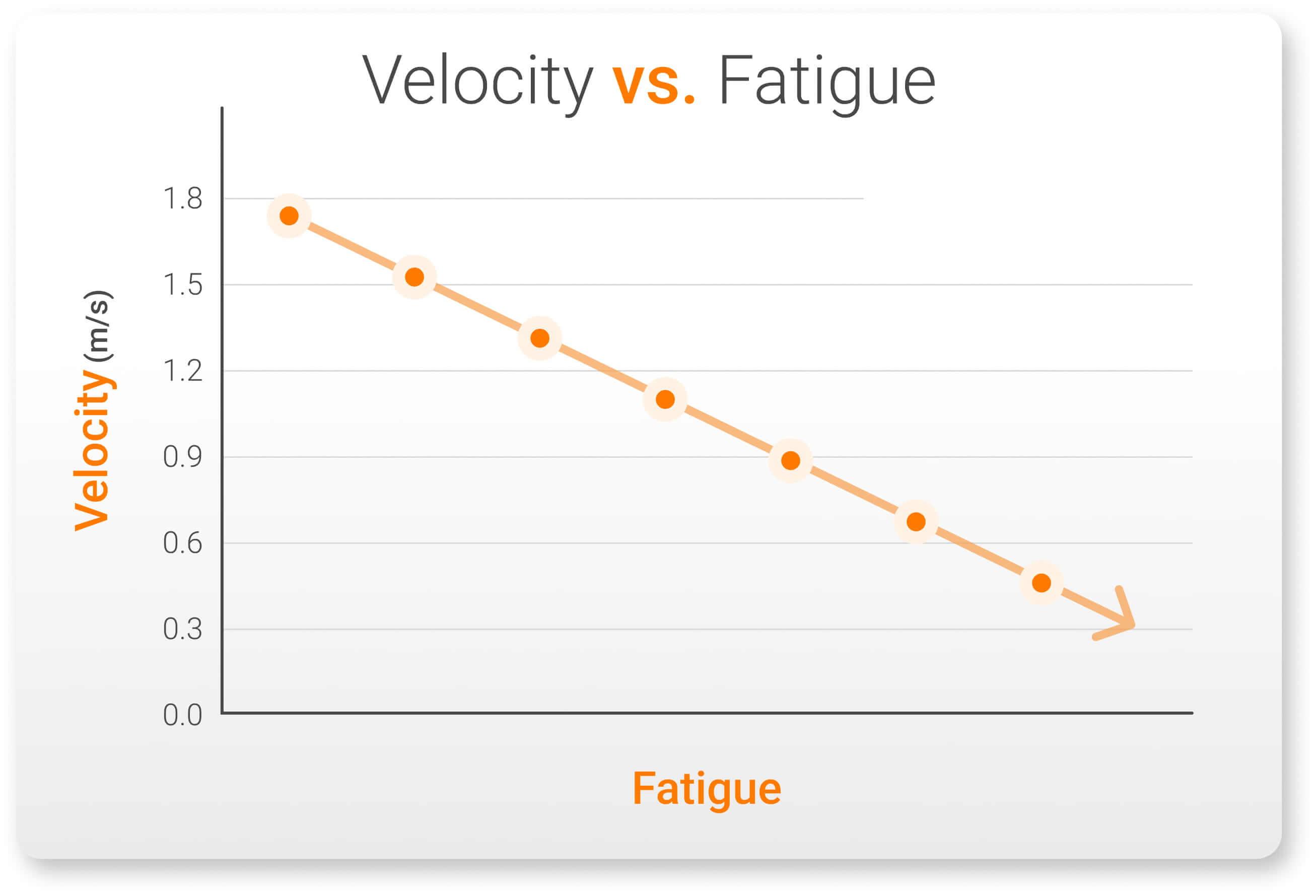
Velocity decreases when fatigue increases.
Maximal Intent Is Required
While VBT does not require athletes to train with light loads or at high movement velocities, it does require athletes to move with maximal intent without sacrificing technique. Whether athletes are lifting heavy loads or light loads, they should be instructed to “move the bar as fast as possible.”
Lifting with maximal intent has been shown to produce greater improvements in maximal strength and power than lifting the same loads at submaximal movement velocities (González-Badillo et al., 2014). When using a VBT device such as GymAware, athletes receive real-time feedback that can reinforce their intent. This feedback can enhance athletes’ velocity and power output by up to 10% and support chronic training adaptations (Weakley et al., 2020).
Who Benefits from Using VBT
When implemented effectively, VBT benefits both athletes and practitioners. Athletes receive training prescriptions that reflect their readiness on the day, while practitioners can individualize programming across large groups without manually adjusting every training load. Its benefits were recognized decades ago by professional sports teams, Olympic athletes and powerlifters, and adoption continues to expand beyond elite sport.
VBT is now used across high school, collegiate and professional sport, as well as private training and rehabilitation settings. It can be applied wherever resistance training is used to develop performance, guide loading or support return-to-play.
Modern VBT systems extend beyond velocity measurement by providing real-time feedback, performance tracking and session reporting. Features such as live leaderboards, synchronized video and cloud-based data improve athlete engagement while making it easier for practitioners to monitor performance and communicate objective results.
Modern VBT systems extend beyond velocity measurement by providing real-time feedback, performance tracking and session reporting.
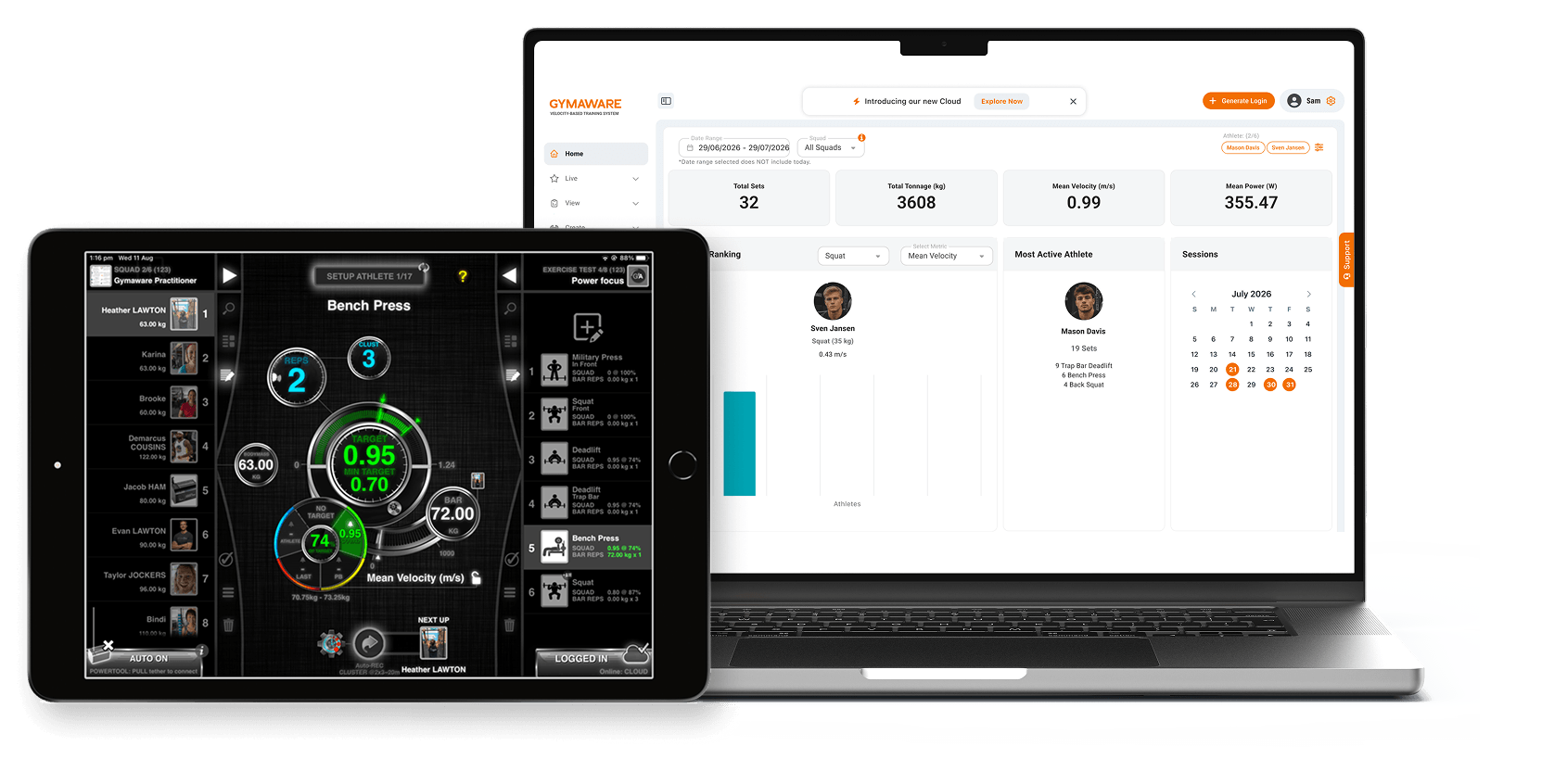
The GymAware app and cloud platform for real-time training feedback and performance review.
VBT Devices
Reliability and accuracy are the most important consideration when selecting a VBT device. Objective data are only valuable if they can be trusted, and inconsistent measurements, missed repetitions or false repetitions can reduce confidence in the data and limit its value for coaching and programming decisions.
Objective data are only valuable if they can be trusted, and inconsistent measurements, missed repetitions or false repetitions can reduce confidence in the data…
For more than 20 years, GymAware has been the gold standard in VBT. Its validity and reliability have been well established in the scientific literature (Thompson et al., 2020), and it is routinely used as the reference device for validating other VBT technologies.
To better understand the different VBT device technologies, it is helpful to consider the five most popular devices.
| Technology | Key Advantages | Key Considerations | |
|
|
Linear Position Transducers (LPTs)
Use a tether attached to the barbell or athlete to measure distance moved directly. |
|
|
|
|
Laser Optic Devices
Attach to the barbell and use lasers to take key measurements, including distance moved directly. |
|
|
|
|
Accelerometers and Inertial Measurement Units
Small, often wearable devices that can be placed on the lifting equipment or on the athlete’s arm or leg. |
|
|
|
|
Smartphone-Based Camera Systems
Use a smartphone camera and app to track movement and estimate velocity. |
|
|
 |
External Camera or LiDAR Systems
Standalone, purpose-built camera or LiDAR systems placed on the ground or mounted to a rack in front of the athlete. |
|
|




How VBT Guides Training
At its core, VBT is another source of objective feedback. Whether used to prescribe training intensity, monitor fatigue or reinforce movement intent, practitioners can progressively integrate its applications over time. Simple uses can improve coaching decisions, with more advanced applications added as experience and confidence grow.
…VBT is another source of objective feedback. [Allowing practitioners] to prescribe training intensity, monitor fatigue [and] reinforce movement intent…
VBT Metrics
Although the focus is on velocity, a VBT device such as GymAware can measure multiple metrics, including the following:
- Mean and peak velocity (m/s) during both the concentric and eccentric phases
- Mean and peak power (W) during both the concentric and eccentric phases
- Mean and peak force (N)
- Time to peak velocity/power/force
- Rep height, dip, distance, duration and bar path visualization
- Rate of force development (kN/s)
- Reactive strength index (m/s)
For more information, explore the full list of metrics GymAware measures.
VBT Methods
These metrics can be used in several ways to guide strength training. Commonly used methods include:
- Providing velocity feedback as a measure of intensity
- Setting velocity training zones instead of %1RM
- Estimating 1RM
- Autoregulating daily training load
- Using velocity drop-offs, or thresholds, to control volume and manage fatigue
- Monitoring changes in velocity with the same load over time
- Creating load-velocity and force-velocity profiles
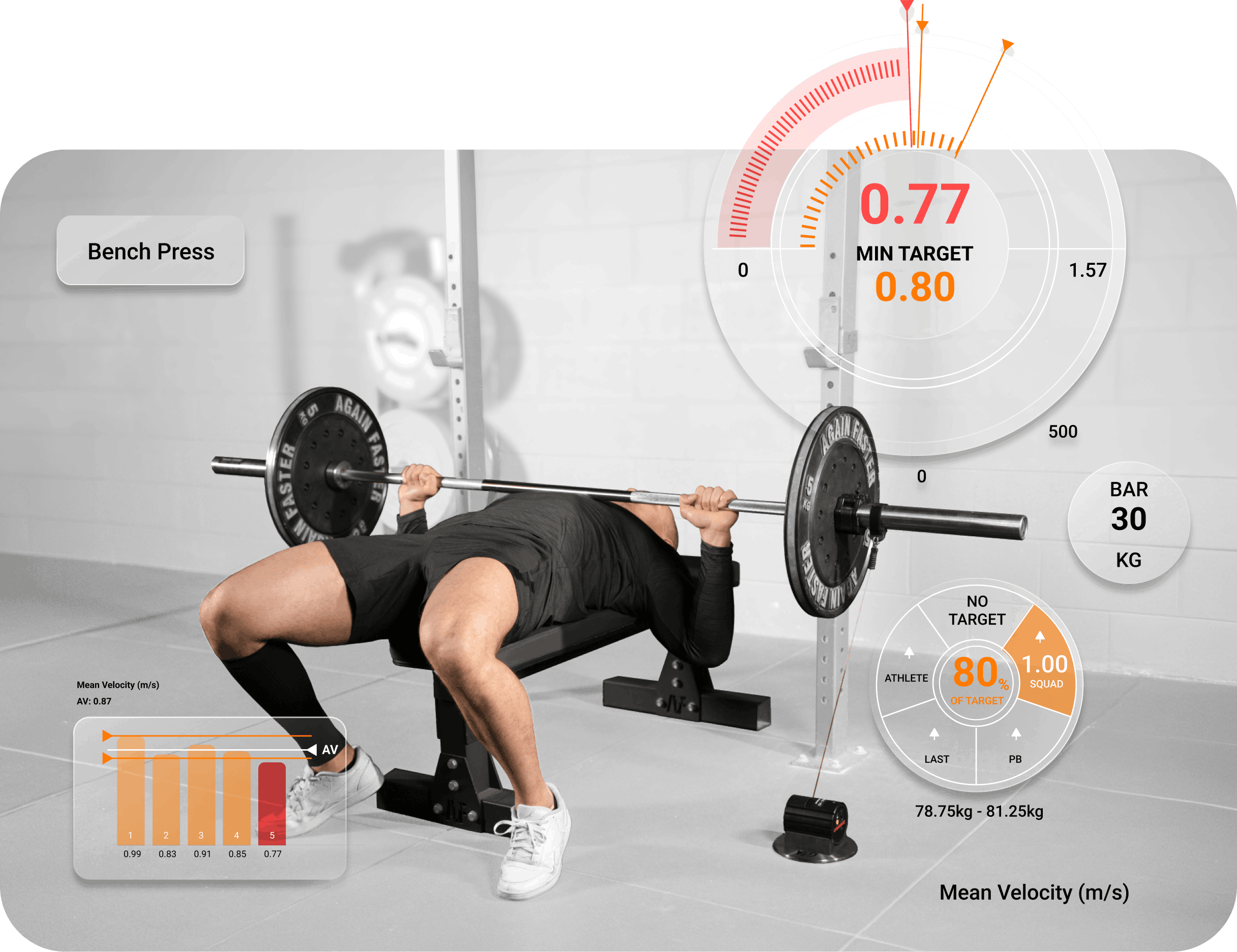
The GymAware app providing real-time feedback during strength training.
Key Considerations for Using VBT
VBT uses movement velocity to prescribe and monitor intensity in strength, power and plyometric training. Because velocity decreases as load and fatigue increase, it provides an objective measure of training intensity while accounting for daily fluctuations in strength and individual differences in performance.
The accuracy of this approach depends on the validity and reliability of the VBT device, making device selection an important consideration. Regardless of the prescribed load, athletes should perform every repetition with maximal intent while maintaining technique to optimize the training stimulus.
If you are interested in learning more about VBT and discovering how GymAware devices can support objective, data-informed strength training decisions, explore GymAware or get in touch with our team.
References
- González-Badillo, J. J., Rodríguez-Rosell, D., Sánchez-Medina, L., Gorostiaga, E. M., & Pareja-Blanco, F. (2014). Maximal intended velocity training induces greater gains in bench press performance than deliberately slower half-velocity training. European Journal of Sport Science, 14(8), 772–781. https://doi.org/10.1080/17461391.2014.905987
- Thompson, S. W., Rogerson, D., Dorrell, H. F., Ruddock, A., & Barnes, A. (2020). The reliability and validity of current technologies for measuring barbell velocity in the free-weight back squat and power clean. Sports (Basel, Switzerland), 8(7), 94. https://doi.org/10.3390/sports8070094
- Weakley, J., Mann, B., Banyard, H., McLaren, S., Scott, T., & Garcia-Ramos, A. (2020). Velocity-based training: From theory to application. Strength & Conditioning Journal, 43(2), 31–49. https://doi.org/10.1519/SSC.0000000000000560
