Run-Specific Isometrics: What I have changed and learned since 2023
Available in:
EN

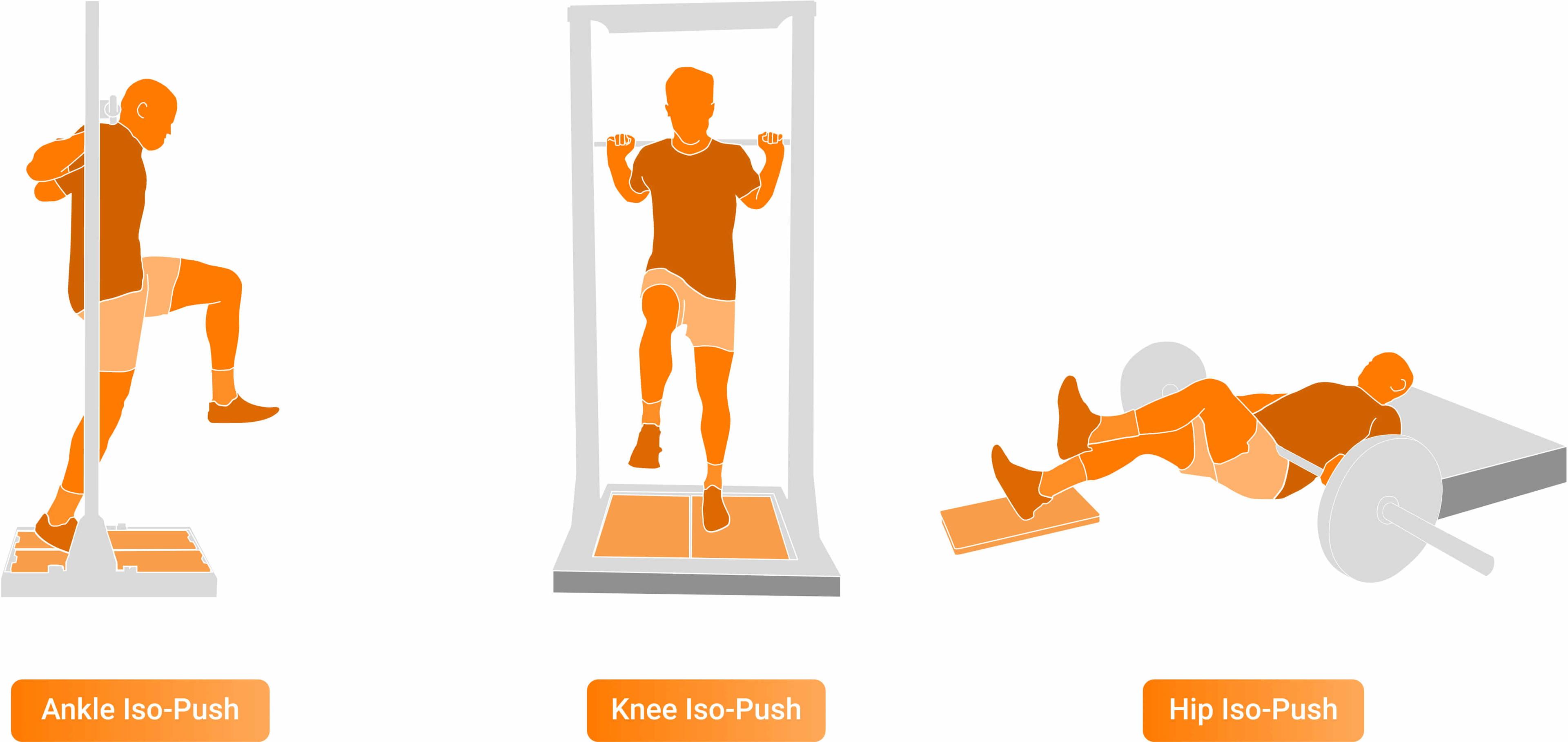
Several years ago, I shared how I use Run-Specific Isometric Strength Testing (RSIT) to assess maximal and rapid force-generating capabilities in positions relevant to high-speed running. While the fundamental framework remains unchanged, years of applying and teaching the hip, ankle and knee isometric push (Iso-Push) assessments have refined how I set them up, interpret the results and integrate them into practice.
The Hip Iso-Push
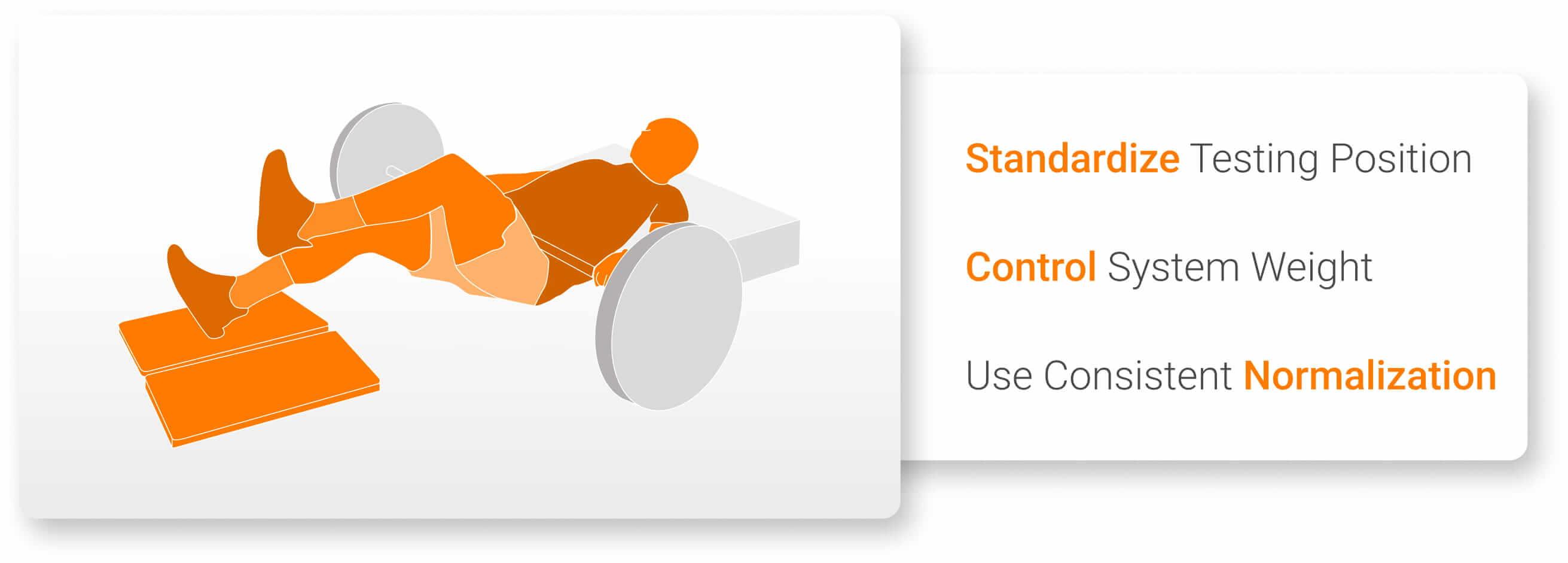
Of the three assessments, my approach to standardizing the Hip Iso-Push has evolved the most. Small differences in heel position, dorsiflexion, hip height, knee angle, upper-back position, box-to-force-plate distance and active tension can materially affect results. Tightly controlling these variables has improved repeatability across testing sessions.
Small differences in heel position, dorsiflexion, hip height, knee angle, upper-back position, box-to-force-plate distance and active tension can materially affect results.
System-weight (SW) measurement is one example. During measurement, the athlete’s hips and buttocks should only just clear the floor, hovering a few millimeters above it. Raising the hips substantially higher, or changing this position between sessions, can alter SW and affect longitudinal comparisons.
My approach to normalizing Hip Iso-Push force has also evolved. Historically, force was expressed relative to system mass, which is typically around 25-30% of body mass in this position. Expressing force relative to body mass can also be appropriate, particularly when it provides consistency with Knee and Ankle Iso-Push. Regardless of the method selected, it should be clearly defined and applied consistently over time.
The Ankle Iso-Push
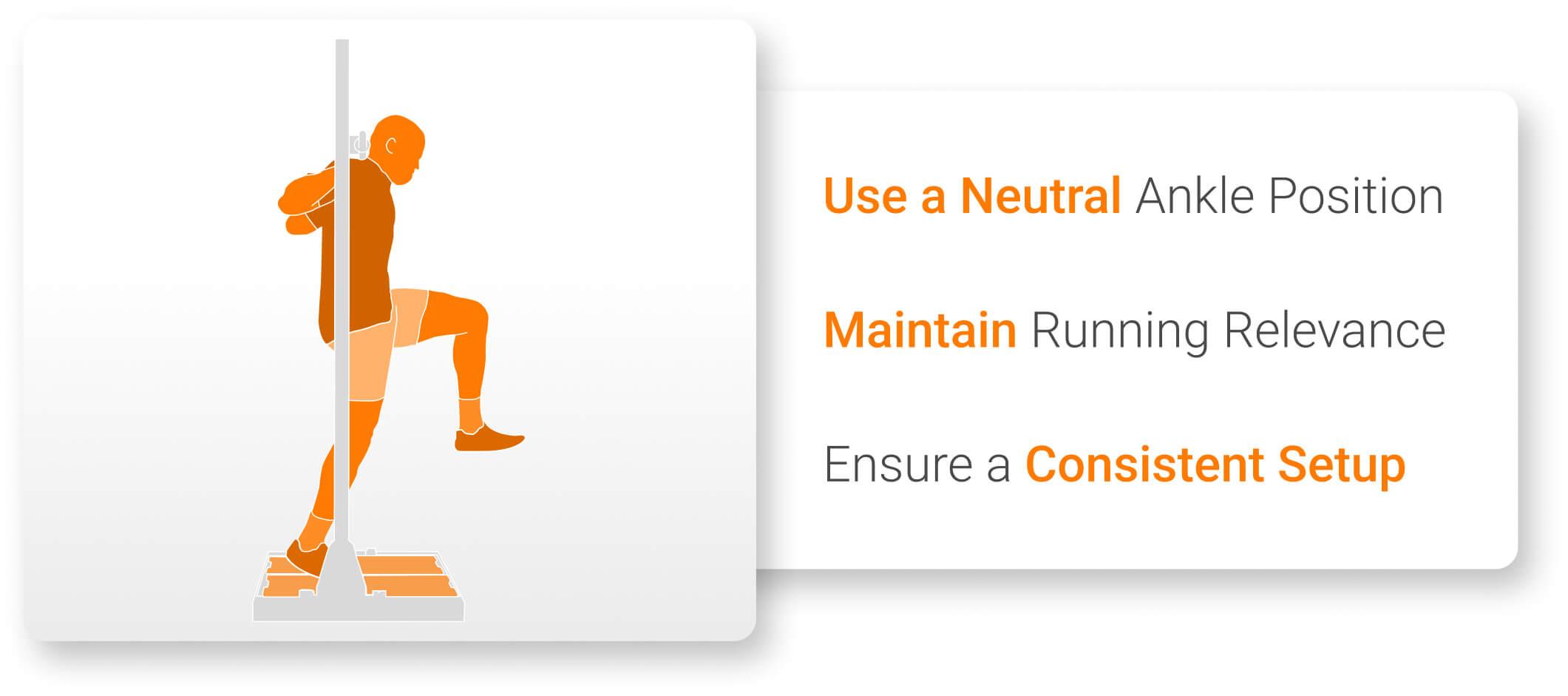
One clear change from my original recommendations relates to Ankle Iso-Push positioning. Previously, I recommended performing the assessment between neutral and approximately 5-10° of plantar flexion. In practice, these small plantar flexion angles were difficult to measure and reproduce consistently, introducing unnecessary variability between testing sessions.
My current approach uses the ankle in a neutral position at approximately 90°. This position is easier to visualize and reproduce, while providing a representation of the ankle around mid-stance, when the shin has a slight positive angle and the ankle moves into dorsiflexion. Although a relatively small adjustment, it simplifies the assessment and improves standardization.
The Knee Iso-Push
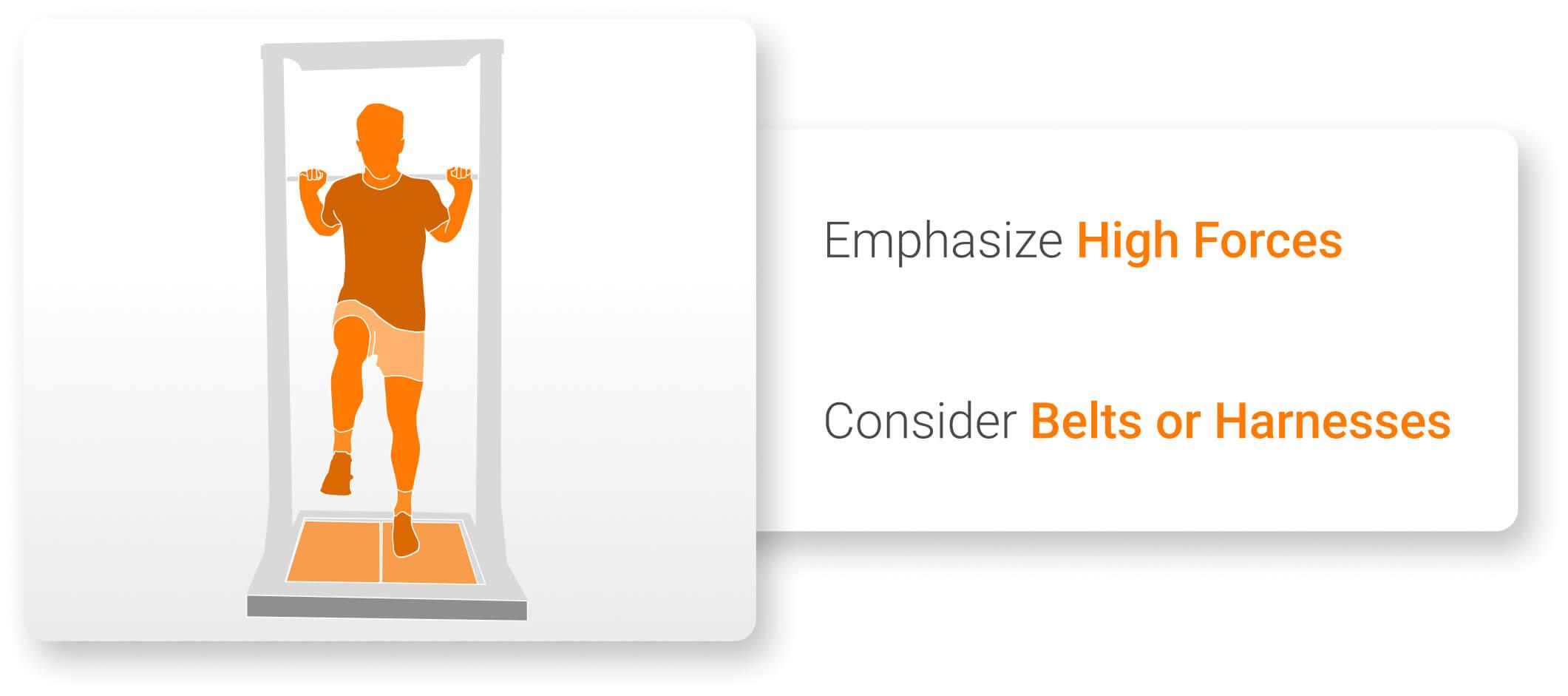
One reason I continue to value the Knee Iso-Push is the magnitude of force athletes can produce. In my applied work, unilateral Knee Iso-Push forces are consistently high and often exceed the estimated contribution of one leg during bilateral assessments such as the isometric mid-thigh pull (IMTP), as well as forces produced during other unilateral isometric assessments such as the single leg IMTP.
…Knee Iso-Push forces…often exceed the estimated contribution of one leg during bilateral assessments such as the IMTP…
If I want to assess an athlete’s maximal unilateral force-generating capability, I want an assessment that allows them to express very high force. An instrumented leg press can achieve this, but that is not practical in every environment. The Knee Iso-Push provides a practical alternative using equipment already available in many performance settings. I have also found that belts or harnesses can provide additional stability, facilitate greater force expression and often improve athlete buy-in across sports.
Force at 100ms Still Matters
Rapid force production remains an important component of my approach, with increasing emphasis on force at 100ms due to its relationship with qualities such as speed and reactive strength.
Rapid-force testing requires greater standardization than maximal-force testing, particularly around pretension, which I standardize at 2.5% of body weight (BW). However, this additional complexity can provide information that maximal force alone may not capture. In rehabilitation and preseason testing, athletes may regain much of their maximal force-generating capacity while rapid force remains below previous levels.
[During] rehabilitation…athletes may regain much of their maximal force-generating capacity while rapid force remains below previous levels.
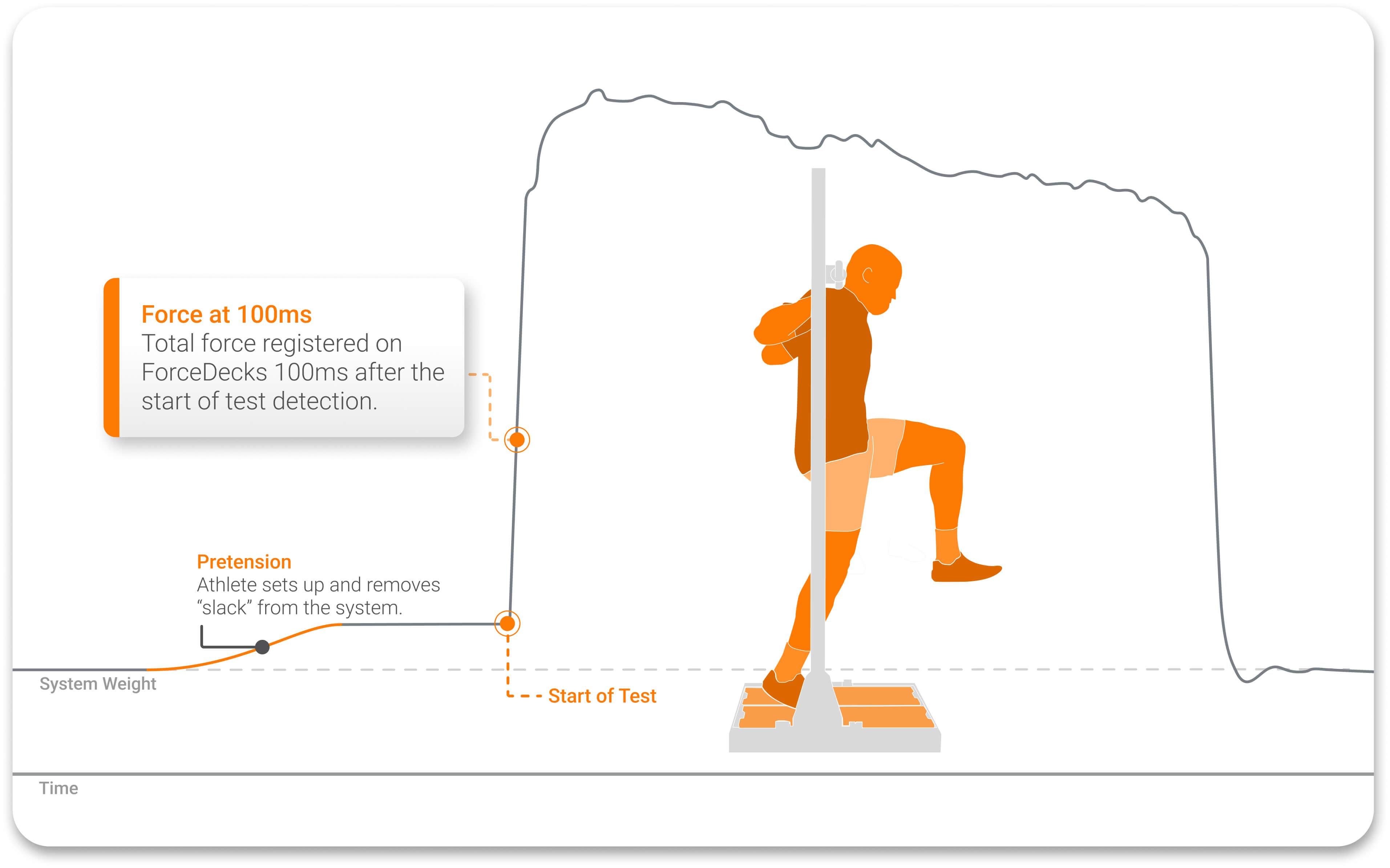
Assessing both maximal and rapid force therefore provides a more complete representation of an athlete’s force-generating capabilities and how quickly those capabilities can be expressed. This distinction can be particularly valuable when determining whether improvements in maximal strength are also translating to the rapid force production required during high-speed running.
Benchmarks Are Only Part of the Story
The target values I presented previously remain relevant, particularly within team-sport populations where moderate-to-strong relationships continue to be observed between Ankle and Hip Iso-Push force-generating capabilities and running speed. However, my approach has evolved to place greater emphasis on the athlete’s longitudinal profile and the specific demands of their sport.
| RSIT Battery Benchmark Results | |||
| Athlete Group | Hip Iso-Push | Ankle Iso-Push | Knee Iso-Push |
| Team Sports: Males | 2.2-2.5 × SW | 3.1-3.3 × BW | 4.2-4.4 × BW |
| Elite Track: Males | > 3 × SW | > 4 × BW | > 5.5 × BW |
| Team Sports: Females | 1.95-2.15 × SW | 2.75-2.9 × BW | 3.85-4.2 × BW |
During rehabilitation or reintroduction to high-speed running, changes in asymmetry, relative maximal force and rapid force can be compared with values established when the athlete was healthy and training consistently. An athlete may remain below a population target but have returned to their previous capabilities, while another may exceed that target but remain substantially below their own established values.
Population targets therefore provide useful context, while longitudinal data can provide a more individualized reference point.
The same principle applies to athletes with exceptional force-generating capabilities. Elite sprinters, hurdlers and horizontal jumpers, for example, consistently demonstrate higher maximal-force values than team-sport athletes. As maximal force increases, further improvements in this quality may become less informative, shifting greater emphasis toward rapid-force qualities and more advanced Run-Specific Isometric Strength Training (RSIST) methods.
As maximal force increases, further improvements in this quality may become less informative, shifting greater emphasis toward rapid-force qualities…
Heavy Iso-Holds, ballistic Iso-Holds, advanced Iso-Switches and quasi-isometrics can provide additional information in these populations. While some characteristics are difficult to quantify, qualities such as the speed and apparent stiffness of an advanced Iso-Switch under substantial relative load can still inform coaching decisions.
For most team-sport athletes, Iso-Pushes and Iso-Holds continue to provide considerable value, while higher-level track-and-field athletes may require greater emphasis on how rapidly and effectively force is expressed, received and managed.
Applications to Isometric Training
My approach to programming Iso-Holds has become relatively simple, predominantly using five- or 10-second holds for heavier work. I also use submaximal Iso-Pushes more often, with ForceDecks allowing me to prescribe intensity relative to an athlete’s maximal voluntary isometric contraction (MVIC).
For strength-focused work, this may include approximately 15-20 seconds at 80% MVIC, 10 seconds at 90-95% MVIC or 3-5 seconds at 100% MVIC. This allows intensity and duration to be adjusted according to the intended stimulus rather than requiring every Iso-Push to be performed maximally.
Maximal Iso-Pushes and heavy Iso-Holds should still be treated as high-intensity loading, with progression based on the athlete’s training history and capacity. For Ankle and Knee Iso-Holds, I generally do not exceed approximately 80% loading as quantified using ForceDecks, with 80% representing a ceiling rather than a target. For some athletes, even 60% can represent a substantial external load relative to conventional resistance training.
Equipment and setup should reflect the magnitude of these loads. When using a Smith machine, appropriately positioned safety stops are essential. When loading or setup poses unnecessary risk, a more appropriate alternative may be to reduce the load and increase hold duration or use equipment such as a hack squat or leg press.
Integrating RSIST Into a Larger Training Philosophy
RSIST is most valuable when integrated within a broader assessment and physical preparation framework. For the posterior chain, I use a long-muscle-length Hip Iso-Push alongside the Nordic hamstring exercise to assess force-generating capacity across hip- and knee-dominant tasks. This approach is supported by current research showing that lower preseason strength across isometric bridge and Nordic hamstring assessments was associated with subsequent hamstring injury in professional baseball athletes (Driggers et al., 2025).
The same principle applies to training. RSIST is not intended to replace traditional strength and power development, but to complement heavy strength training, eccentric exercise, ballistic work and plyometrics. Even when isometrics feature prominently, they remain one component of a broader physical preparation program.
Ultimately, RSIST requires a balance between precision and practicality. Standardization is important when it improves assessment quality, but testing and training must remain practical within the athlete’s wider program. The objective is not to build a program around isometrics, but to use them alongside complementary methods to better understand, prepare and progress the athlete.
If you are interested in learning more about RSIST, explore Alex Natera’s Masterclass on VALD Academy, or contact our team to learn how ForceDecks can support RSIT and RSIST in your practice.
References
- Driggers, A. R., Fry, A. C., Chochrane-Snyman, K. C., Wagle, J. P., & McBride, J. M. (2025). Effectiveness of single leg isometric bridge and Nordic hamstring exercise testing for prediction of hamstring injury risk in professional baseball players. The American Journal of Sports Medicine, 53(12), 2924–2932. https://doi.org/10.1177/03635465251371789
