Quadrant of Boom Part 4: Reactive strength and plantar flexion peak force
Available in:
EN



The calf is exposed to some of the highest tensile loads in the entire body (Komi et al., 1992) and contributes substantially to many common sporting demands, including sprinting, jumping and changing direction (Devaprakash et al., 2022; Lai et al., 2016; Maniar et al., 2018). However, despite its contributions to athletic performance, calf training is rarely integrated as a risk-reduction strategy in healthy athletes.
The calf is exposed to some of the highest tensile loads in the entire body…[but] calf training is rarely integrated as a risk-reduction strategy in healthy athletes.
Similarly, calf muscle strain injuries (CMSIs) are prone to frequent recurrence, even though rehabilitation often improves athletes’ heel-raise capacity (Green et al., 2020).

Athletic performance is often underpinned by physical qualities such as lower-extremity stiffness (e.g., countermovement stiffness or proxy measures like concentric impulse 100ms) and reactive strength (e.g., reactive strength index [RSI]).
Athletes competing in sports such as basketball, soccer and American football, as well as track sprint events, typically demonstrate high levels of reactive strength during jumping, sprinting and bounding tasks, all of which place substantial demands on the plantar flexor complex. These movements can generate forces exceeding 9kN (nearly 12 times body weight) through the Achilles tendon (Komi et al., 1992), highlighting the importance of developing sufficient calf strength to repeatedly tolerate high-magnitude loading.
The first three articles in the Quadrant of Boom series pair eccentric hamstring strength with sprint speed (Part 1), sprint momentum (Part 2) and hip adductor strength (Part 3) to provide additional context for athlete profiling and training decisions.
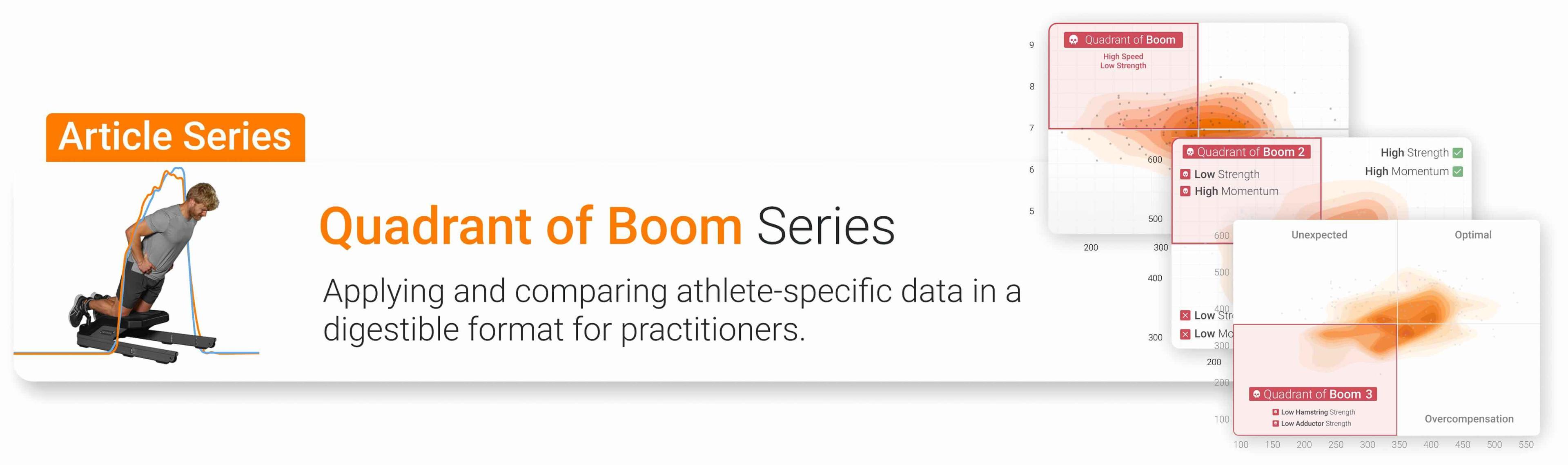
Quadrant of Boom 4 applies the same framework by plotting plantar flexion isometric peak force capacity against hop test average RSI to help identify and monitor athletes who demonstrate exceptional reactive strength alongside minimal peak force capacity to tolerate sporting loads.
Plantar Flexor Performance Demands
The importance of calf strength becomes clear when considering how the plantar flexors behave during dynamic athletic tasks.
During sprinting, jumping and change-of-direction tasks, the soleus and gastrocnemius fibers behave quasi-isometrically (Dorn et al., 2012; Komi et al., 1992; Lai et al., 2016; Rubenson et al., 2012). This means that, despite significant ankle dorsiflexion occurring at foot impact during running, jumping or cutting, much of the associated muscle-tendon unit (MTU) lengthening is accommodated by tendon strain rather than muscle fiber excursion.
During sprinting, jumping and change-of-direction tasks, the soleus and gastrocnemius fibers behave quasi-isometrically.
This strategy allows the calf muscle fascicles to operate within their preferred or optimal range, while enabling the tensile strength and stretch-shortening cycle of the Achilles tendon to amplify force production. This behavior is a major contributor to an athlete’s reactive strength ability.
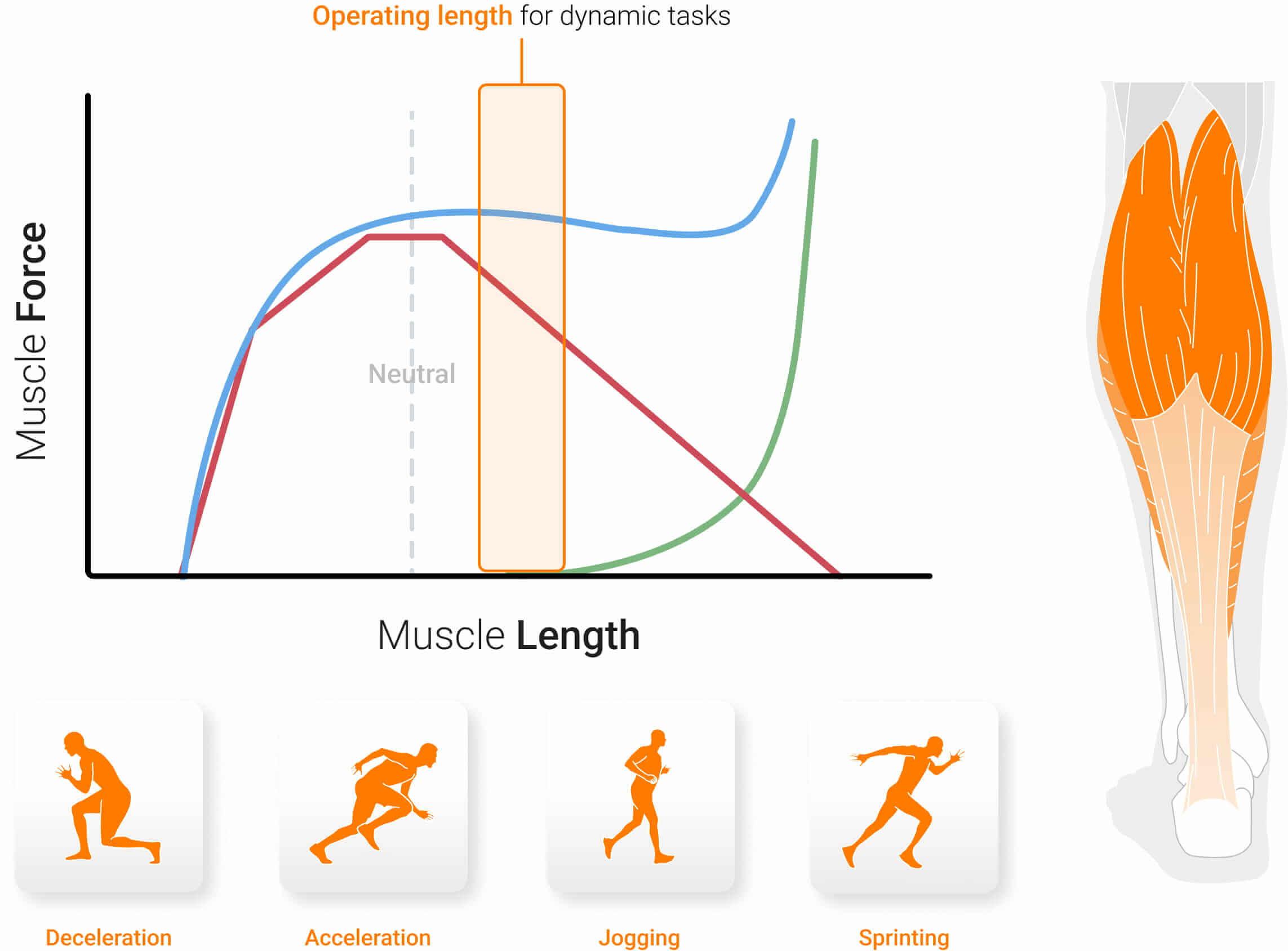
Muscle length influences force production during dynamic movement.
The Achilles tendon has been shown to tolerate forces exceeding 12 times body weight during high-speed athletic activities. During activities such as maximal-velocity sprinting, these forces occur during contact times in just over one-tenth of a second (Blauberger et al., 2021).
In these scenarios, the plantar flexor complex must repeatedly withstand, transmit and reproduce considerable forces within approximately 0.05s, with peak forces achieved around halfway through the stance phase, faster than typical human reaction times allow for a meaningful response (Jain et al., 2015). This points to the innate mechanical properties such as tissue stiffness, rather than neuromuscular coordination, as key drivers of performance.
Athletes with high levels of reactive strength have developed the ability to repeatedly expose their plantar flexor complex to very high loading rates while efficiently storing and returning elastic energy. However, not all athletes with high levels of reactive strength also have similarly high levels of maximum isometric strength.
…not all athletes with high levels of reactive strength also have similarly high levels of maximum isometric strength.
Benefit of Training for Maximum Force
Despite the central role the plantar flexors play in athletic performance, high-load calf strengthening is frequently underemphasized within many training programs. However, heavy strength training has been shown to improve maximal isometric strength and tendon stiffness, which may contribute to lower-extremity health and performance.
Isometric training protocols, performed through ForceFrame Training Mode, have been shown to increase both peak force capacity and tendon stiffness (Lazarczuk et al., 2022).
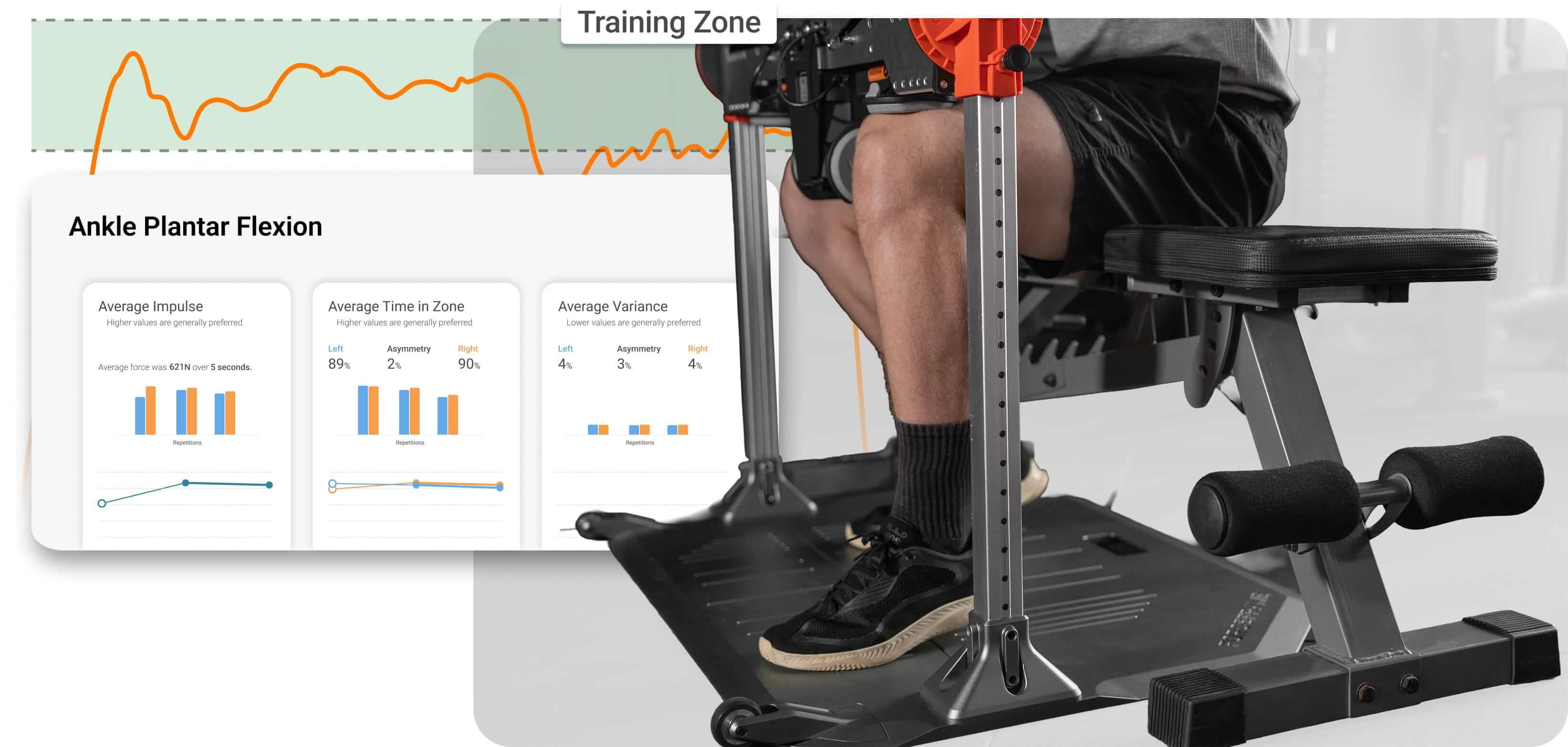
Although heavy compound lifts undoubtedly load the plantar flexors to some degree, targeted calf training remains an essential component of a quality training program, especially for athletes who participate in sports requiring repeated jumps, high-speed running or both. This becomes particularly relevant when considering athletes with exceptional reactive strength.
Heavy-slow (e.g., resistance training) and ballistic (e.g., plyometrics) training differ in the localized strain rates within the MTU (Massey et al., 2018). Ballistic isometric loads (replicating nervous system control of the muscle during plyometrics) lead to greater aponeurotic strain of the MTU, while sustained isometric loads, such as a seated isometric heel raise, lead the aponeuroses to stiffen.
Athletes with exceptional reactive strength repeatedly expose the plantar flexor complex to very high loading rates. Therefore, practitioners are tasked with ensuring slow maximal force-generating capacity continues to develop as reactive strength values improve.
…practitioners are tasked with ensuring slow maximal force-generating capacity continues to develop as reactive strength values improve.
Adding Reactive Strength to an Ankle Assessment Battery
RSI is one of the most widely used measures of stretch-shortening cycle performance, reflecting an athlete’s ability to rapidly tolerate, transmit and reapply force during short ground contact tasks such as hopping, jumping and sprinting. High RSI values are typically associated with athletic qualities such as tissue stiffness, elastic energy utilization and efficient force transmission, making them a common marker of explosive performance.
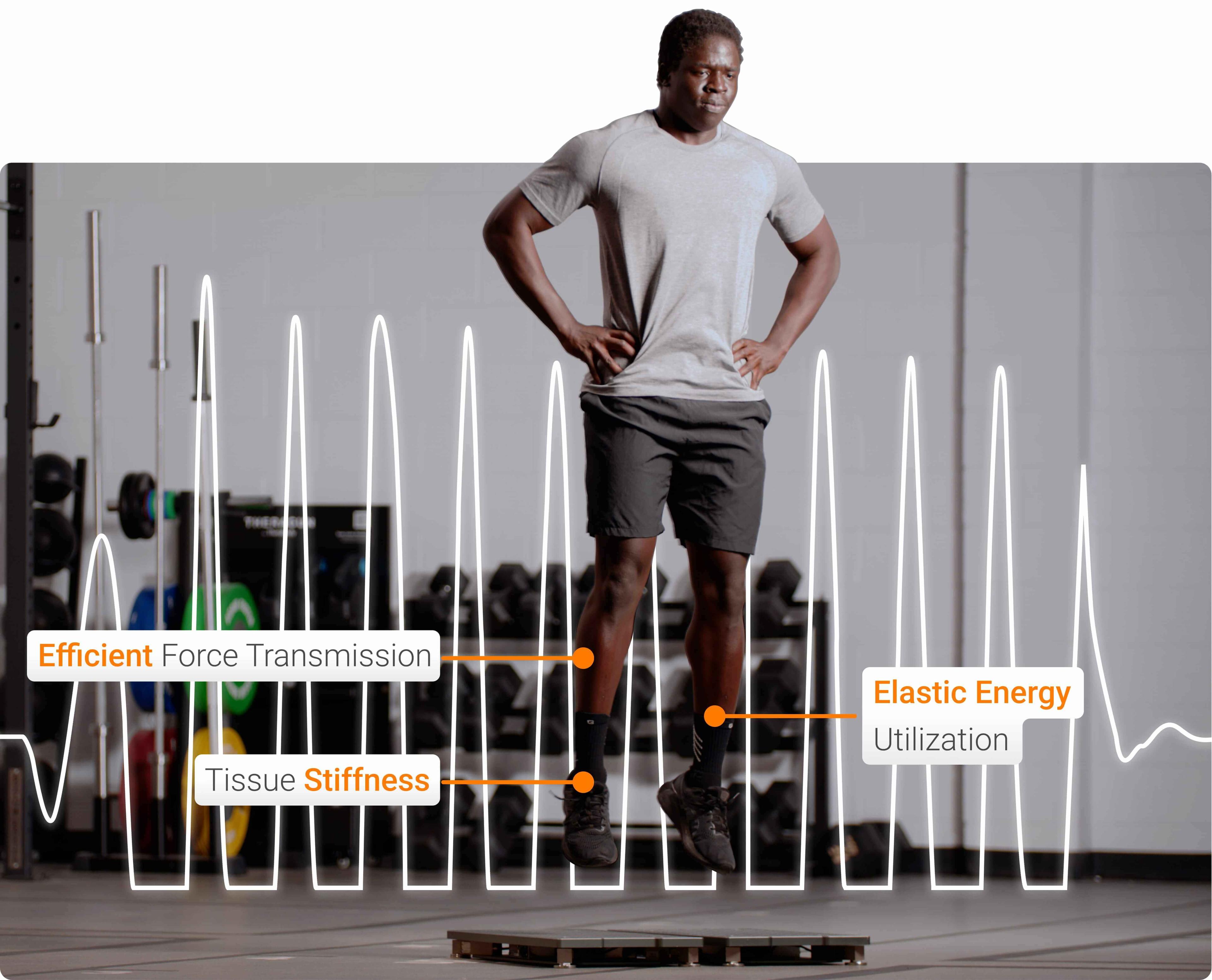
High RSI values are typically associated with athletic qualities such as tissue stiffness, elastic energy utilization and efficient force transmission…
However, the most interesting athlete profiles are often those in which physical qualities do not appear to align. An athlete demonstrating exceptional reactive strength alongside comparatively low plantar flexor force is repeatedly exposing the calf MTU to high forces and strains, potentially with less strength reserve to support these demands.
This profile may warrant closer monitoring of plantar flexor capacity and its response to training, particularly as heavy, slow or sustained loading can provide an important stimulus for adaptations across the muscle, muscle-tendon junction and free Achilles tendon.
Conversely, athletes with substantial plantar flexor force but modest reactive strength may benefit from greater emphasis on reactive stiffness and stretch-shortening cycle performance. Considering both qualities together allows practitioners to monitor whether plantar flexor capacity is developing appropriately for the plyometric demands an athlete repeatedly experiences.
Using the Quadrant of Boom 4
Quadrant of Boom 4 compares plantar flexor isometric peak force with reactive strength. The quadrant helps practitioners identify potential mismatches between an athlete’s demonstrated reactive ability and the muscular force capacity available to support it.
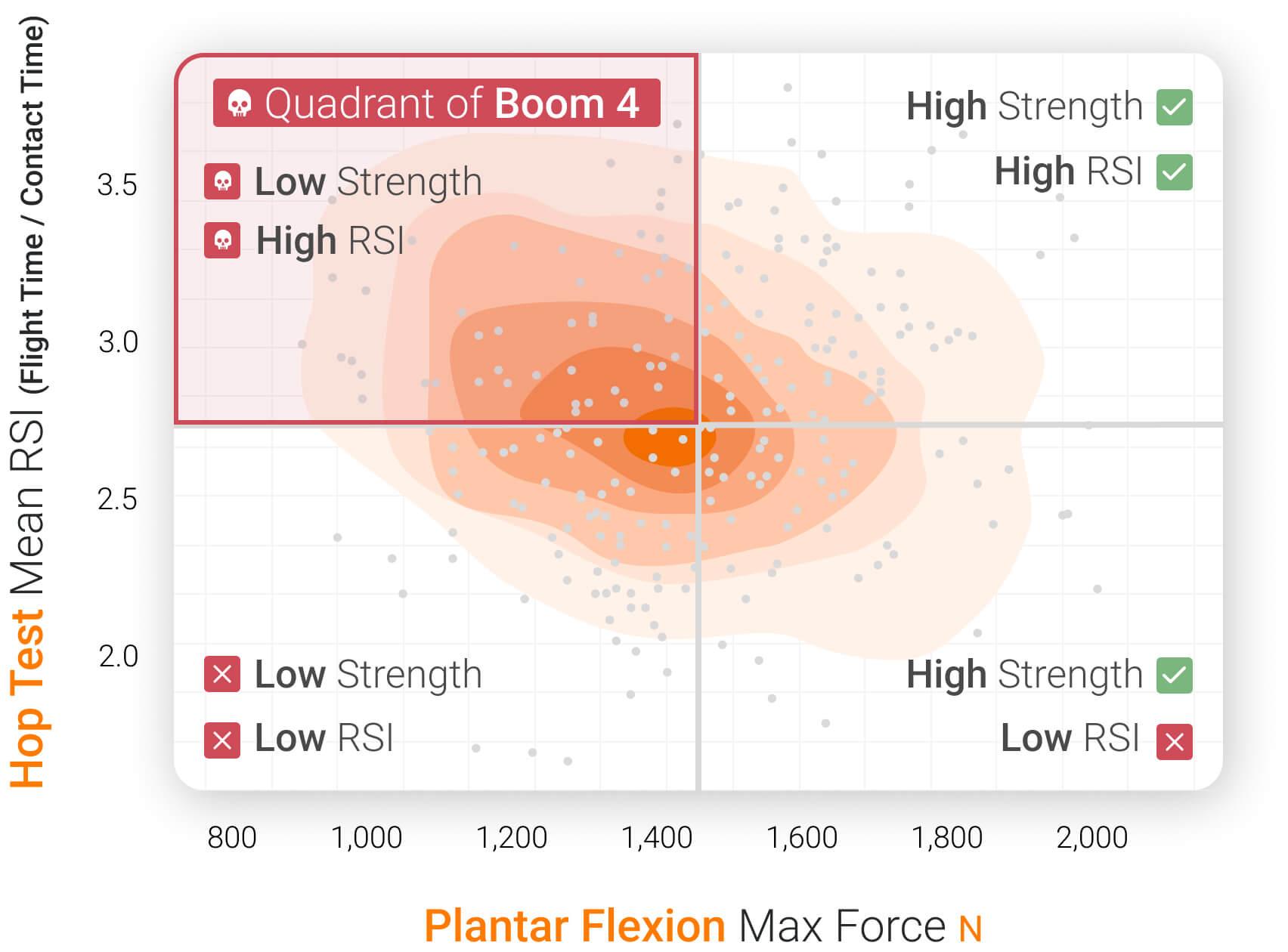
Athletes demonstrating high reactive strength alongside relatively modest plantar flexor force may indicate an undetected mismatch between physical output and capacity that could influence their risk of high time-loss or recurrent injuries such as Achilles tendon rupture or CMSI.
In addition to maximal muscular capacity, low plantar flexor force capacity may reflect limited exposure to heavy resistance training, which is known to influence tendon adaptation and stiffness (Jacobs et al., 2025). A more compliant tendon may experience greater strain under similar loading conditions, meaning athletes with a high RSI but comparatively low plantar flexor force could operate with less structural reserve.
One hypothesis is that these athletes may be biased toward greater strain at the muscle-tendon junction, potentially increasing their risk of CMSI. While this relationship has not been directly established, the profile may warrant further assessment and targeted strength development.
Regardless of injury risk, an athlete flagged by the Quadrant of Boom 4 highlights a specific physical quality that may require greater emphasis depending on the athlete’s sporting demands, position and training history. Testing setup and athlete familiarization are particularly important for both plyometric and isometric assessments, as inaccurate data from either assessment may place an athlete in a quadrant that does not represent their capacity.
Applying the Quadrant of Boom 4
Repeated maximal jumping, aggressive decelerations, rapid accelerations and frequent changes of direction, as experienced in elite basketball, expose the Achilles tendon and calf to substantial mechanical loading throughout training and competition. It is therefore unsurprising that CMSIs and subsequent Achilles tendon injuries remain a significant concern within basketball, prompting many efforts to better understand the physical qualities that underpin both performance and availability.
Athletes with comparatively greater reactive strength may benefit from further development of maximal plantar flexor force capacity, while those with substantial force but lower reactive strength may warrant greater emphasis on building tendon stiffness, stretch-shortening cycle efficiency and reactive strength performance. The quadrant helps practitioners identify these profiles without assuming how an athlete should perform based on their position, size or playing role.
…this quadrant plot allows practitioners to identify, rank and monitor athletes who require new training options for both health and performance considerations…
Therefore, this quadrant plot allows practitioners to identify, rank and monitor athletes who require new training options for both health and performance considerations, supporting an appropriately balanced profile based on the demands of an athlete’s role.
Looking Beyond a Single Metric
Objective testing becomes most valuable when multiple physical qualities are interpreted together.
Reactive strength shows how effectively an athlete performs explosive stretch-shortening cycle tasks, while plantar flexor force quantifies the muscular capacity underpinning those movements. Independently, each assessment provides useful information, but together, they offer greater context for understanding how an athlete may be meeting the substantial demands placed on the calf during sport.
Quadrant of Boom 4 gives practitioners a practical framework for prioritizing calf strength development where it may matter most, while identifying athletes whose existing strength may be better expressed through targeted reactive training.
For more examples of how the Quadrant of Boom framework can be applied across different physical qualities, explore Part 1: Sprint Speed and Hamstring Strength, Part 2: Sprint Momentum and Hamstring Strength and Part 3: Hip Adductor and Hamstring Strength.
If you are interested in learning how ForceFrame and ForceDecks can help you assess plantar flexor force and reactive strength to identify athlete profiles and inform training priorities, get in touch with our team.
References
- Blauberger, P., Horsch, A., & Lames, M. (2021). Detection of ground contact times with inertial sensors in elite 100-m sprints under competitive field conditions. Sensors, 21(21), 7331. https://doi.org/10.3390/s21217331
- Devaprakash, D., Graham, D. F., Barrett, R. S., Lloyd, D. G., Obst, S. J., Kennedy, B., Adams, K. L., Kiely, R. J., Hunter, A., Vlahovich, N., Pease, D. L., Shim, V. B., Besier, T. F., Zheng, M., Cook, J. L., & Pizzolato, C. (2022). Free Achilles tendon strain during selected rehabilitation, locomotor, jumping, and landing tasks. Journal of Applied Physiology, 132(4), 956–965. https://doi.org/10.1152/japplphysiol.00662.2021
- Dorn, T. W., Schache, A. G., & Pandy, M. G. (2012). Muscular strategy shift in human running: Dependence of running speed on hip and ankle muscle performance. Journal of Experimental Biology, 215(11), 1944–1956. https://doi.org/10.1242/jeb.064527
- Green, B., Lin, M., McClelland, J. A., Semciw, A. I., Schache, A. G., Rotstein, A. H., Cook, J., & Pizzari, T. (2020). Return to play and recurrence after calf muscle strain injuries in elite Australian football players. The American Journal of Sports Medicine, 48(13), 3306–3315. https://doi.org/10.1177/0363546520959327
- Jain, A., Bansal, R., Kumar, A., & Singh, K. D. (2015). A comparative study of visual and auditory reaction times on the basis of gender and physical activity levels of medical first year students. International Journal of Applied & Basic Medical Research, 5(2), 124–127. https://doi.org/10.4103/2229-516X.157168
- Komi, P. V., Fukashiro, S., & Järvinen, M. (1992). Biomechanical loading of Achilles tendon during normal locomotion. Clinics in Sports Medicine, 11(3), 521–531.
- Lai, A., Schache, A. G., Brown, N. A., & Pandy, M. G. (2016). Human ankle plantar flexor muscle-tendon mechanics and energetics during maximum acceleration sprinting. Journal of the Royal Society Interface, 13(121), 20160391. https://doi.org/10.1098/rsif.2016.0391
- Lazarczuk, S. L., Maniar, N., Opar, D. A., Duhig, S. J., Shield, A., Barrett, R. S., & Bourne, M. N. (2022). Mechanical, material and morphological adaptations of healthy lower limb tendons to mechanical loading: A systematic review and meta-analysis. Sports Medicine, 52(10), 2405–2429. https://doi.org/10.1007/s40279-022-01695-y
- Maniar, N., Schache, A. G., Sritharan, P., & Opar, D. A. (2018). Non-knee-spanning muscles contribute to tibiofemoral shear as well as valgus and rotational joint reaction moments during unanticipated sidestep cutting. Scientific Reports, 8(1), 2501. https://doi.org/10.1038/s41598-017-19098-9
- Massey, G. J., Balshaw, T. G., Maden-Wilkinson, T. M., Tillin, N. A., & Folland, J. P. (2018). Tendinous tissue adaptation to explosive- vs. sustained-contraction strength training. Frontiers in Physiology, 9, 1170. https://doi.org/10.3389/fphys.2018.01170
- Rubenson, J., Pires, N. J., Loi, H. O., Pinniger, G. J., & Shannon, D. G. (2012). On the ascent: The soleus operating length is conserved to the ascending limb of the force-length curve across gait mechanics in humans. Journal of Experimental Biology, 215(20), 3539–3551. https://doi.org/10.1242/jeb.070466
