Tendon Rehabilitation: Why Force, Isometrics and Plyometric Capacity Matter
About the Author
Dr. Alex Natera is the Manager of Sport Science at the New South Wales Institute of Sport, where he oversees a department of 40 world-class practitioners in strength and conditioning, physiology, psychology, nutrition, biomechanics and performance analysis. His background in strength and conditioning spans nearly 25 years in professional sport and at national sport institutes worldwide.
The Tendon Rehabilitation Domain
Tendon rehabilitation has increasingly been framed as a clinical problem. As symptoms progressively develop, the athlete is often handed over to rehabilitation professionals, with loading strategies introduced reactively and in isolation from performance preparation. Although some rehabilitation strategies may improve symptoms and basic capacities, there is often a gap between rehabilitation and training demands.
Tendons are not just tissues to be settled down. They are performance structures, responsible for force transmission, elastic energy storage and rapid load acceptance. If they are not prepared for those demands in the first place, pathology is a predictable and recurrent outcome.
Tendons are not just tissues to be settled down. If they are not prepared for [sport]…pathology is a predictable and recurrent outcome.
Treat the Whole Squad as “At Risk”
Research shows structural changes in the tendon often precede pain (Millar et al., 2021). Therefore, practitioners cannot assume that pain-free means pathology-free.
Instead of separating athletes into injured and non-injured groups, a squad-based approach treats everyone as a potential tendon risk, embedding proactive tendon loading within performance preparation to reduce reactive decision-making and support long-term tissue health.
Contraction Type Matters
A common phrase in contemporary tendon discussions is that “tendons do not know the contraction type, they only know the tensile loads that are placed on them.” While true at a tissue level, this statement has been misused to justify useful but incomplete rehabilitation methods.
Sport itself is a blend of concentric, eccentric and stretch-shortening cycle (SSC) actions. Any effective program must expose athletes to all of these demands across time. However, when load, fatigue and practice schedules constantly interfere, isometric contractions are often one of the only viable methods to deliver sufficient magnitude and frequency of tendon loading.
…when load, fatigue and practice schedules constantly interfere, isometric contractions are often one of the only viable methods [of training]…

Heavy dynamic lifting at 80-90% of one-repetition maximum (1RM) cannot be performed frequently without affecting neuromuscular recovery and often induces symptom exacerbations. In contrast, isometric contractions allow athletes to reach near-maximal loads with less fatigue and equivalent tendon adaptation.
Measurement Is the Intervention
Unmeasured isometric loading is guesswork. Without objective feedback, athletes routinely undershoot prescribed intensities by 15-20%. What is intended as 80% maximal voluntary isometric contraction (MVIC) often ends up closer to 60%, fundamentally changing the stimulus applied to the tendon.
Unmeasured isometric loading is guesswork. Without objective feedback, athletes routinely undershoot prescribed intensities by 15-20%.
This is where force measurement is necessary. Tools like ForceDecks and ForceFrame allow practitioners to quantify output in real time, ensuring that loading prescriptions match their intended intensity. In these cases, measurement can inform whether the tendon is actually experiencing sufficient load – and therefore strain – to adapt.
In practice, holding isometric muscle actions (HIMA) and pushing isometric muscle actions (PIMA) are often implemented for tendon rehabilitation. While HIMA exercises can be useful, PIMAs often become the primary method of isometric loading. In this context, controllable, quantifiable and repeatable force exposures using tools such as ForceFrame or NordBord Training Mode allow isometric training to be delivered with intent and precision.
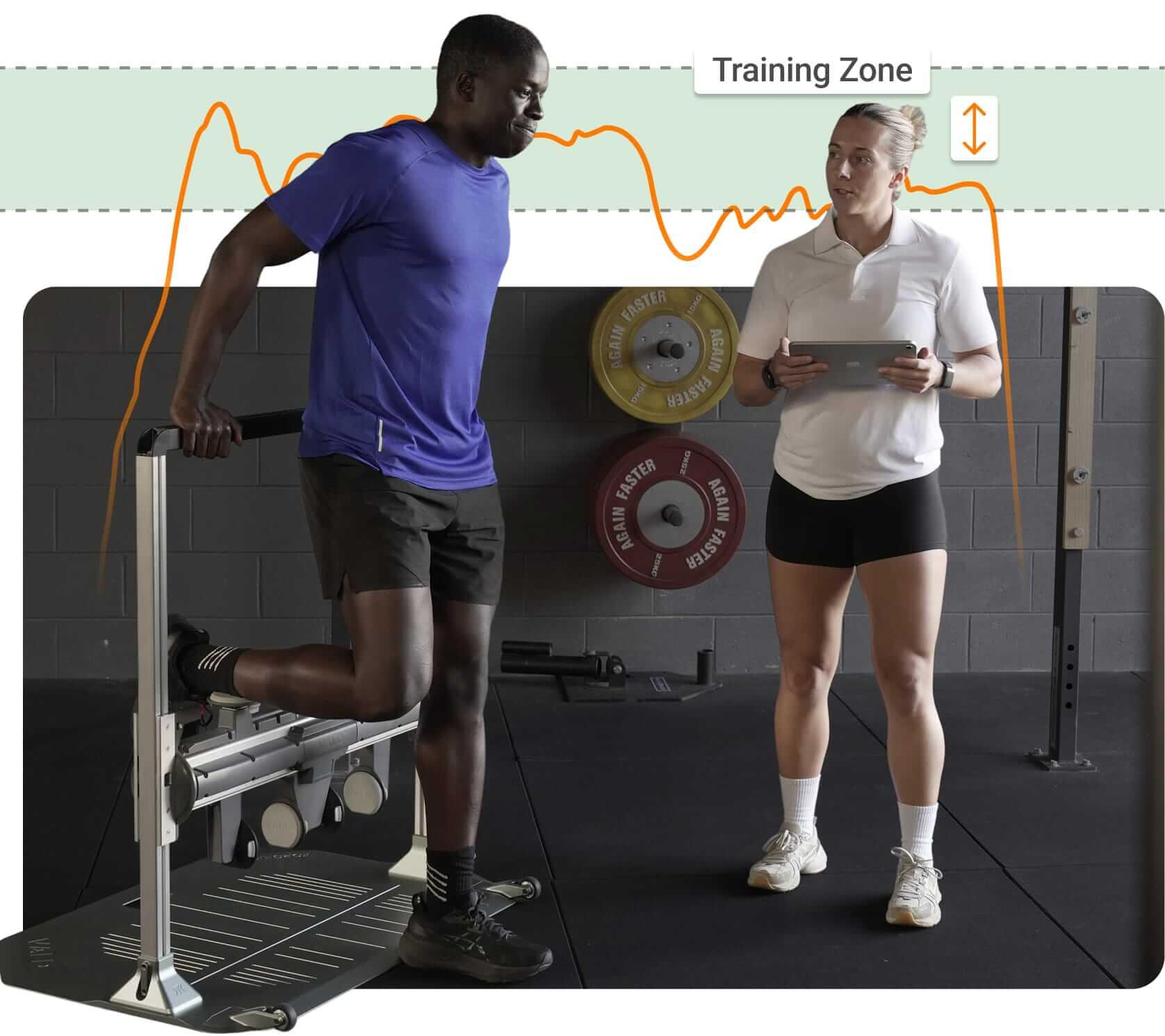
Athlete and practitioner using ForceFrame Training Mode for tendon adaptation.
Using Isometrics as a Substitute
Plyometrics are essential for performance due to their effects on improving muscle stiffness and SSC abilities. However, plyometrics are one of the most provocative stimuli for symptomatic tendons. When pain flares, plyometric volume is often reduced or removed entirely. In this instance, practitioners are left with limited options to train similar qualities with non-provocative stimuli.
Plyometrics are essential for [improving]…SSC abilities. However, [they] are one of the most provocative stimuli for symptomatic tendons.
Isometric loading can develop and preserve tendon stiffness, helping mitigate residual training decline when plyometric exposure is reduced. Short, high-intensity efforts support stiffness and readiness for higher loading rates. While longer-duration isometrics may provide a pain-reducing effect, they must be sequenced carefully to avoid excessive tendon compliance before performance sessions.
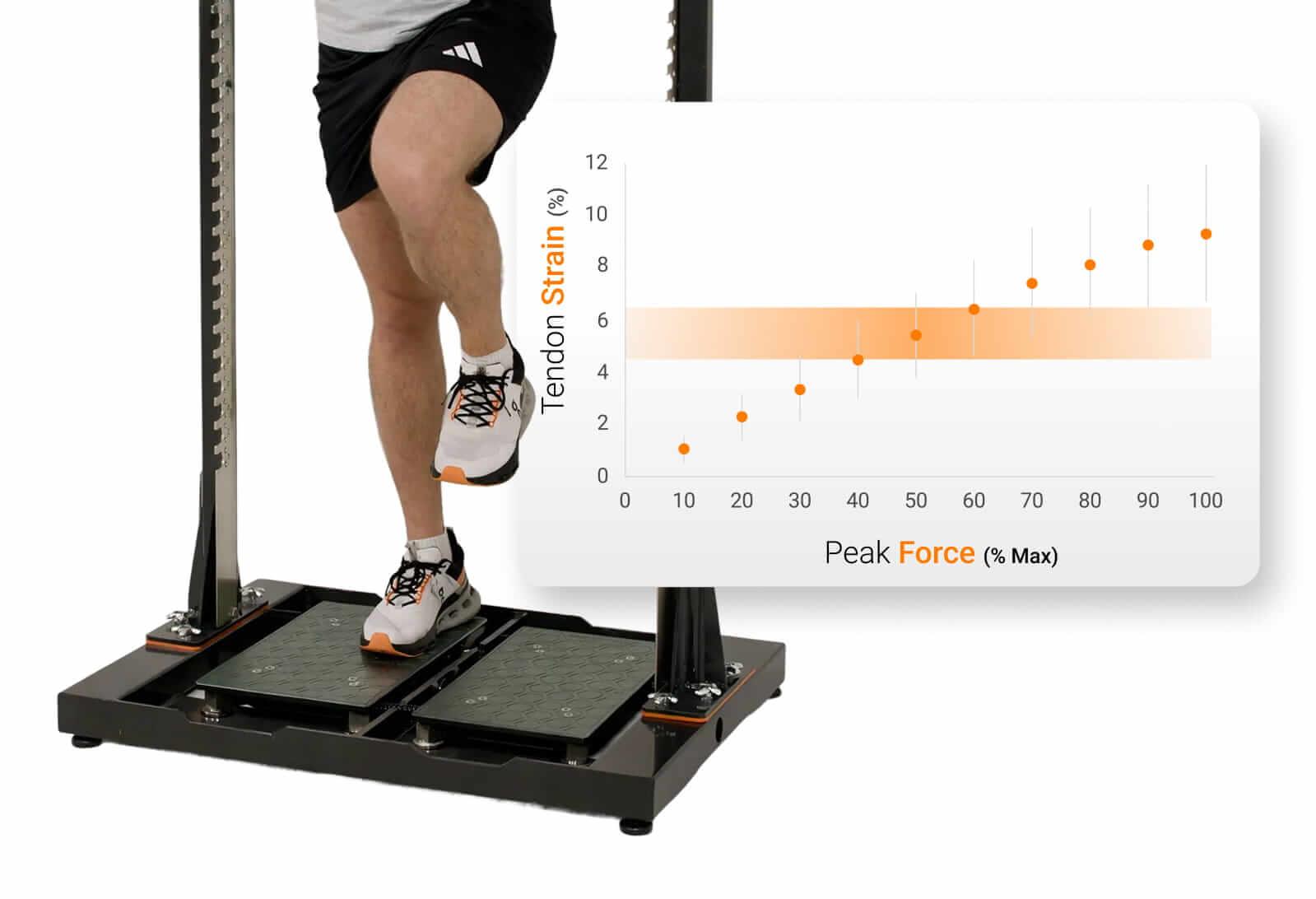
Isometric loads and optimal zone of tendon strain (Merry et al., 2022).
For example, an athlete with a symptomatic patellar tendon may benefit from mid- to long-duration isometrics to reduce anterior knee pain. However, this strategy is likely to increase stress relaxation of the tendon (Baar, 2019).
In this case, practitioners can implement a progressive isometric program during the athlete’s warm-up to combine the pain-reducing effects of long-duration isometrics with the tissue-quality preparation provided by high-intensity isometrics. This may look like the following prescription:
- 2 × 45s PIMA at 70% MVIC
- 3 × 3s PIMA at 90% MVIC
- 3 × 1s rapid PIMA at 100% MVIC
- 6 × 1s repetitions of ballistic quasi-isometric switches at 30-40% MVIC
…a progressive isometric program…[combines] the pain-reducing effects of long-duration isometrics, with the tissue-quality preparation [of] high-intensity isometrics.
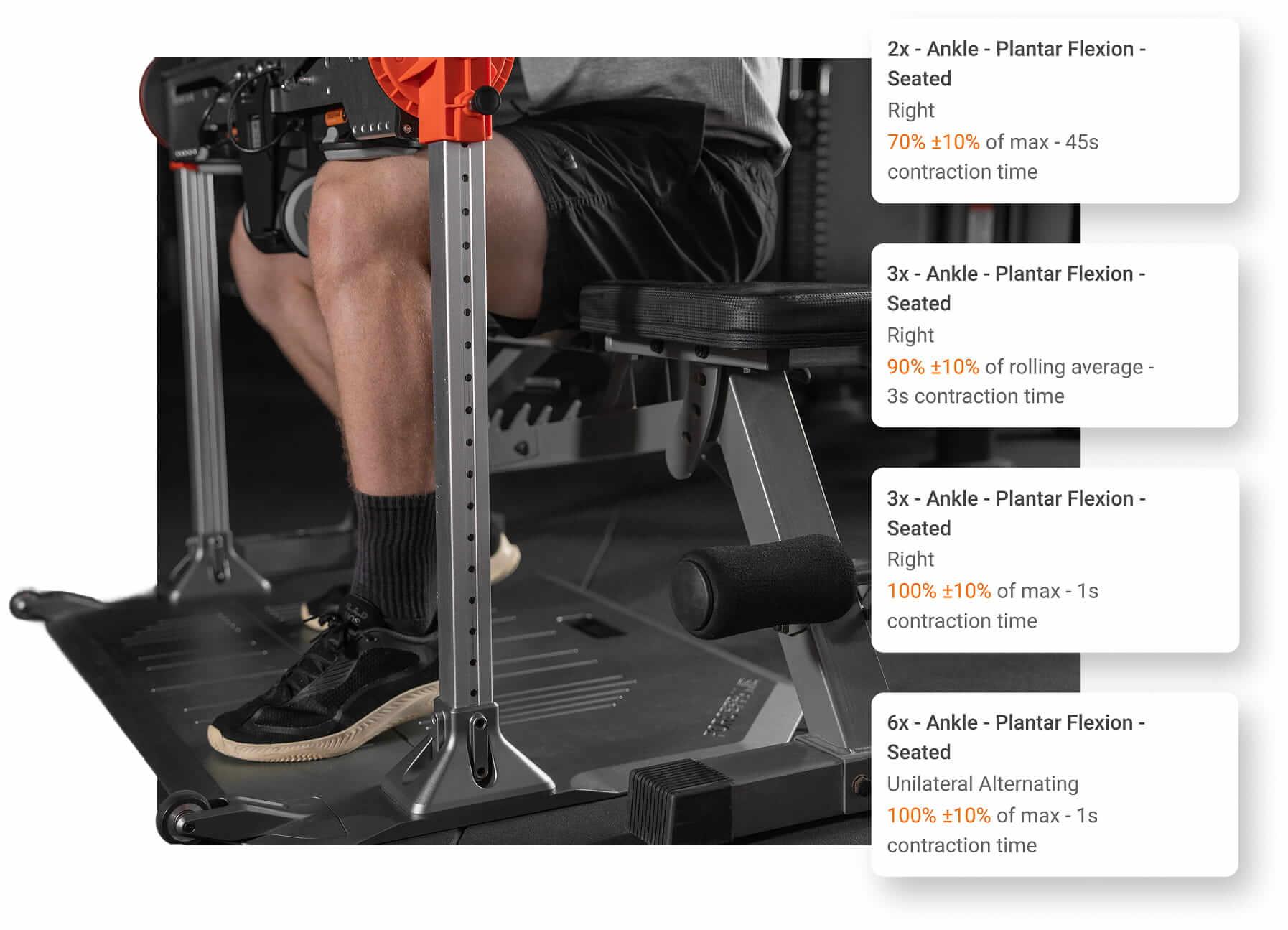
Training program in ForceFrame Training Mode, optimizing both tendon adaptation and pain reduction.
Layering different isometric strategies prior to a pre-pitch or pre-court session, or across a week, can help manage symptoms while maintaining qualities specific to sport performance.
Defining Stiffness
A recurring source of confusion in practice is the interchangeable use of “stiffness.” However, there is a clear distinction between tendon stiffness, muscle stiffness and whole-limb stiffness:
- Tendon Stiffness: The stress-strain relationship of the tendon itself – how much a tendon elongates for a given tensile load.
- Muscle Stiffness: The resistance of the muscle to length change under load, influenced by neural activation, contractile properties and cross-bridge dynamics.
- System Stiffness: The combined behavior of muscles, tendons and joints across the entire kinetic chain, describing the vertical center of mass displacement at a given system load.
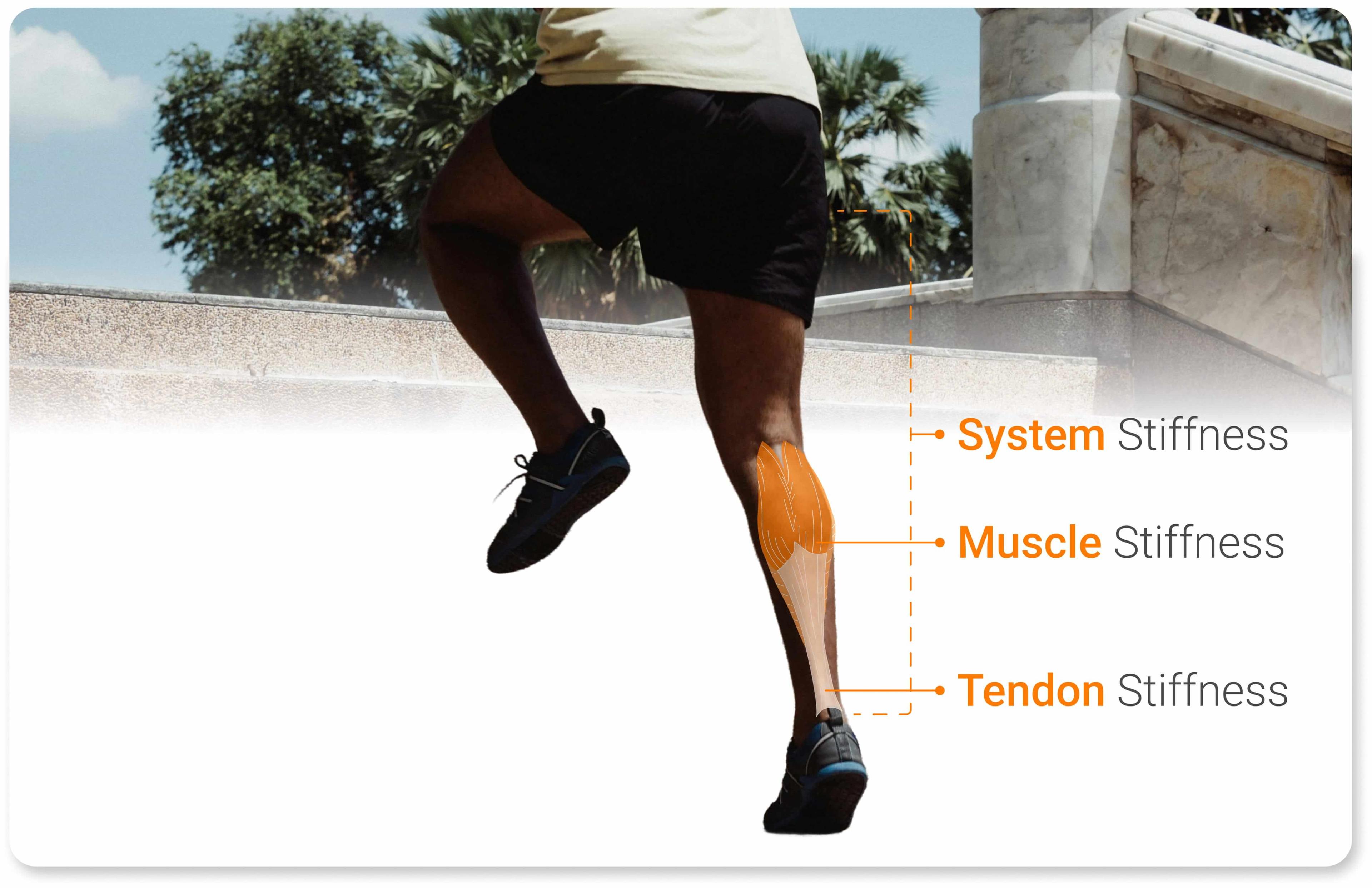
Traditional strength training primarily increases muscle stiffness by enhancing cross-sectional area and force production, thereby improving overall load capacity. Similarly, muscles often display a quasi-isometric action in plyometrics, which trains and subsequently improves dynamic muscle stiffness, forcing rapid strain into the tendon.
Isometrics, however, are more effective tools for directly targeting tendon stiffness. Longer durations of consistent, high loads increase tendon strain sufficiently to stimulate collagen synthesis and enhance overall stiffness. Tools such as NordBord and ForceFrame allow these loads to be applied and monitored with precision.
Longer durations of consistent, high loads increase tendon strain sufficiently to stimulate collagen synthesis and enhance overall stiffness.
Over time, imbalances can emerge where muscle strength and stiffness from traditional resistance training can outpace the tendon’s capacity to tolerate and transmit force. In these cases, tendons become a weak link.
This is why isometric tendon loading across long competitive seasons, particularly for athletes with extensive strength-training histories, can help to maintain performance quality during competition.
Drop Jumps and SSC Capacity
Once plyometrics are tolerated, drop-jump profiling can help practitioners understand how athletes manage SSC demands. By progressively increasing drop height and observing changes in contact time, jump height and reactive strength, practitioners can identify when tendon-muscle behavior shifts from elastic, quasi-isometric actions to inefficient eccentric strategies.
By progressively increasing drop height and observing changes [in jump strategy]…practitioners can identify when tendon-muscle behavior shifts…
This change reflects the turning point at which greater heights may no longer be effective for training reactive strength.
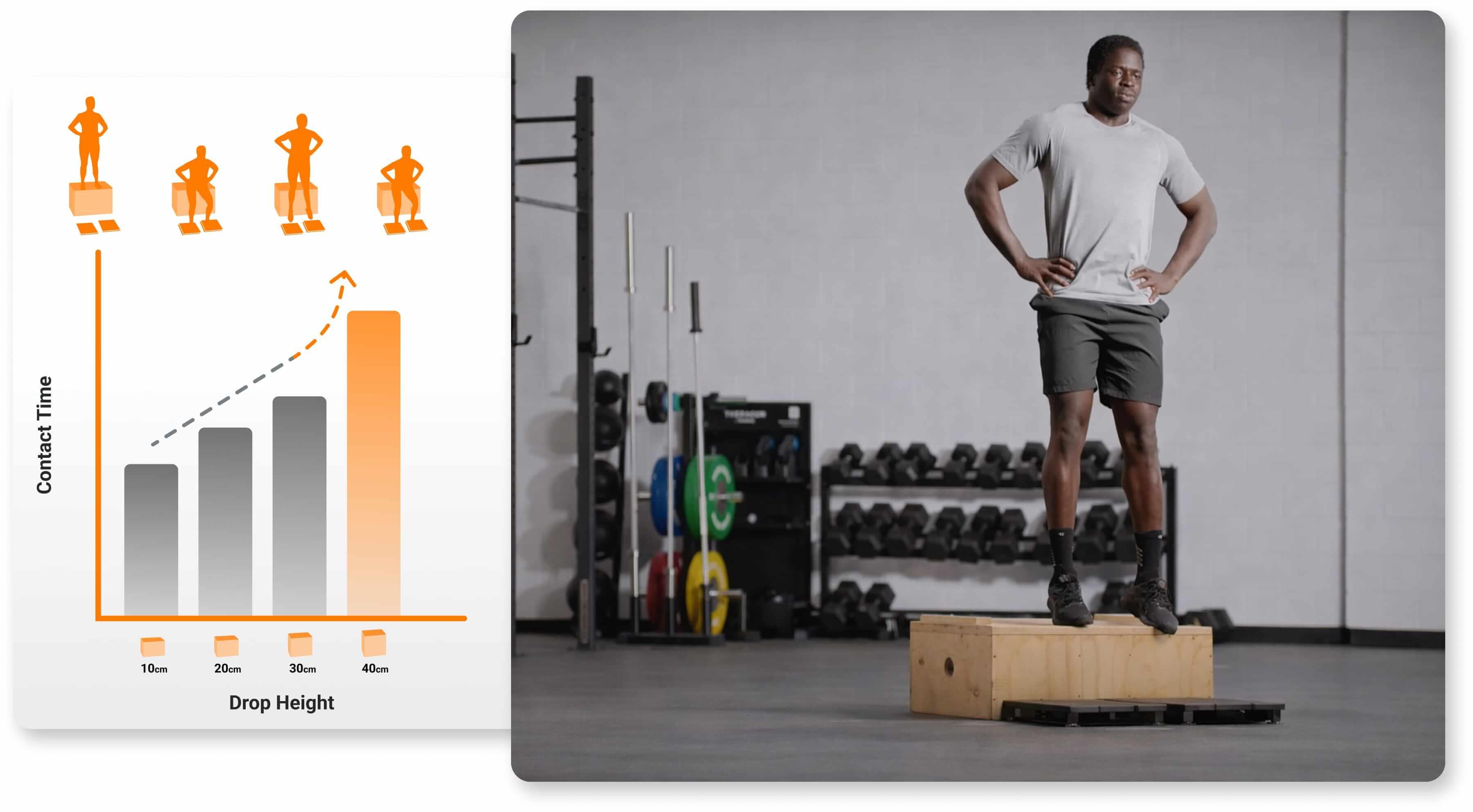
Drop-jump profile with ForceDecks to better determine tendon behavior thresholds.
With ForceDecks, this profiling becomes objective. Rather than guessing which plyometric intensities are appropriate, practitioners can identify the ranges where athletes maintain efficient SSC behavior and bias training accordingly. This approach allows SSC exposure to be scaled, reducing unnecessary overload while still preparing athletes for the demands of sport.
Individual Tendons, Individual Responses
While the overarching framework remains consistent, tendon location and individual response still matter. Achilles tendons often tolerate and require higher loads during training and rehabilitation. Proximal hamstring tendons may respond better to lower loads and longer durations, while adductor tendons often benefit from frequent, daily exposure.
However, these dosages and frequencies are impossible to optimize without effective sources of load monitoring and training management. Setting key parameters and thresholds for isometric training, as available in Training Mode from ForceFrame and NordBord, is therefore essential to ensuring quality, progressive training.
Setting key parameters and thresholds for isometric training…is essential to ensuring quality, progressive training.
Key Takeaways
Tendon rehabilitation strategies should be approached with weight-room-specific interventions as a first-line treatment strategy. Therefore, loading interventions can be measured and monitored to ensure practitioner intent matches the athlete’s execution.
Isometrics provide a reliable pathway to high-intensity, high-frequency tendon loading during competition. As rehabilitation and training progress, drop-jump profiling helps contextualize SSC capacity to further enhance training applicability.
When tendons are treated as performance structures, rehabilitation stops being reactive and becomes preventative, adaptive and sustainable.
If you would like to learn more about how ForceDecks, ForceFrame and NordBord can support tendon loading, isometric training and SSC progression in your environment, please get in touch.
References
- Baar, K. (2019). Stress relaxation and targeted nutrition to treat patellar tendinopathy. International Journal of Sport Nutrition and Exercise Metabolism, 29(4), 453–457. https://doi.org/10.1123/ijsnem.2018-0231
- Merry, K., Napier, C., Waugh, C. M., & Scott, A. (2022). Foundational principles and adaptation of the healthy and pathological Achilles tendon in response to resistance exercise: A narrative review and clinical implications. Journal of Clinical Medicine, 11(16), 4722. https://doi.org/10.3390/jcm11164722
- Millar, N. L., Silbernagel, K. G., Thorborg, K., Kirwan, P. D., Galatz, L. M., Abrams, G. D., Murrell, G. A. C., McInnes, I. B., & Rodeo, S. A. (2021). Tendinopathy. Nature Reviews Disease Primers, 7(1), 1. https://doi.org/10.1038/s41572-020-00234-1
