My Dashboard: Motriq
Available in:
EN
My Dashboard is a series featuring insights from health and performance experts on the tests and metrics they use to identify performance and rehabilitation deficits. Each article breaks down their VALD Hub dashboard, which has been optimized for a specific type of athlete or patient, outlining key tests, metrics and training insights to help practitioners better integrate testing data into practice.
Contributors

Athlete Profile
This dashboard is designed for athletes preparing for HYROX, a competition combining eight 1km runs with eight workout stations. Rather than trying to find one test for every station, we use a needs analysis to identify physical qualities shared across the competition and guide individual athlete testing and programming.
Rather than trying to find one test for every station, we use a needs analysis to identify physical qualities shared across the competition and guide individual athlete testing and programming.
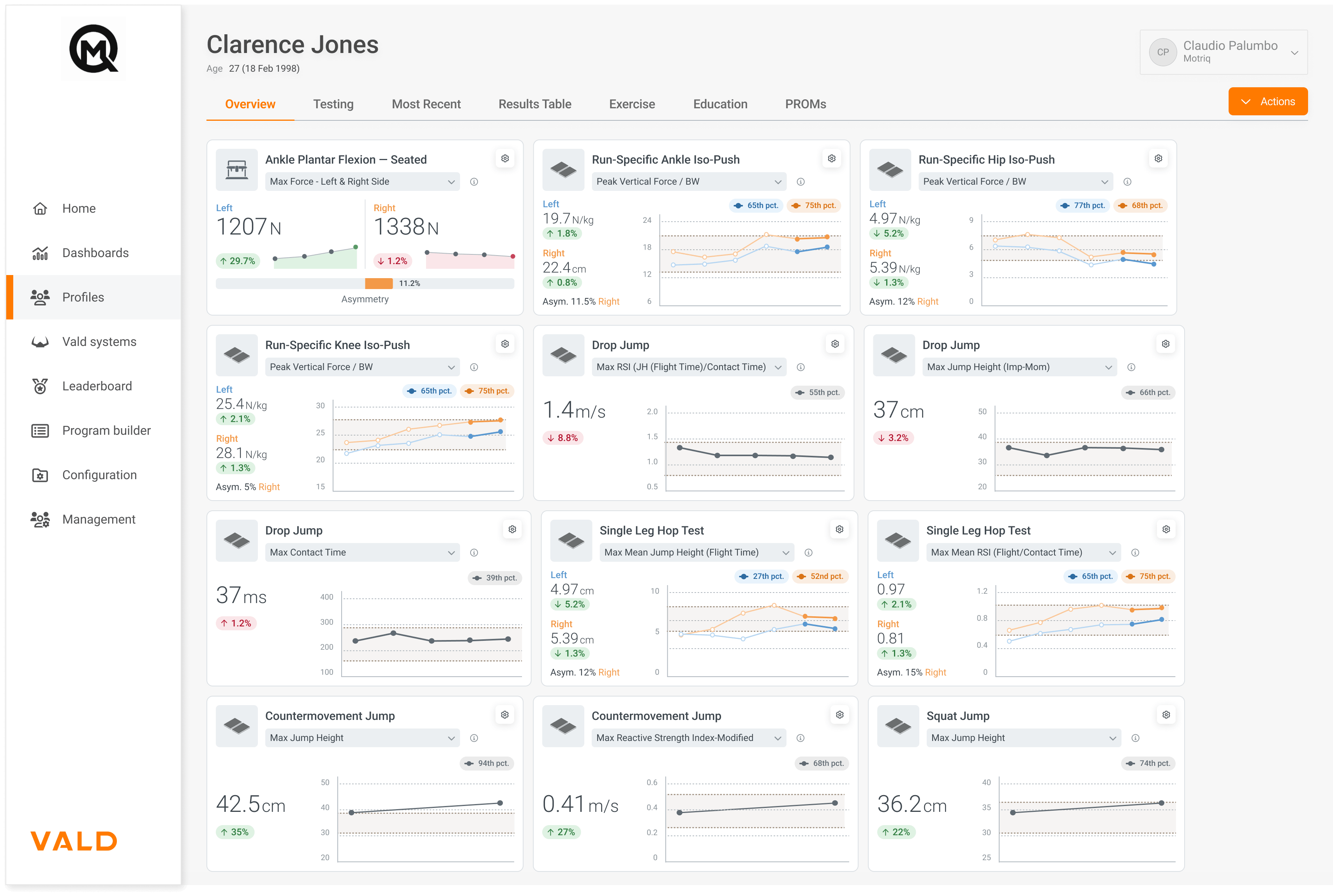
Motriq’s VALD Hub dashboard, highlighting the tests and metrics selected from its HYROX needs analysis.
Overview
We developed our testing battery by first considering the recurring movement patterns, directions of force production and muscular demands of HYROX. Three priorities emerged: calf performance and reactive strength, hip extension capacity, knee extension and lower-body power. The following assessments combine isolated force measurements with jumping and hopping tests to inform athlete profiling and exercise selection.
Calf Performance and Reactive Strength
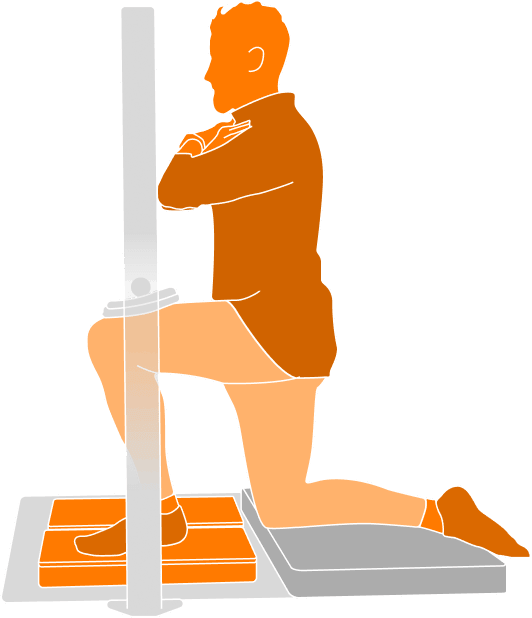
Kneeling Isometric Plantar Flexion Test

| Test | Metric | Exercise Prescription for Improvement |
 | Maximum Force (N) |
|
The kneeling isometric plantar flexion test assesses force production through the calf muscle-tendon complex. This capacity is relevant to repeated running demands and contributes to force production during other HYROX tasks, including sled pushing and the burpee broad jump. Maximum force helps identify athletes who may benefit from targeted plantar flexor strengthening.
[Plantar flexion] capacity is relevant to repeated running demands and contributes to force production during other HYROX tasks, including sled pushing and the burpee broad jump.
We use reference values for peak force relative to body weight (BW) of 1.9-2.2 × BW in elite running athletes and 1.8 × BW in elite HYROX athletes. Drawn from VALD Resources such as Profiling the HYROX Athlete, these values provide context rather than serving as standalone performance criteria.

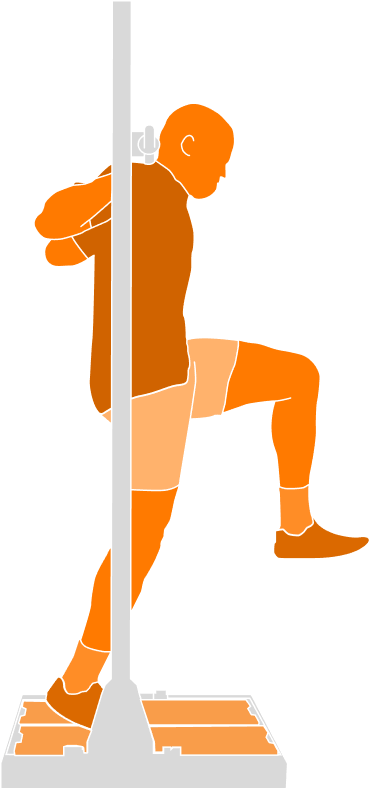
Run-Specific Ankle Iso-Push
| Test | Metric | Exercise Prescription for Improvement |
 | Peak Vertical Force / BW |
|
| Peak Force Asymmetry |
|
The Run-Specific Ankle Iso-Push provides a second measure of plantar flexor capacity in a position intended to reflect running demands. Peak vertical force relative to BW describes force capacity, while asymmetry identifies inter-limb differences that may warrant further assessment or targeted training.
Exercise selection should target both maximal plantar-flexor strength and inter-limb differences in force production. Heavy calf raises and Run-Specific Ankle Iso-Push exercises can help develop overall force capacity, while standing deficit single leg calf raises provide a unilateral, isotonic training option to address asymmetries identified during testing.
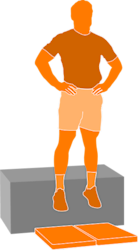
Drop Jump
| Test | Metric | Exercise Prescription for Improvement |
 | Jump Height |
|
| Reactive Strength Index (RSI) |
|
The DJ assesses how effectively an athlete uses rapid stretch-shortening cycle actions. RSI combines jump height and ground contact time into a composite measure of reactive jump performance. Jump height reflects the outcome, while ground contact time indicates how long the athlete took to achieve it. Together, these metrics can inform whether training should emphasize jump output, rapid ground contact or both.
Jump height reflects the outcome, while ground contact time indicates how long the athlete took to achieve it.
Exercise selection should target both jump height and the ability to produce force within short ground contact times. Loaded DJs and hurdle jumps can help develop reactive jump performance, while pogo jumps and alternating pogo variations emphasize shorter ground contact times and rapid force production. These exercises can be progressed based on whether the athlete demonstrates limitations in jump height, ground contact time or both.
Single Leg Hop Test
| Test | Metric | Exercise Prescription for Improvement |
 | RSI |
|
| Ground Contact Time | ||
| Jump Height |
|
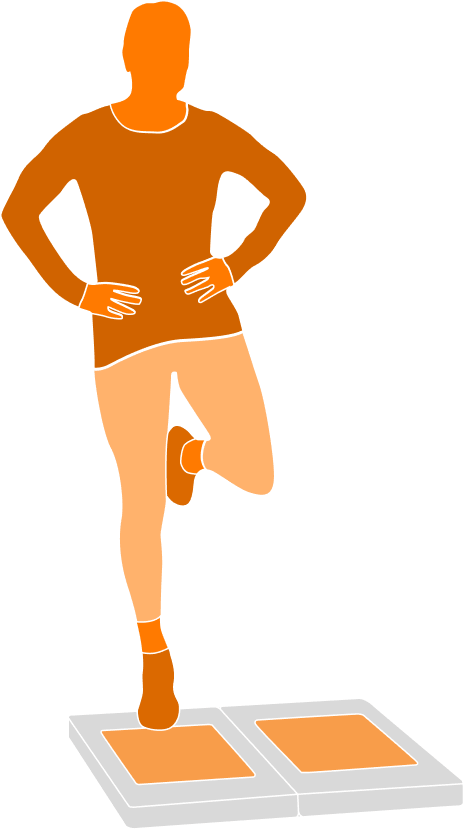
The single leg hop test extends reactive assessment to a unilateral task. Jump height, RSI and ground contact time provide information about each limb’s ability to produce and use force during repeated contacts. Comparing these measures between limbs can help identify individual development priorities alongside bilateral DJ performance.
Hip Extension Capacity
Run-Specific Hip Iso-Push
| Test | Metric | Exercise Prescription for Improvement |
 | Peak Vertical Force / BW |
|
| Peak Force Asymmetry |
|
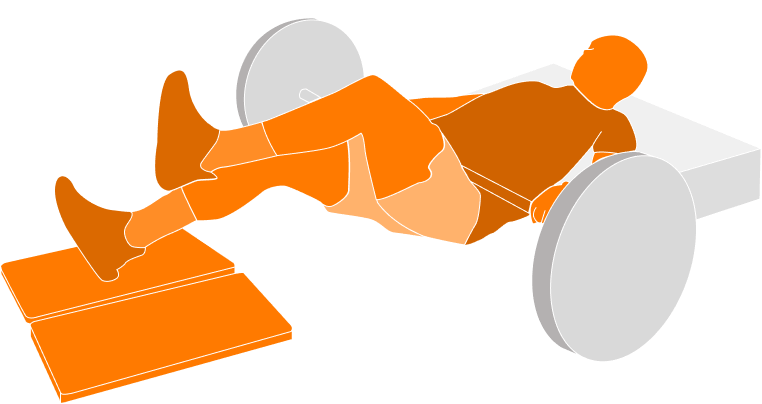
Hip extension contributes to running, sled work, broad jumps and lunges. The Run-Specific Hip Iso-Push assesses hip extension force production in a standardized posture relevant to running, without attempting to reproduce any individual HYROX station. Peak force relative to BW and inter-limb asymmetry help characterize capacity and potential training priorities.
The Run-Specific Hip Iso-Push assesses hip extension force production in a standardized posture relevant to running, without attempting to reproduce any individual HYROX station.
Exercise selection should target both maximal hip extension strength and inter-limb differences in force production. Heavy hip thrusts and Run-Specific Hip Iso-Push exercises can help develop overall force capacity, while single leg hip thrusts and single leg Romanian deadlifts provide unilateral training options to address asymmetries identified during testing.
Knee Extension and Lower-Body Power
Run-Specific Knee Iso-Push
| Test | Metric | Exercise Prescription for Improvement |
 | Peak Vertical Force / BW |
|
| Peak Force Asymmetry |
|
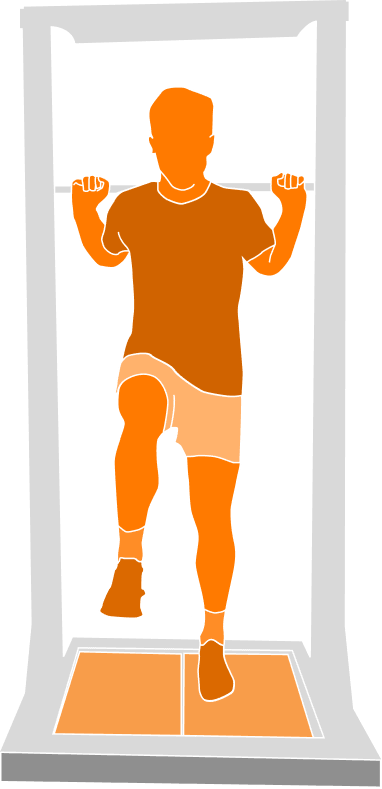
Knee extension strength contributes to running, sled pulling, wall balls, rowing and lunges. The Run-Specific Knee Iso-Push quantifies knee extension force capacity in a standardized position. Peak vertical force relative to BW describes overall output, while asymmetry may identify limb-specific differences relevant to exercise selection.
Exercise selection should target both maximal knee extension strength and inter-limb differences in force production. Heavy partial squats, overcoming squat isometrics and Run-Specific Knee Iso-Push exercises can help develop overall force capacity, while Bulgarian split squats and heavy single leg presses provide unilateral training options to address asymmetries identified during testing.
Countermovement Jump
| Test | Metric | Exercise Prescription for Improvement |
 | Reactive Strength Index-Modified (RSI-Mod) |
|
| Contraction Time | ||
| Jump Height |
|
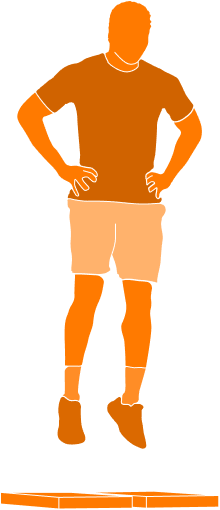
The CMJ provides a global assessment of lower-body jump performance. RSI-Mod combines jump height and contraction time (the time from movement onset to takeoff) into a composite measure of jump performance relative to the time taken. Jump height reflects the outcome, while contraction time shows how long the athlete took to achieve it. These measures can complement isolated hip and knee extension assessments when profiling lower-body power.
Squat Jump
| Test | Metric | Exercise Prescription for Improvement |
 | Jump Height |
|
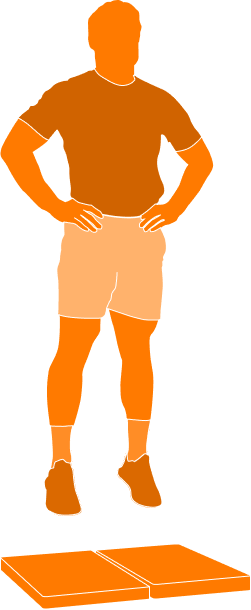
The squat jump (SJ) assesses jump performance without a preparatory countermovement. Comparing SJ and CMJ jump height allows practitioners to calculate the eccentric utilization ratio (EUR), defined as CMJ jump height divided by SJ jump height. This comparison helps describe the performance difference associated with using a countermovement.
We interpret EUR values of 1.0-1.1 as a relatively small countermovement advantage, values above 1.1 as a greater advantage and values below 1.0 as lower CMJ-than-SJ performance. These categories should be interpreted in the context of test execution, athlete history and other strength and jump metrics, not as standalone prescriptions.
How These Tests Integrate
Together, these assessments provide a profile of the physical qualities identified through our HYROX needs analysis. Plantar flexor isometrics quantify calf strength, the DJ and single leg hop test assess reactive performance and Run-Specific Hip and Knee Iso-Push tests measure joint-specific force capacity. CMJ and SJ testing provide an integrated view of lower-body power, helping identify potential differences between isolated strength and functional performance.
When interpreted together, these measures help practitioners identify physical development priorities, guide exercise selection and monitor changes over time. Rather than using individual metrics to predict HYROX performance, the battery provides a structured approach to assessing relevant physical qualities and informing training decisions.
If you are interested in building your own dashboard or applying a needs-analysis approach to HYROX athlete testing, get in touch with our team.
