Multi-Domain Athlete Monitoring: Building a convergent framework for load management
Available in:
EN

Athlete monitoring has progressed beyond tracking sets, reps and GPS data, as practitioners now collect large volumes of isometric, wellness and jump data in addition to traditional workload monitoring tools. However, as data volume increases, identifying the metrics that provide the most meaningful insight for decision-making requires clear frameworks and decision-making tools that support repeatable outcomes.
Interpreting metrics in isolation can be misleading. Creating a convergence monitoring approach addresses this by helping practitioners distinguish meaningful change from normal variability. Convergence monitoring is the process of combining information from multiple independent physiological domains, such as neuromuscular performance, maximum strength, endurance or psychological wellness, to create a more comprehensive approach to athlete monitoring.
Supported by clear workflows, a convergence monitoring approach simplifies communication across high-performance, medical and coaching staff by consolidating information into a single system, improving confidence and clarity in decision-making.
The Need for Convergence Monitoring
Neuromuscular fatigue, tissue soreness, psychological readiness and other physiological responses do not always change at the same time. Relying on a single test can imply that one metric or variable fully represents athlete readiness, which is rarely the case.
Relying on a single test can imply that one metric or variable fully represents athlete readiness, which is rarely the case.
Instead, a convergence monitoring approach treats each assessment as an independent gauge within a larger decision-making system. Technologies such as VALD Hub can support this process by allowing practitioners to build custom Dashboards for their given population.

The process is intentionally simple:
- One domain flagged: Monitor
- Two domains flagged: Modify
- Three domains flagged: Immediate investigation
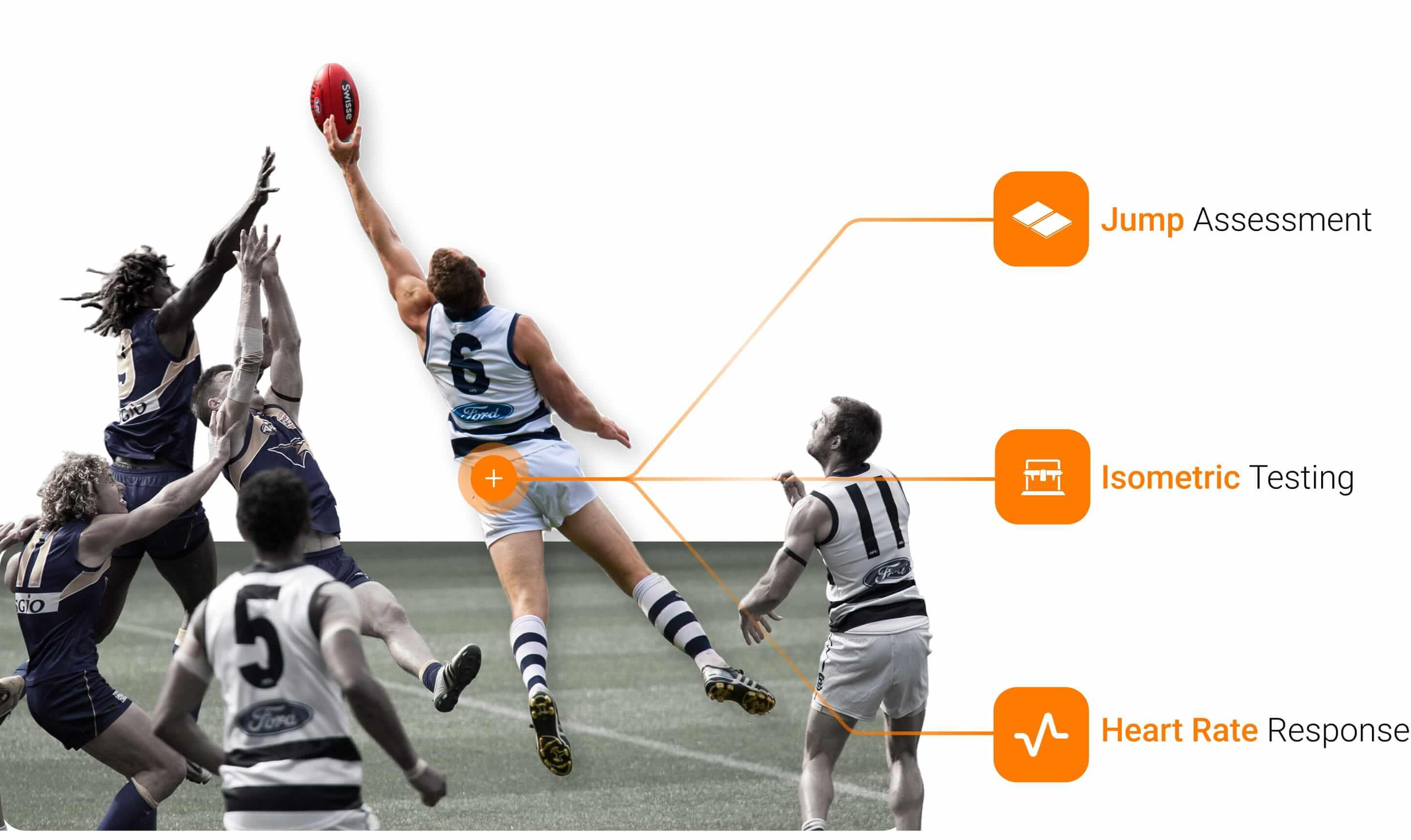
This system reduces overreaction from practitioners to isolated changes while improving confidence that the observed signal reflects genuine physiological stress rather than noise. In Australian Football League (AFL) settings, this framework is built around three primary domains:
- Neuromuscular function using countermovement jump (CMJ) testing
- Adductor function using the groin squeeze assessment
- Autonomic-cardiovascular status using submaximal heart rate response
Additionally, this framework is supported by GPS load monitoring and wellness questionnaires, which provide important contextual information but do not independently drive load modifications.
CMJ Testing and Neuromuscular Readiness
CMJ testing, best performed on technologies such as ForceDecks, serves as the foundational test in the neuromuscular domain.
Athletes complete three maximal jumps following a standardized warm-up, with the mean score used for analysis. Testing is typically performed early in the training week, with follow-up testing later in the week if an alert is identified. Within this framework, two primary variables are emphasized:
- Jump Height: A simple outcome measure that athletes and coaches easily understand, providing engagement and buy-in during the monitoring process.
- Eccentric Duration: A primary strategic metric, as fatigued athletes often lengthen the eccentric phase of the movement as a compensatory strategy before performance outcomes decline.
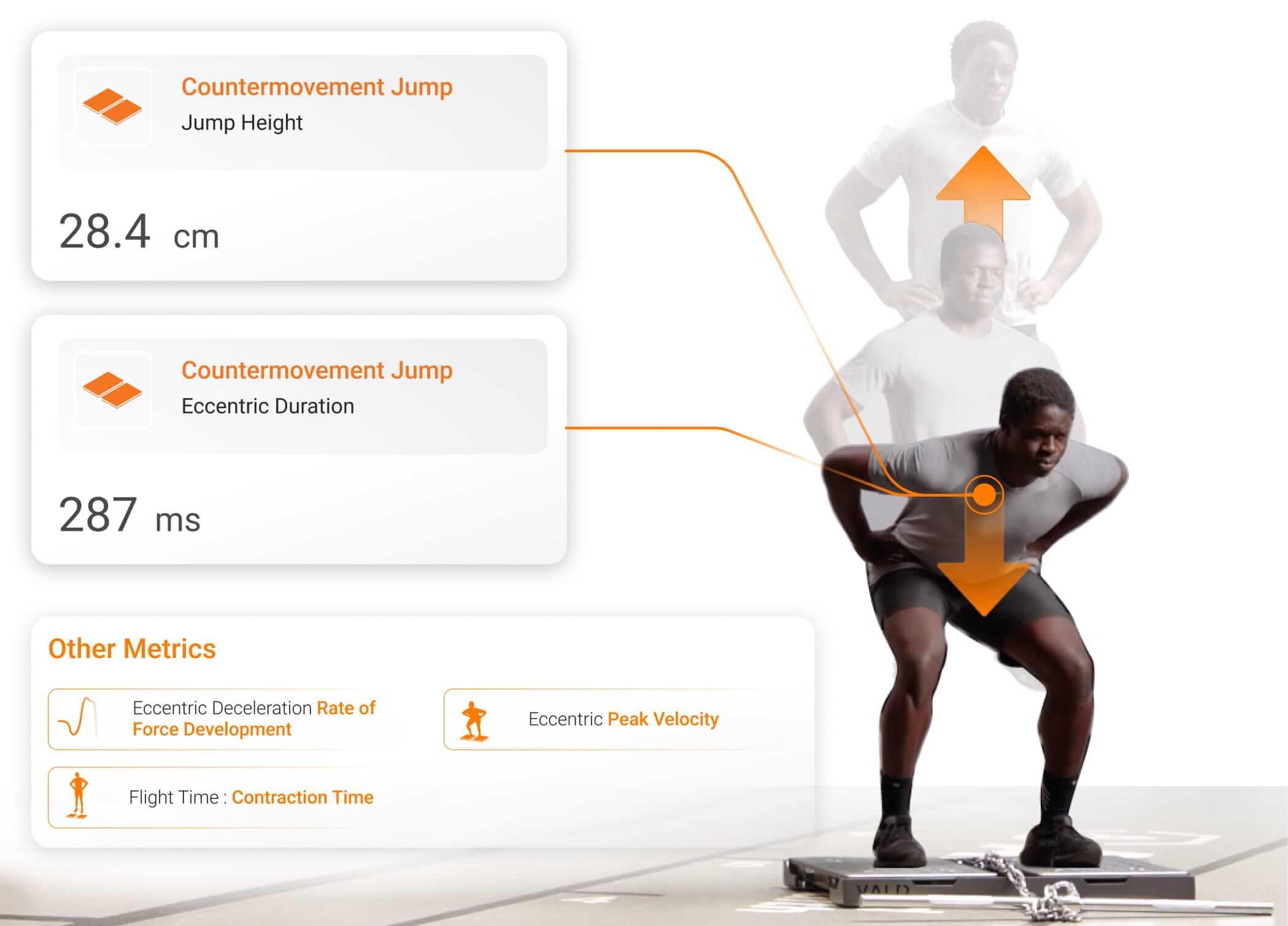
Immediate feedback on metrics such as jump height provides a simple, intuitive performance outcome that promotes athlete and coach buy-in, while eccentric duration offers more sensitive insight into jump strategy. As fatigue develops, athletes often increase eccentric duration to maintain jump height, helping to flag changes in neuromuscular performance. Monitoring both layers allows practitioners to identify changes earlier rather than waiting for obvious performance decrements.
Monitoring both layers allows practitioners to identify changes earlier rather than waiting for obvious performance decrements.
Additional variables, including eccentric peak velocity, eccentric rate of force development and flight time-to-contraction time ratio, may still be monitored internally by performance or rehabilitation staff, but limiting routine reporting to a small number of actionable metrics improves communication efficiency.
Isometric Testing to Monitor Specific Tissue Function
Groin injuries remain common in multidirectional field sports, particularly in AFL and rugby environments. Isometric hip adduction assessment performed with technologies like ForceFrame provides a reliable and efficient method for monitoring adductor function throughout the season.

Athletes perform maximal isometric squeezes at both 0° and 60° hip flexion positions following progressive submaximal warm-up efforts. Testing both positions captures different aspects of adductor function, including short- and long-lever capacity, and may help detect potentially different adductor pathologies.
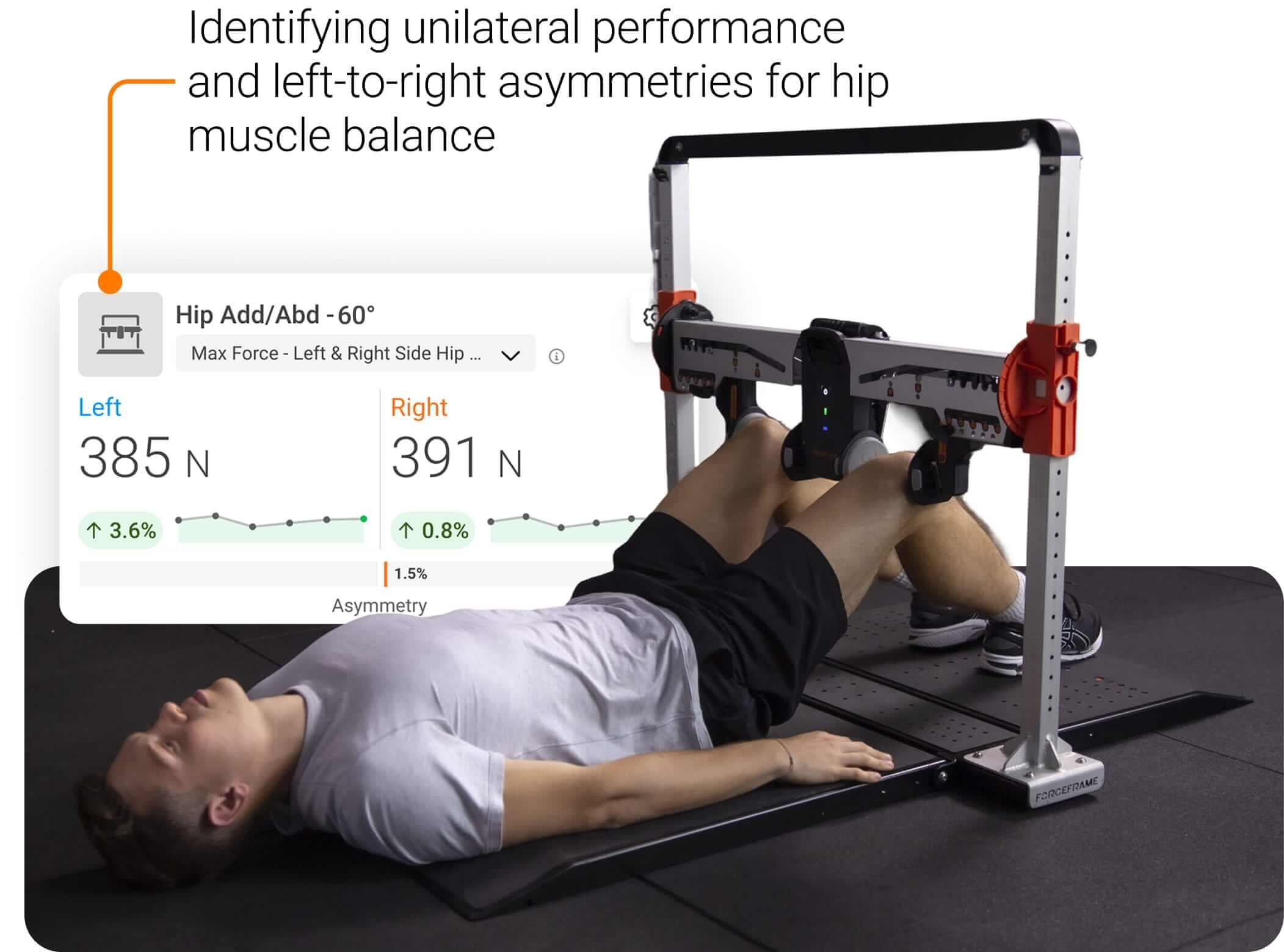
Weekly testing is typically sufficient because adductor strength tends to remain relatively stable day-to-day while still responding to accumulated load and early symptom development.
ForceFrame was selected within this framework for three main reasons:
- It helps reduce potential bias between testers and preserve data quality.
- It offers an accurate, standardized test that is straightforward for all involved practitioners to integrate.
- It provides immediate feedback so decisions can be made efficiently.
While groin testing is especially relevant for football and rugby, other sports may warrant different types of isometric strength testing. For example, hamstring isometrics may also benefit soccer athletes, while shoulder isometrics can help with tennis screening. It is important for practitioners to tailor the types of tests included in the framework to their specific sport and population.
It is important for practitioners to tailor the types of tests included in the framework to their specific sport and population.
Tertiary Measures
Heart rate response testing assesses autonomic and cardiovascular response using a standardized 3-minute run at 12km/h, with heart rate recorded during the final 60 seconds. Elevated heart rate responses at a fixed workload may reflect accumulated fatigue, autonomic stress or incomplete recovery (Shushan et al., 2022).
However, because heart rate is influenced by factors such as hydration, sleep, caffeine and environment, exercise heart rate should be interpreted alongside CMJ and groin squeeze monitoring data rather than in isolation.
GPS and wellness measures provide important context but do not independently drive decision-making. GPS data helps quantify external load exposures, including high-speed running, accelerations and total distance, helping practitioners contextualize changes observed in neuromuscular or heart rate response testing.
Similarly, wellness questionnaires provide subjective insight into sleep, soreness, stress and fatigue. While valuable for identifying trends and improving confidence in objective findings, subjective measures are inherently variable and are most useful when multiple monitoring domains align.
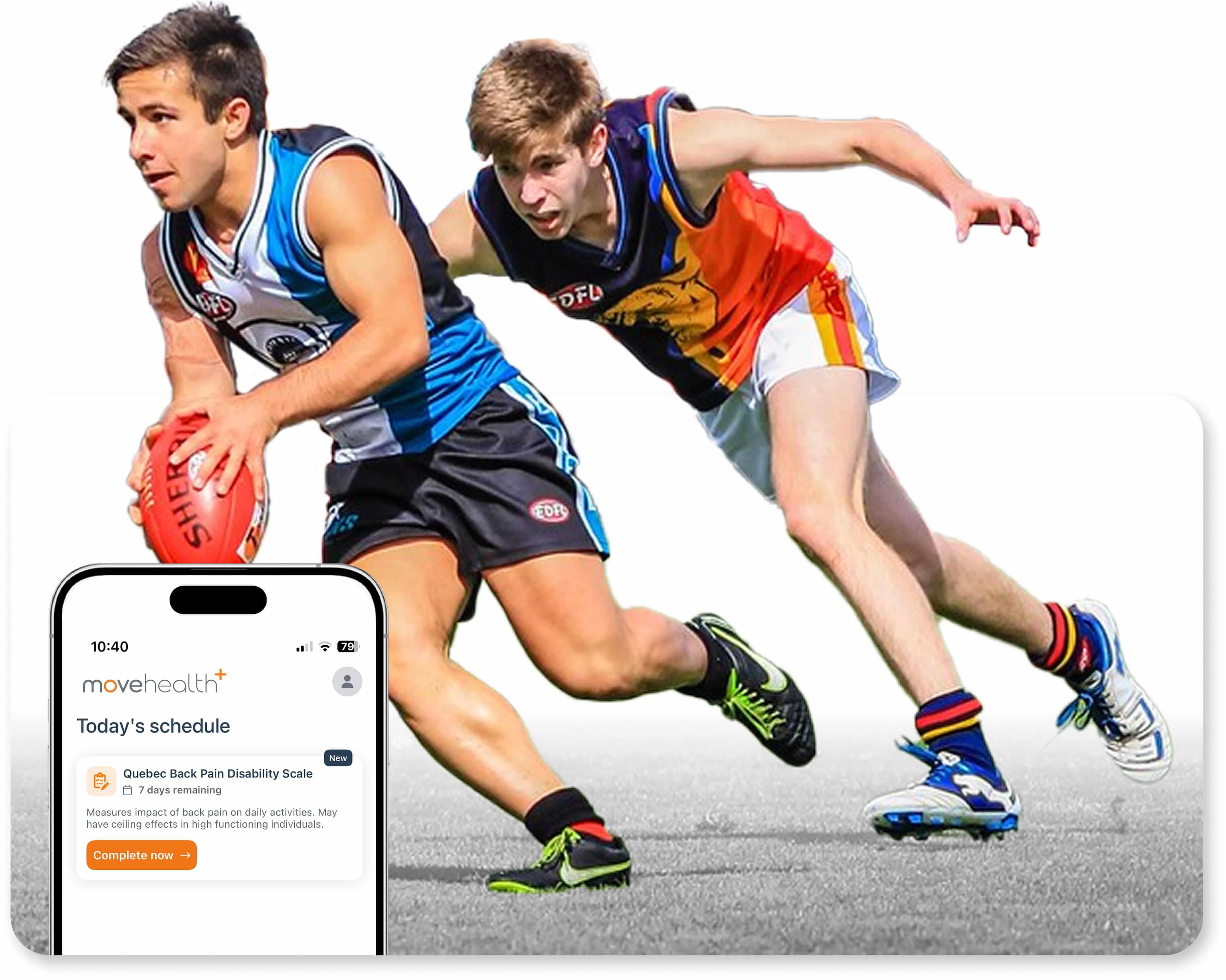
Wellness questionnaires available through MoveHealth can help track post-training recovery and injury-related trends in elite sport.
The Convergence Model
The defining feature of this framework is the requirement for convergence across domains before modifying training.
| Response | Flag Threshold | Recommended Steps |
| Monitor | One domain flagged |
|
| Modify | Two domains flagged |
|
| Immediate Investigation | Three domains flagged |
|
This framework balances sensitivity and specificity by reducing unnecessary reactions to isolated metric changes and highlighting the performance priorities most affected. Requiring similar signals across multiple independent domains improves confidence that a meaningful physiological change has occurred, helping practitioners respond to broader patterns rather than normal day-to-day variability.
This framework balances sensitivity and specificity by…highlighting the performance priorities most affected.
Practical Workflow
The framework was designed to fit within the demands of professional sport environments. A typical monitoring session may include all tests at once (e.g., a 15-minute monitoring session), or each test may be assessed at different time points throughout the week.
The goal is to identify meaningful trends that support training, recovery and availability decisions, rather than simply collecting more data. By combining neuromuscular, tissue-strength and contextual monitoring, practitioners can identify meaningful fatigue while reducing false positives, using a simple, repeatable framework that guides decisions with multiple metrics rather than a single measure.
Acknowledgments
Nick would like to acknowledge the following individuals and organizations for their contributions to this article:
Dr. Andrew Murphy, GWS Giants Football Club
Dr. Adriano Arguedas-Soley, Sydney Swans Football Club
If you are interested in learning how VALD systems can support multi-domain athlete monitoring and help your organization build a more integrated testing framework, get in touch.
References
- Shushan, T., Buchheit, M., & McLaren, S. J. (2022). Submaximal fitness tests in team sports: A theoretical framework for evaluating physiological state. Sports Medicine, 52(11), 2605–2626. https://doi.org/10.1007/s40279-022-01712-0
