Using VALD Academy to Enhance Learning in the Classroom
Available in:
EN

VALD Academy is a free online education platform that provides evidence-informed courses, ranging from basic technology implementation to expert-led Masterclasses, designed to help practitioners apply objective data more effectively across performance, rehabilitation and health settings.
Building an Environment for Applied Learning
At the University of Iceland, biomechanics is taught to students in their second year of the Sports and Health Sciences master’s program, allowing the application of technology and biomechanics to build on their baseline knowledge of anatomy, physiology and basic training. With experience across high-performance sport, research and education, my role is to help connect students’ theoretical understanding to an applied workplace environment.
By creating a teaching model that combines hands-on application in a sport science laboratory equipped with VALD systems and structured learning through VALD Academy, students become more engaged in the learning process and gain practical experience with real-world technologies.
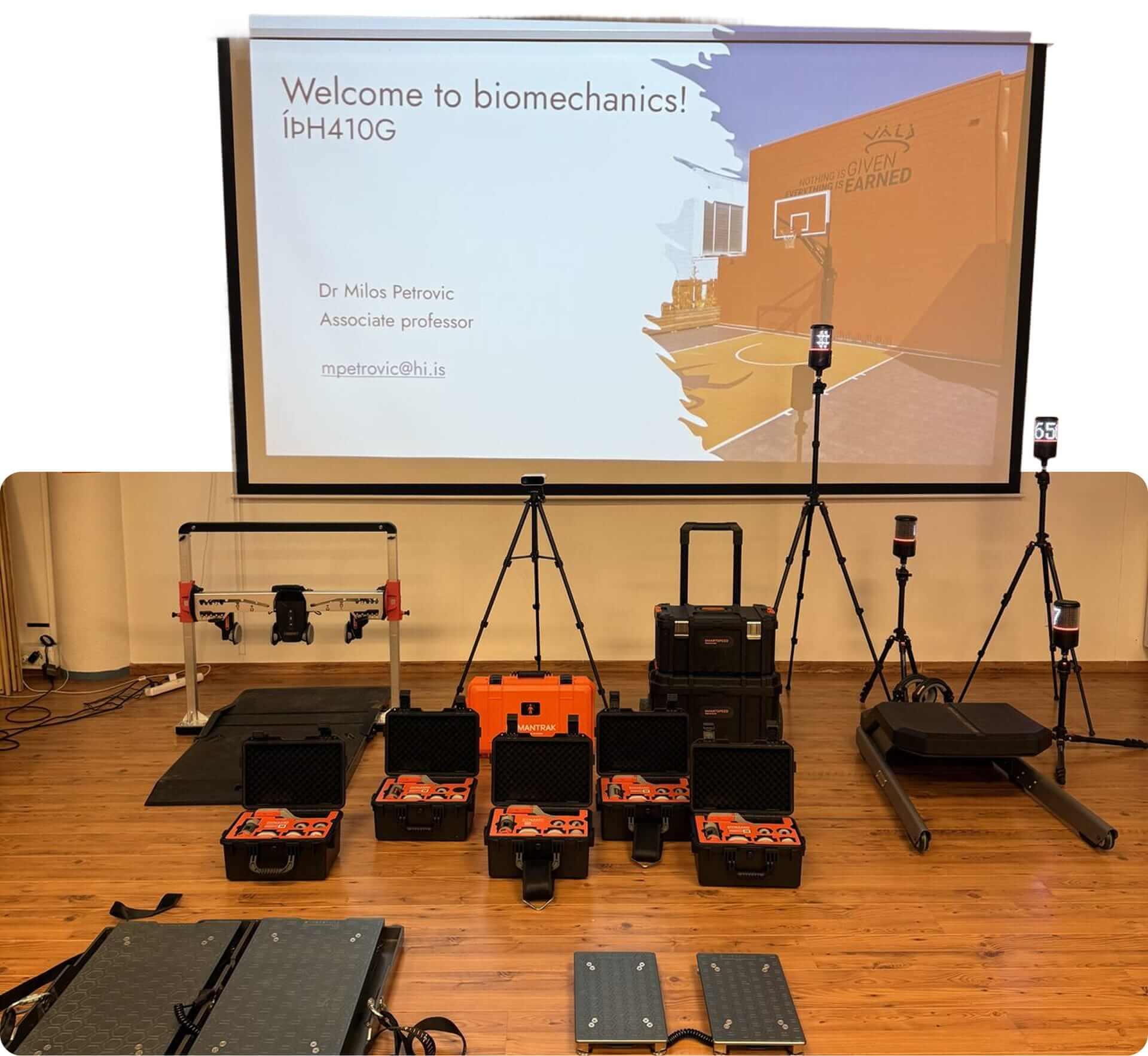
First day of the biomechanics course at the University of Iceland.
Rather than starting with equations, theory or abstract principles, we start with testing. Students test and interact with the systems before layering in the underlying biomechanics. This reverse classroom model changes how students engage with the material.
Rather than starting with equations…we start with testing. This reverse classroom model changes how students engage with the material.
Practical exposure creates the need for theory. Once students see the complexity of testing and decision-making, they are more motivated to connect their foundational knowledge to real-world application using systems such as ForceDecks, ForceFrame and NordBord.
Where VALD Academy Fits In
While in-person teaching provides the foundation, VALD Academy adds technology-specific education through structured learning that is difficult to replicate in a traditional curriculum.
With 13 mandatory VALD Academy courses integrated into the curriculum, students have access to a flexible learning format that will ultimately enhance their understanding of the benefits technology can provide in practice. Each course aligns with topics covered in class, helping students better understand concepts through varied learning formats. These courses include:
With 13 mandatory VALD Academy courses integrated into the curriculum, students have access to a flexible learning format…
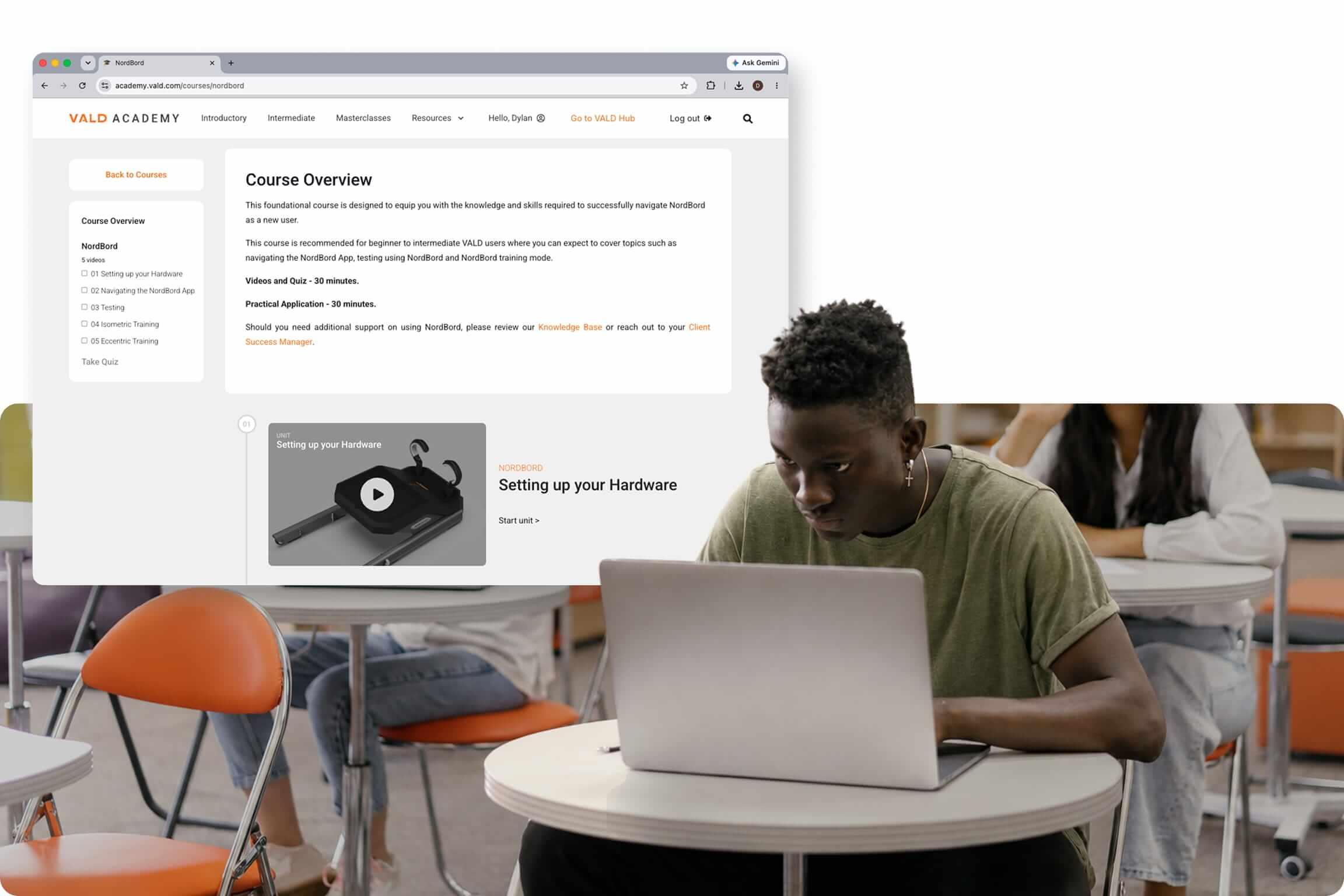
VALD Academy allows students to connect theory directly to the tools they are using. It provides structure around topics such as testing protocols, metrics and system setup – areas that are often underdeveloped in traditional coursework.
Learning Through Collaboration
A key component of this model is how students interact with the material and collaborate with each other. They are encouraged to work in groups, discuss interpretations and challenge each other’s reasoning. In many cases, they complete VALD Academy modules together by debating answers to quiz questions, revisiting concepts and cross-referencing what they observed in the laboratory.
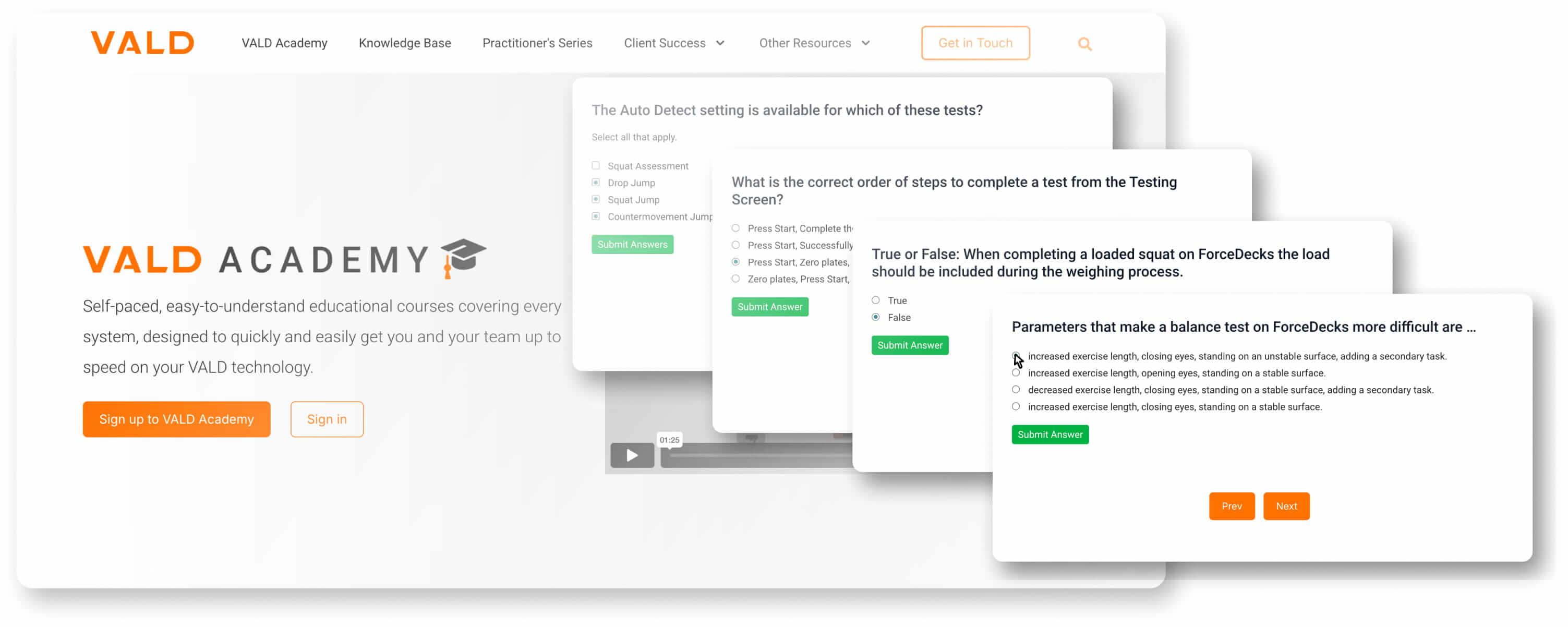
This learning environment encourages the thoughtful, collective discussion needed in applied settings. It also creates a change of pace from the academic and rote studying routines students often adopt, enhancing learning outcomes like:
- Interprofessional collaboration
- Results interpretation
- Decision justification through applied principles
This approach deliberately challenges students’ thinking strategies, ultimately building confidence in navigating systems and applying knowledge independently.
This approach deliberately challenges students’ thinking strategies, ultimately building confidence in navigating systems and applying knowledge independently.
Structured Pacing Throughout the Semester
VALD Academy courses are not assigned all at once. Instead, they are structured across the semester, with one to two modules typically assigned each week to align with in-class topics. This sequencing ensures that students first encounter each concept in a practical setting, then reinforce it through structured learning.
This [flipped classroom format] ensures that students first encounter each concept in a practical setting, then reinforce it through structured learning.
For example, after covering force plate assessments in class, students were assigned ForceDecks modules, such as Popular ForceDecks Tests and Understanding Popular Metrics, the following week. A similar approach was used when progressing into isometric testing, where NordBord content supported what had already been introduced in the laboratory.
With VALD Academy as a supplemental learning resource, students can learn how to apply specific metrics such as force, power, impulse, asymmetry, rate of force development and reactive strength index to relevant populations.
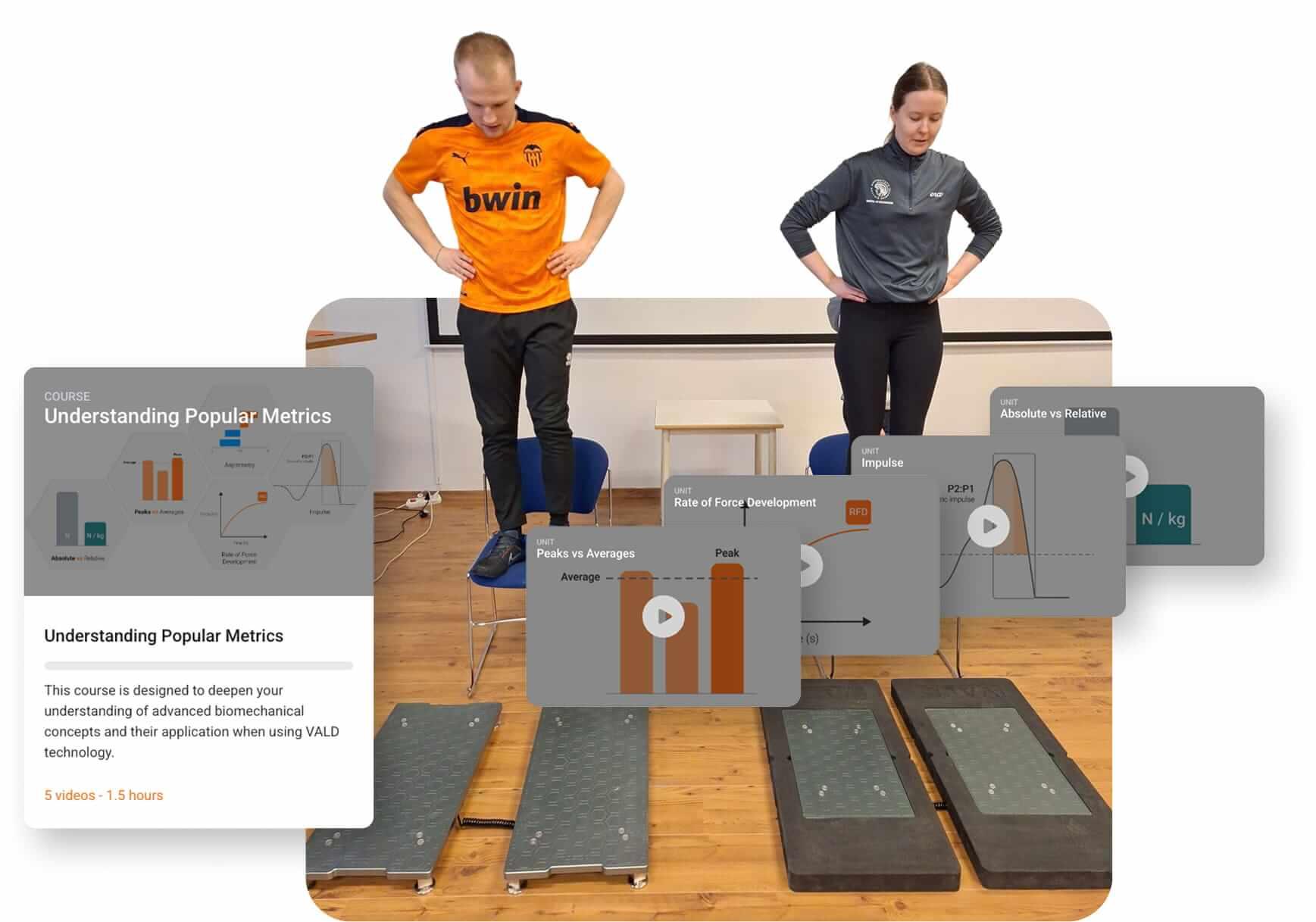
Students applying course concepts during testing.
By aligning modules with hands-on exposure, students engage with concepts in an applied, technology-informed way while they are still fresh, strengthening understanding and improving retention.
Creating Opportunities Beyond the Classroom
One of the clearest outcomes of this approach is its impact on employability, as students graduate with:
- Practical experience using multiple performance systems
- Certifications that demonstrate competency
- Experience interpreting and communicating data
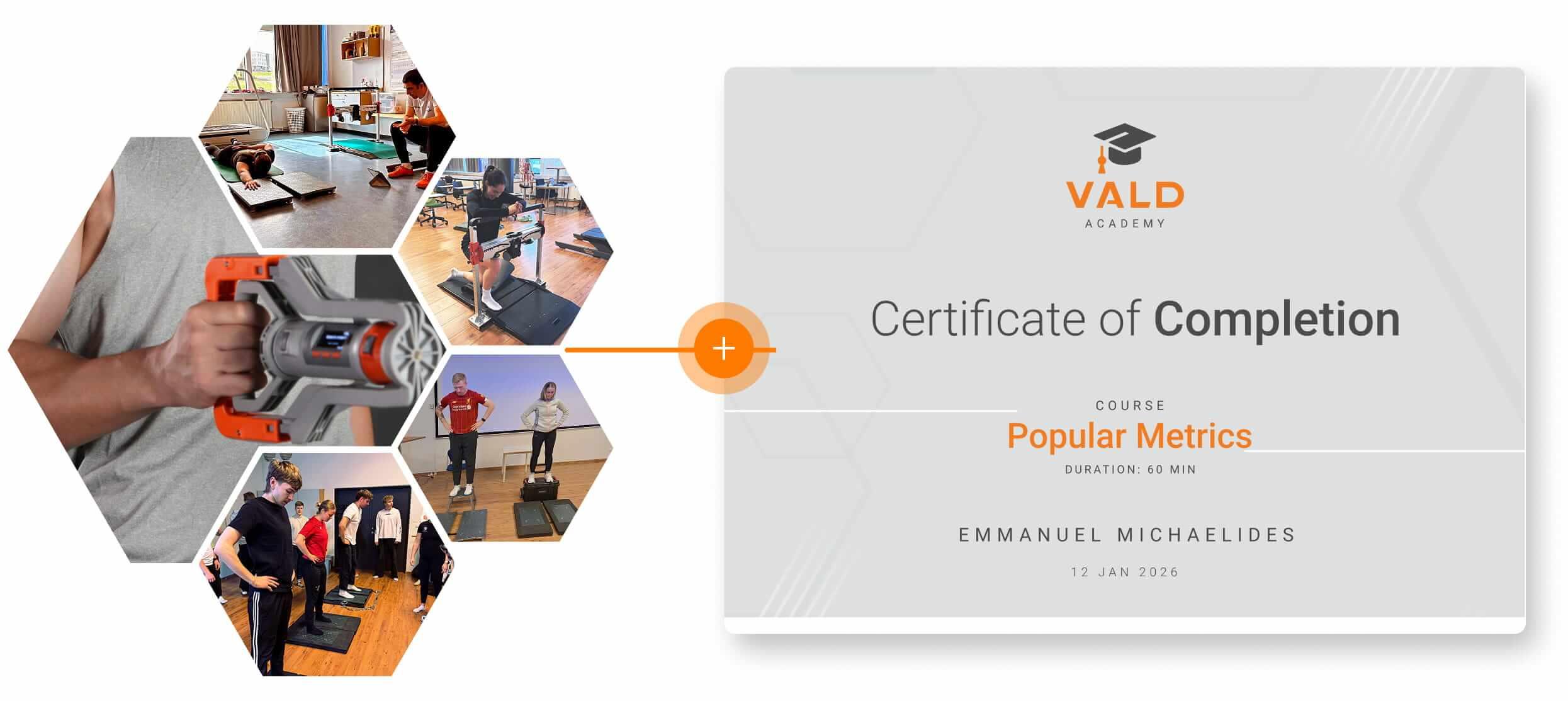
This combination has led to increased opportunities within applied settings. Many former students have accepted roles across clubs, gyms and performance environments throughout Iceland.
The student network has also created a feedback loop. As more facilities adopt VALD systems, we are able to connect current students with previous graduates working in those settings. This has supported internships, placements and early-career opportunities.
As more facilities adopt VALD systems, we are able to connect current students with previous graduates working in those settings …[supporting] internships, placements and early-career opportunities.
These “full circle” moments reinforce the value of applied learning. Students are not only prepared for these environments – they are already familiar with the systems being used.
An Applied Model for Sport Science Education
This learning model more closely reflects the demands of modern sport science roles, where collecting data is only one part of the process.
Students are expected to interpret outputs, communicate findings and use that information to inform decisions. Throughout the course, this reinforces a central principle: data should not be viewed in isolation, but understood within the broader context of the athlete, the task and the environment.
Take-Home Points
Sport science education can evolve when application is prioritized alongside theory. By incorporating VALD systems and VALD Academy into the curriculum, educational programs can create a learning environment that emphasizes practical application, critical thinking and preparation for real-world clinical and performance settings.
The impact extends beyond the classroom, with students entering applied settings with experience, confidence and familiarity with the tools they will use in practice. Rather than replacing traditional education, this model builds on foundational knowledge and strengthens the ability to apply it, helping to bridge the gap between understanding and execution.
If you would like to learn more about how VALD technology and VALD Academy can support hands-on learning in educational settings, get in touch with our team.
