Lachlan James is an associate professor of sport science at La Trobe University and the founder of ForceLab Strength Science Solutions, with over 80 peer-reviewed publications in strength science.
Lachlan JamesPhD
Available in:
EN
Lachlan James is an associate professor of sport science at La Trobe University and the founder of ForceLab Strength Science Solutions, with over 80 peer-reviewed publications in strength science.

Lachlan James is an associate professor of sport science at La Trobe University and the founder of ForceLab Strength Science Solutions, with over 80 peer-reviewed publications in strength science.
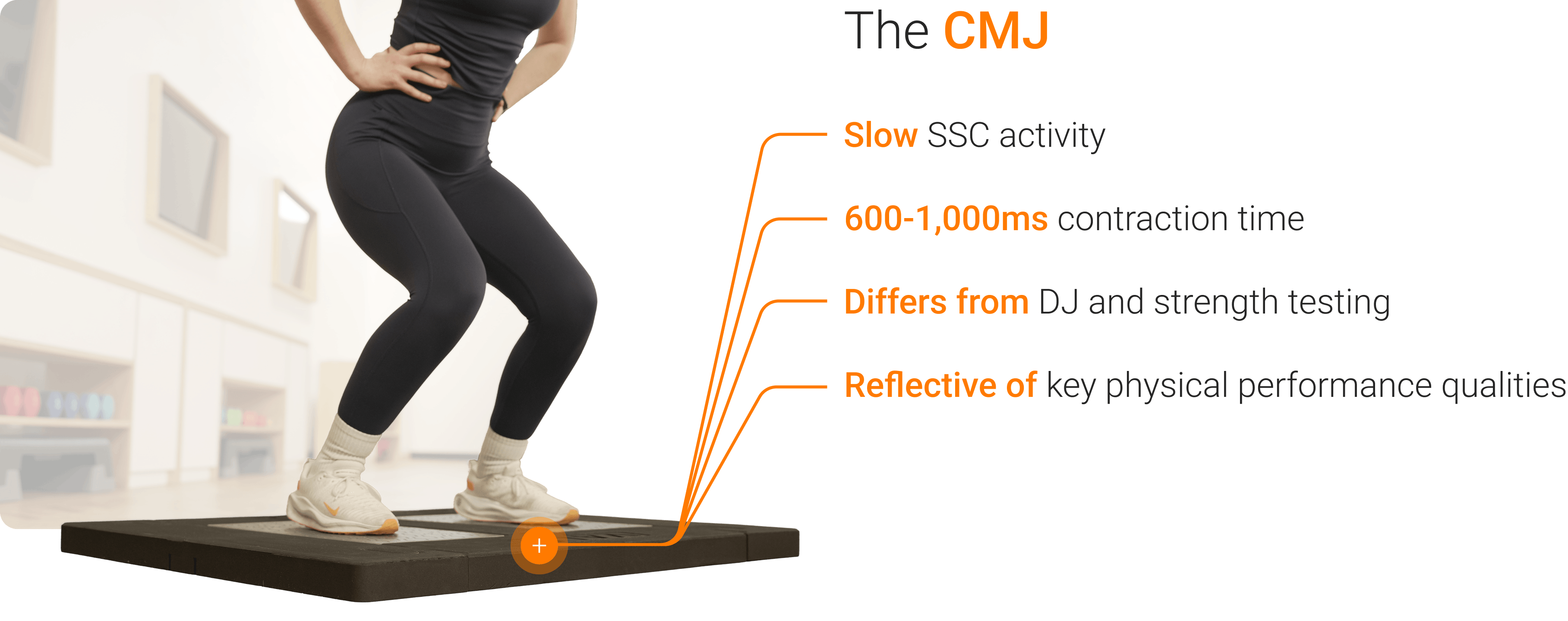
The countermovement jump (CMJ) is the most widely used ballistic test of maximal neuromuscular function. It is a slow stretch-shortening cycle (SSC) action, with contraction time usually sitting between 600 and 1,000ms, which distinguishes it from reactive tasks such as the drop jump (DJ), which are constrained to ground contact times below 250ms.
The greater the added external load on the performer or the less time available to produce force, the more a test differs from the CMJ (James et al., 2023). For example, a squat jump or a depth jump for maximal height is statistically very similar to the CMJ because the movement time is not constrained and the added external load is low or absent. However, as more load is added, the test becomes increasingly different from the CMJ, to the point where performance in a one-, three- or five-repetition maximum (1RM, 3RM or 5RM) test explains only about 30% of CMJ performance.
The greater the added external load on the performer or the less time available to produce force, the more a test differs from the CMJ.
A similar differentiation occurs across the time axis. In a DJ, the time available to produce force is a fraction of that available in a CMJ, and DJ performance explains only about 35% of CMJ performance. A strong maximal strength or DJ score does not indicate high CMJ results, which is why the jump earns its own place in a testing battery.
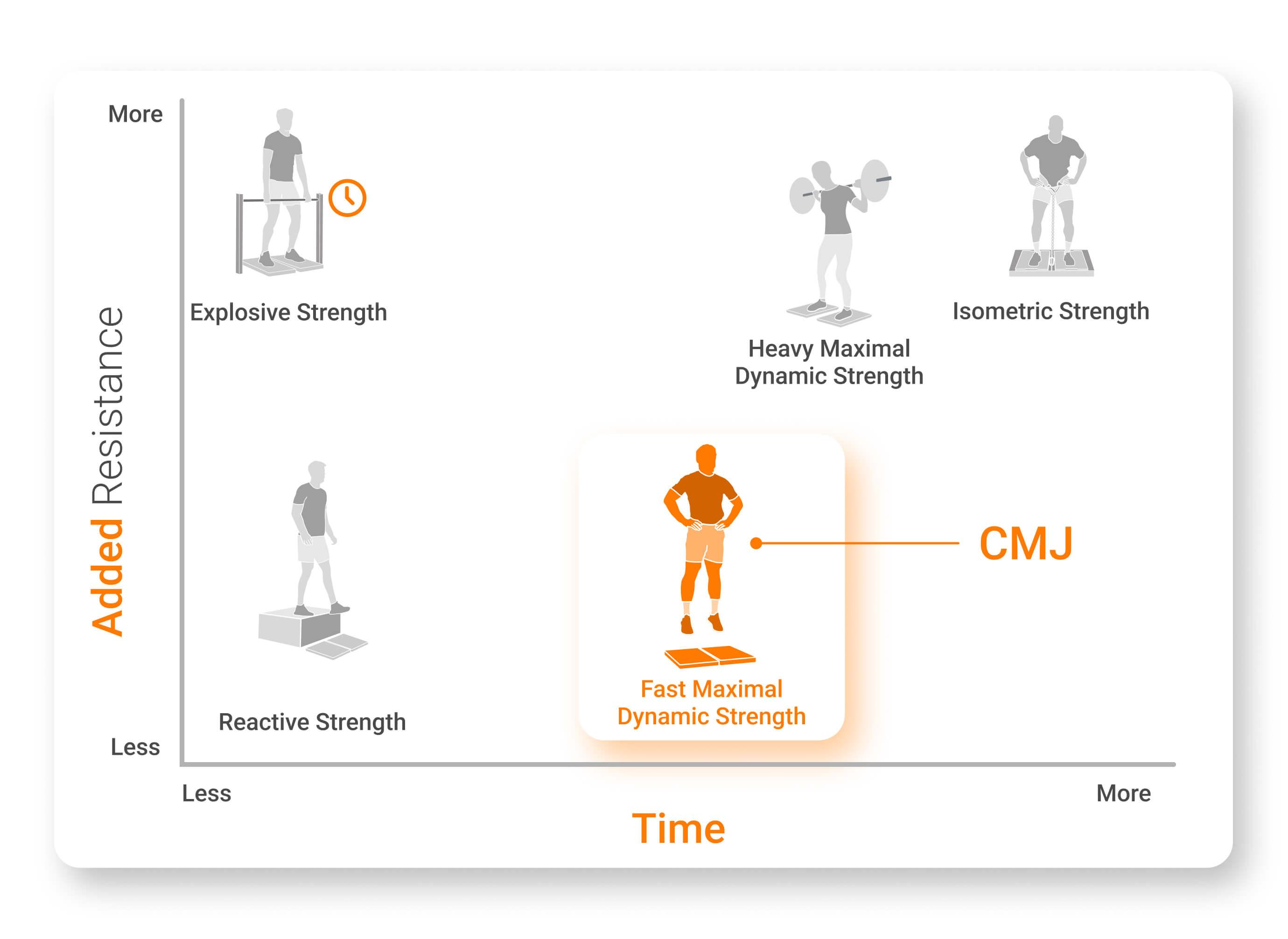
The CMJ within a strength continuum.
If a testing battery has room for only one test, the CMJ is the strongest candidate because it serves a wide range of purposes within the training process. Measures such as jump height, peak power and eccentric peak velocity (EPV) distinguish higher- from lower-tier athletes across a range of sports. The CMJ is also sensitive to training-induced adaptations and tracks acute changes in fatigue state.
If a testing battery has room for only one test, the CMJ is the strongest candidate because it serves a wide range of purposes within the training process.
So, which CMJ measures should you use and in what context? A helpful starting point is that the CMJ returns the same handful of meaningful components (i.e., clusters of variables) regardless of what you use it for, whether for profiling, quantifying adaptation or monitoring fatigue.
Three to four independent components account for the bulk of the variance in the jump. These components can each represent a category that organizes every CMJ variable worth reporting:
Each captures something the others do not, so a good selection samples across them rather than stacking several measures from one.
Practitioners, performance managers and coaches already juggle a large volume of data. Every CMJ variable added draws attention away from other measures that might say something unique about an athlete’s state. That cost changes the question worth asking. What matters is how important the CMJ is relative to everything else in the environment, and that relative importance sets the level of granularity.
What matters is how important the CMJ is relative to everything else in the environment, and that relative importance sets the level of granularity.
The more important the test, the more detail is worth collecting, because detail gives a clearer picture of what is driving the result. If the test does not warrant the focus, the extra variables are not worth the attention they consume. Where the CMJ is a priority within a validated performance model, the details of the jump are worth exploring.
Here, it can be appropriate to build a detailed read of the force-time record using the following:
That picture shows exactly how the jump was produced, and the interpretive load is justified in these specific cases.

In most cases, two or three measures are more than enough, leaving attention spare for the other tests and outputs competing for it (James et al., 2021). Two reads follow from this. A lean read covers the jump with the smallest set of variables that still samples across the categories and suits a test sitting alongside many others in the battery. A granular read adds the phase-level detail and carries its interpretive load only where the CMJ is a priority in the performance model.
Matching the depth of analysis to the importance of the test is a coaching judgment, and it sits with the practitioner. The same categories organize the choice either way:
| Selection Category | What it Captures | Lean Read | Granular Read |
| Output | The overall result of the jump | Jump height or takeoff velocity | Not needed |
| Force Magnitude | How much force is produced | – | Eccentric and concentric mean force |
| Timing | How long the action and its phases take | Contraction time | Braking and concentric phase durations |
| Countermovement | How the athlete loads into the jump | Countermovement depth (CMD) | CMD and EPV |
This is where the platform matters. ForceDecks reports the full range of these variables and does not make the selection call for you.
Measurement reliability is well established on validated systems. The greater problems with the CMJ lie in interpretation and metric selection, with three recurring challenges:
| Challenge | Outcome | Solution |
| Granularity Mismatched to Importance | A high-priority test read too thinly or a low-priority test analyzed too deeply misallocates limited attention. | Set the test’s priority in the battery first, then scale the number of measures to it. |
| Redundancy Mistaken for Breadth | Several variables from the same category create the impression of a fuller picture than they provide. | Spread the selection across categories rather than stack variables from a single category. |
| Population and Season Drift | The way variables relate can shift by population and time of season. | Recheck your chosen measures locally and periodically. |
Training adaptations are specific to task demands. Movements performed with the goal of producing maximal velocity at takeoff or release, driven through the same triple-extension pattern, transfer most to the CMJ. These ballistic tasks include jump squats and weightlifting derivatives across a range of loading conditions.
Movements performed with the goal of producing maximal velocity at takeoff or release, driven through the same triple-extension pattern, transfer most to the CMJ.
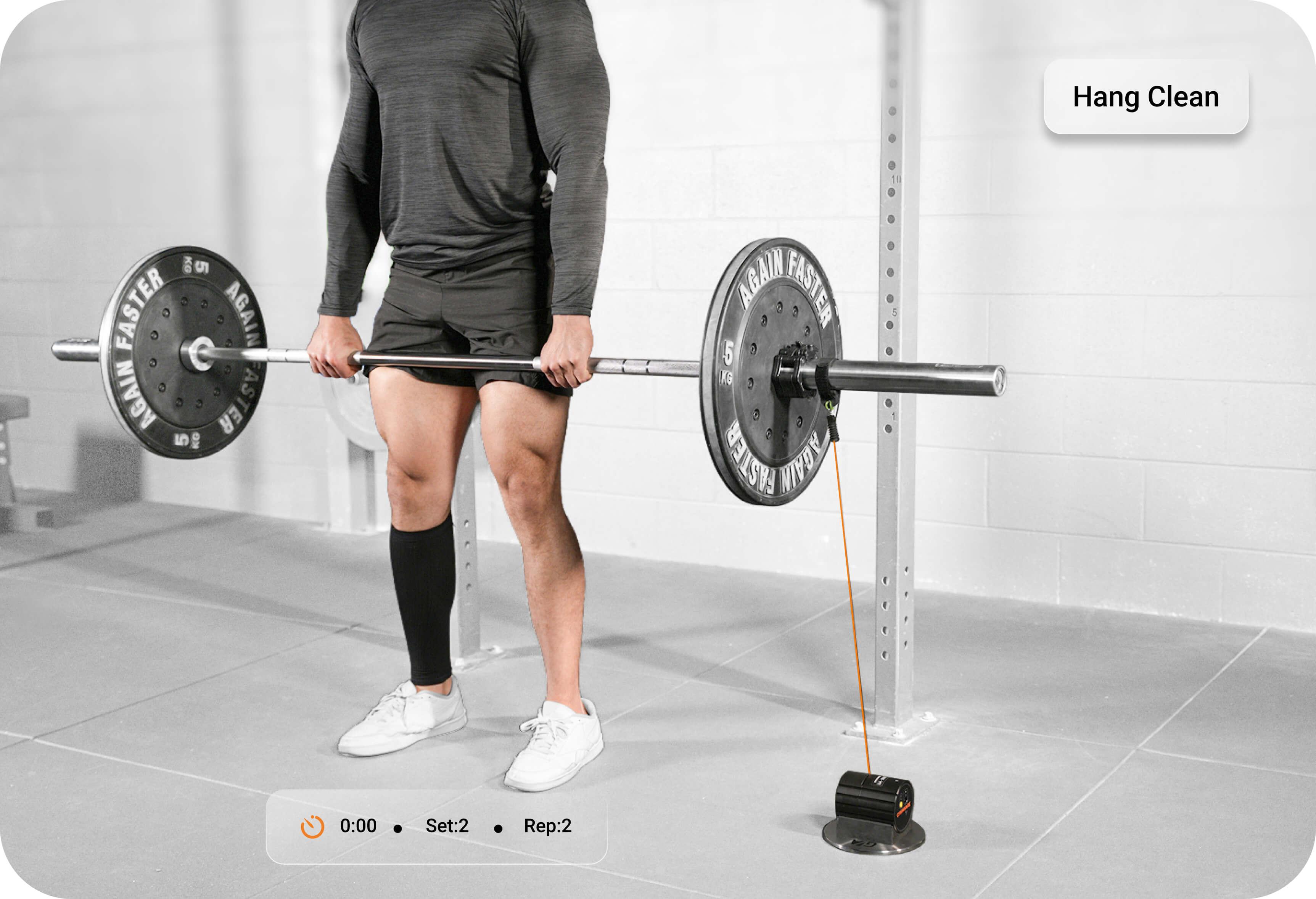
High-velocity triple-extension lifts, such as the hang clean, carry over very well to CMJ performance, and practitioners can amplify training outcomes using velocity-based training devices like GymAware.
Heavy dynamic strength training also transfers to the CMJ, with the effect most pronounced in weaker athletes. In the early months, it can produce transfer that matches or exceeds ballistic work alone. Removing the heavy stimulus for multiple weeks erodes the strength base that supports the jump; therefore, the heavy stimulus should remain in the program once ballistic work is emphasized.
The CMJ is a ballistic, slow SSC test of maximal neuromuscular function. It becomes less like other tests as load is added or as the time available to produce force is cut, to the point where 1RM, 3RM and 5RM tests explain around 30% of CMJ performance and a DJ around 35%. That separation is why the jump holds its own place in a battery rather than serving as a proxy for heavier or faster tests.
Regardless of the purpose of testing, the CMJ is represented by the same three or four meaningful components, so the useful question is how important the test is relative to everything else being measured. That importance sets the level of granularity. For most purposes, an output measure, an overall timing measure and a countermovement descriptor are enough, and the fuller force-time breakdown is reserved for when the jump is a validated priority. ForceDecks reports the full range, and the selection is up to the practitioner.
Training that raises CMJ performance is ballistic and specific, built on jump squats and weightlifting derivatives performed for maximal velocity at release across a range of loads. Reactive, short-contact work transfers little to the slower jump. Heavy strength transfers more, particularly in weaker athletes, and a strength base is worth holding onto even once ballistic work takes over.
To learn how VALD systems can help you measure, monitor and interpret the CMJ, get in touch with our team.

Copyright © 2026 VALD Performance
.
All Rights Reserved |
Privacy Policy