My Dashboard: Alex Natera
Available in:
EN
My Dashboard is a series featuring insights from health and performance experts on the tests and metrics they use to identify performance and rehabilitation deficits. Each article includes an optimized VALD Hub dashboard outlining key tests, metrics and training interventions to help practitioners better integrate testing data into practice.
Contributor

Athlete Profile
Sprinting places significant demands on the lower extremities, contributing to the high incidence of hamstring strains and Achilles tendinopathy in track and field athletes. Short-distance events (200m and under) involve repeated, high-intensity efforts across all phases of sprinting – including block starts, early acceleration, maximal velocity and top-speed maintenance – each imposing distinct mechanical and neuromuscular demands that must be addressed in both performance and rehabilitation.
[Sprints] involve repeated, high-intensity efforts across all phases of sprinting…each imposing distinct…demands that must be addressed in both performance and rehabilitation.
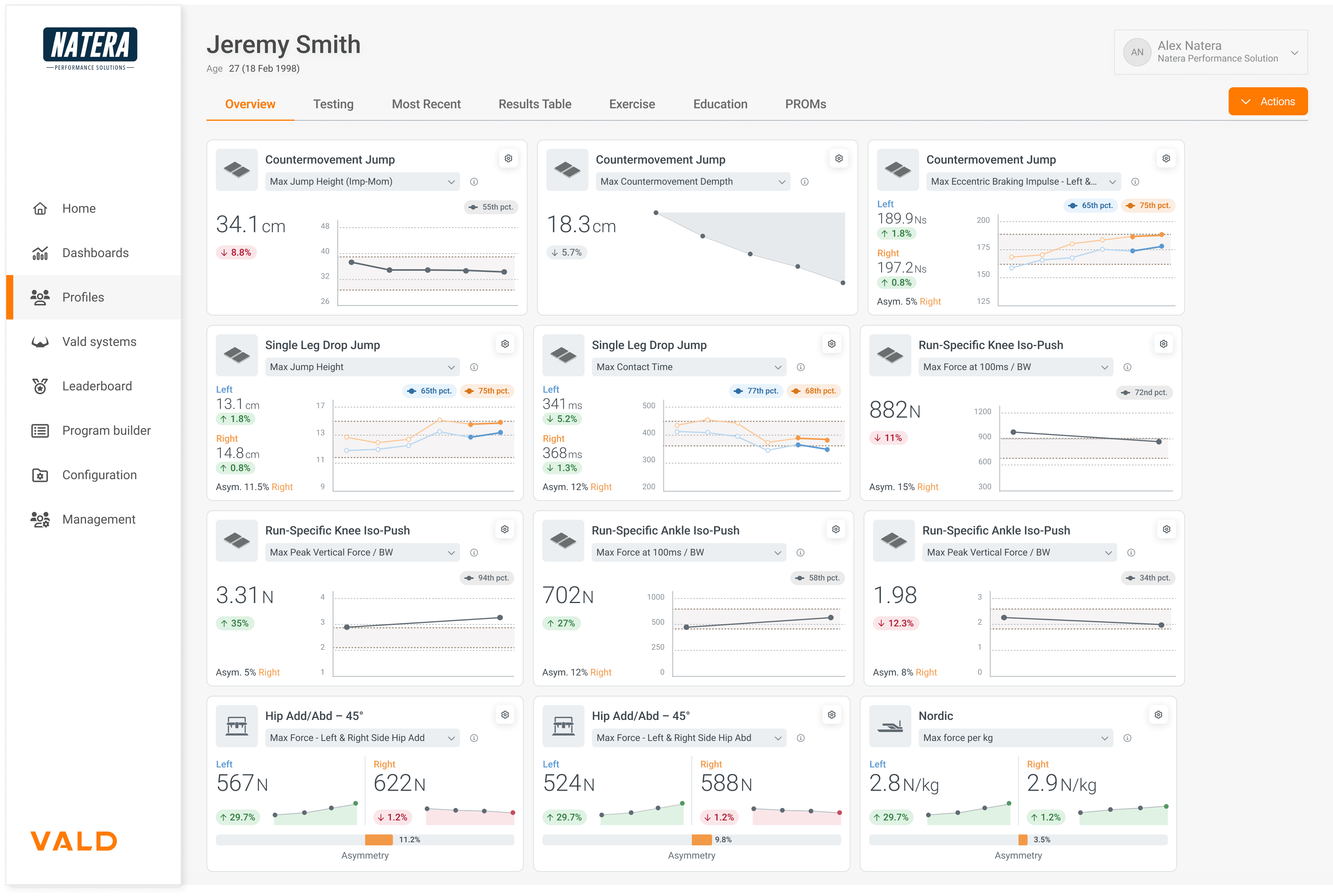
Alex Natera’s VALD Hub dashboard highlighting the tests and metrics he commonly uses to assess sprinting athletes.
Overview
This dashboard captures force-time qualities across the full spectrum of sprint performance. Each test provides a specific lens into output, strategy or tissue capacity, creating a repeatable system for day-to-day monitoring and long-term development.
Countermovement Jump (CMJ)

| Test | Metric | Exercise Prescription for Improvement |
 | Jump Height (Impulse-Momentum [Imp-Mom]) |
|
| Countermovement Depth |
| |
| Contraction Time |
| |
| Eccentric Braking Impulse |
|
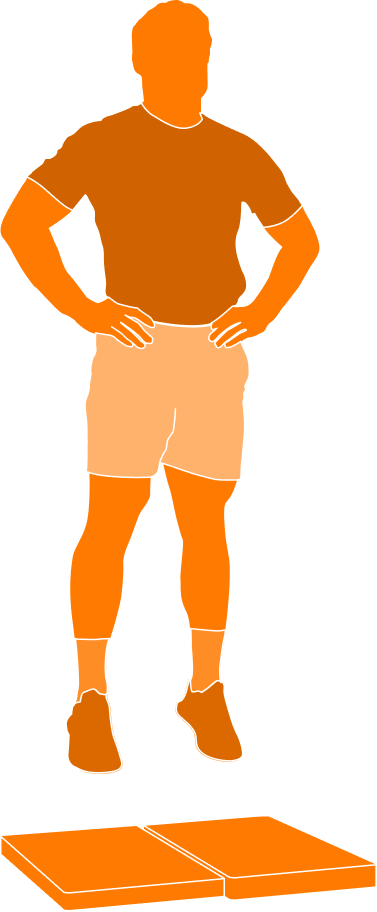
The CMJ provides a global view of neuromuscular performance, combining both output and strategy information. Jump height reflects overall lower extremity power, while countermovement depth and contraction time provide insight into jump strategy. Braking impulse introduces an eccentric component that gives practitioners insight into an athlete’s high-speed braking ability, helping differentiate true performance changes from strategy shifts.
The CMJ provides a global view of neuromuscular performance, combining both output and strategy information.
Training prescriptions often follow a phase-specific approach, in which interventions are selected based on deficits observed in specific phases of the CMJ: eccentric (unloading, yielding, braking, deceleration), concentric (phase 1, phase 2), flight and landing.
Single Leg Drop Jump (SLDJ) – 30cm
| Test | Metric | Exercise Prescription for Improvement |
 | Jump Height (Imp-Mom) |
|
| Contact Time |
|
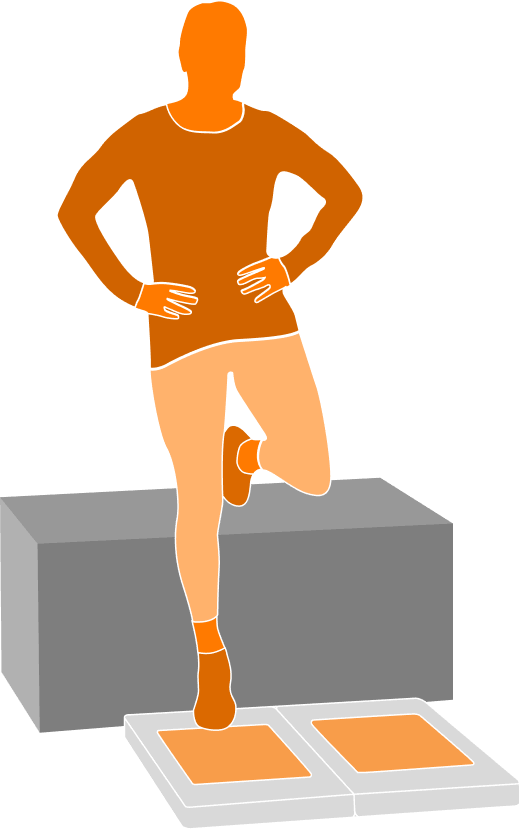
Metrics such as jump height and contact time from the SLDJ provide a clear, consistent measure of lower-limb reactive strength. This quality underpins maximal velocity running, as the ability to store and release kinetic energy is often a limiting factor in sprint performance.
Contact time during the SLDJ adds essential context about the athlete’s jumping strategy, indicating whether a quick or slow ground contact was required to achieve their jump height. A 30cm drop height is used because it requires advanced levels of reactive strength. Therefore, changes in elite track and field athletes’ contact times are sensitive measures, indicative of underlying physical changes.
Contact time during the SLDJ adds essential context about the athlete’s jumping strategy, indicating whether a quick or slow ground contact was required to achieve their jump height.
Training prescriptions often include plyometric and isometric variations to maximize systemic and tissue-specific stiffness.
Run-Specific Isometric Strength Tests (RSIST) Knee and Ankle
| Test | Metric | Exercise Prescription for Improvement |
 | Peak Vertical Force / Body Mass (BM) (N/kg) |
|
| Force at 100ms / BM (N/kg) |
|
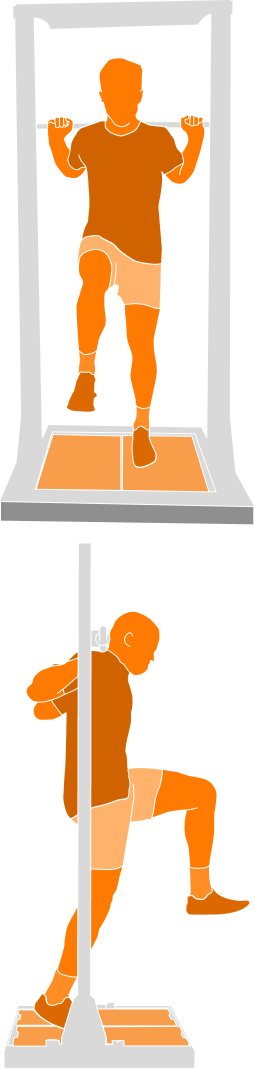
The RSIST evaluates the knee and ankle’s maximal and rapid force-production abilities relative to BM. Peak force provides a clear measure of overall ankle and knee strength, while force at 100ms mirrors the time constraints of maximal velocity ground contacts. These metrics help determine whether the athlete has both the capacity and rate qualities needed for top-end speed.
These metrics help determine whether the athlete has both the capacity and rate qualities needed for top-end speed.
Training interventions typically target the same two qualities identified in testing: capacity and rate. Based on RSIST results, practitioners can make simple adjustments to exercise intent and cueing to emphasize either maximal force output or rapid force expression, often without changing the exercise selection itself.
45° Adductor and Abductor Strength

| Test | Metric | Exercise Prescription for Improvement |
 | Adduction Max Force / BM (N/kg) |
|
| Abduction Max Force / BM (N/kg) |
|
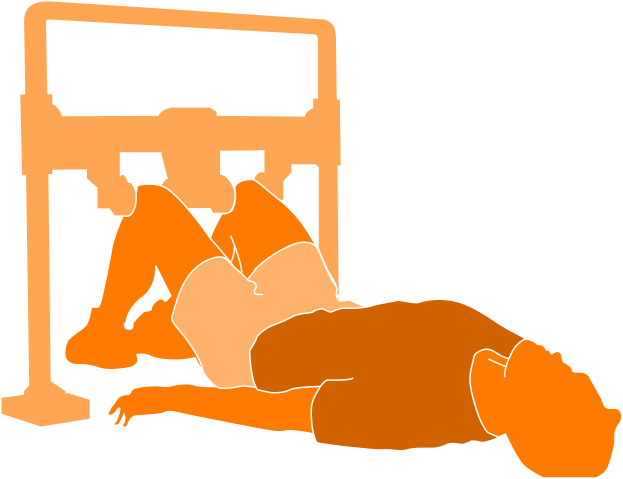
The adductor magnus contributes substantially to maximal velocity sprinting mechanics, making the 45° adductor squeeze a valuable tool for weekly monitoring. Tracking relative strength and how it is affected by aggravating symptoms helps guide load decisions, especially during high-intensity loading periods. Paired abductor testing allows practitioners to highlight potential imbalances or compensatory patterns within the hip musculature.
Tracking relative strength and how it is affected by aggravating symptoms helps guide load decisions, especially during high-intensity loading periods.
Training interventions often combine isolated loads, such as Copenhagen side planks or load-prescribed isometrics (e.g., ForceFrame Training Mode), with dynamic tasks like deadlifts and lunges to maximize peak force and force application.
Nordic

| Test | Metric | Exercise Prescription for Improvement |
 | Nordic Max Force / BM (N/kg) |
|
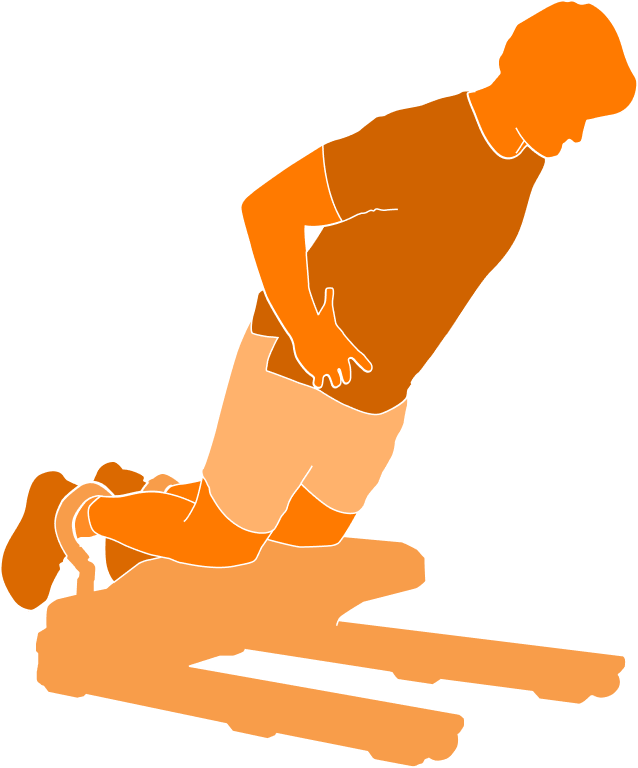
The Nordic test provides a direct assessment of eccentric knee-flexor strength, a critical quality for sprinting, deceleration and hamstring injury resilience. Nordic max force per kilogram reflects the athlete’s overall eccentric capacity relative to BM and contextualizes performance by accounting for individual load demands during the test.
Nordic max force per kilogram…contextualizes performance by accounting for individual load demands during the test.
Nordic training interventions can be optimized through NordBord Training Mode to ensure sufficient loads are achieved within allowable asymmetry thresholds. Similarly, gym-based interventions like leg curls and RDLs can help to augment hamstring strengthening.
How These Tests Integrate
When combined, these assessments create a map of sprint performance qualities. CMJ metrics establish the athlete’s overarching neuromuscular profile, showing whether changes reflect genuine power shifts or alterations in strategy. This context helps inform the interpretation of more granular, joint-level assessments.
[The CMJ] helps inform the interpretation of more granular, joint-level assessments.
The SLDJ and RSIST inform maximal-velocity performance, linking reactive ankle function with underlying force capacity. When increases in jump height and decreases in contact time during the SLDJ align with improvements in RSIST peak and rapid force metrics, practitioners gain a clear signal that the athlete is prepared for high-speed, high-rate loading.
The adductor-abductor and Nordic assessments sit alongside this system as tissue-specific checks, ensuring the musculature supporting high-speed mechanics can tolerate the demands of maximal-velocity sprinting.
Together, these tests provide a cohesive, repeatable framework that connects neuromuscular readiness, force expression and tissue capacity to the distinct phases of sprinting – enabling targeted interventions and confident day-to-day decision-making.
Interested in building your own dashboard or applying similar methods to sprint profiling and rehabilitation? Get in touch with our team.
