How PLNU Is Shaping the Future of Strength and Conditioning Education
Available in:
EN
About the Author
Dr. Antonio Squillante is an Assistant Professor of Kinesiology at Point Loma Nazarene University (PLNU) and Head of Performance and Training for the Sprint Program at USA Track Cycling. He is also a member of the Board of Directors for the National Strength and Conditioning Association (NSCA). With over a decade of experience, he has coached athletes at both national and international levels.
Inside PLNU’s Graduate Strength and Conditioning Program
As a newly accredited NSCA CASCE institution, PLNU is committed to advancing education in the field of strength and conditioning, and technology has become an integral part of the continued development of our academic curriculum.
Within the graduate strength and conditioning program, we have deliberately built a framework that emphasizes the use of objective data to guide decision-making across multiple domains of performance. This includes program design, injury monitoring and athlete testing.
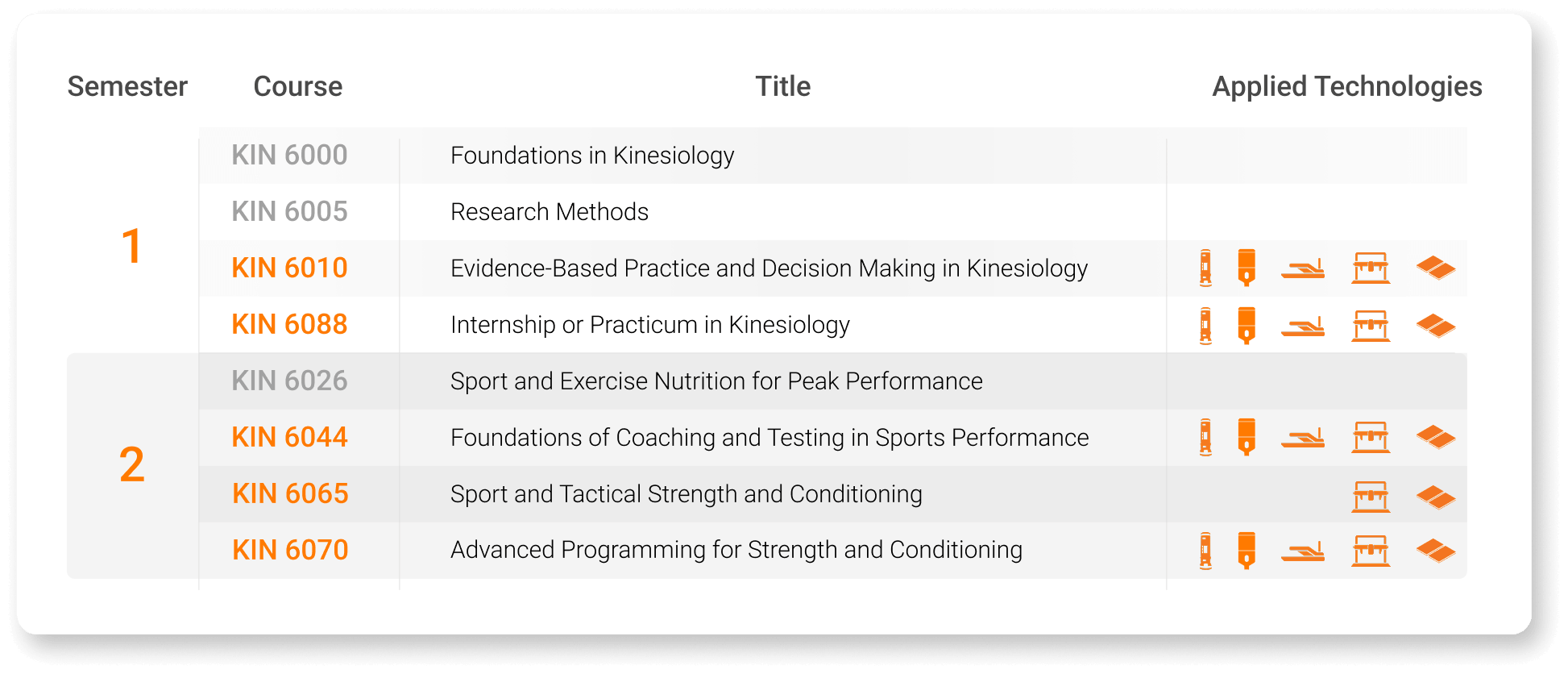
Our approach brings together sport science, biomechanics, physiology, statistics and even software engineering into a more cohesive learning experience, despite these domains often being taught separately in academic curricula.
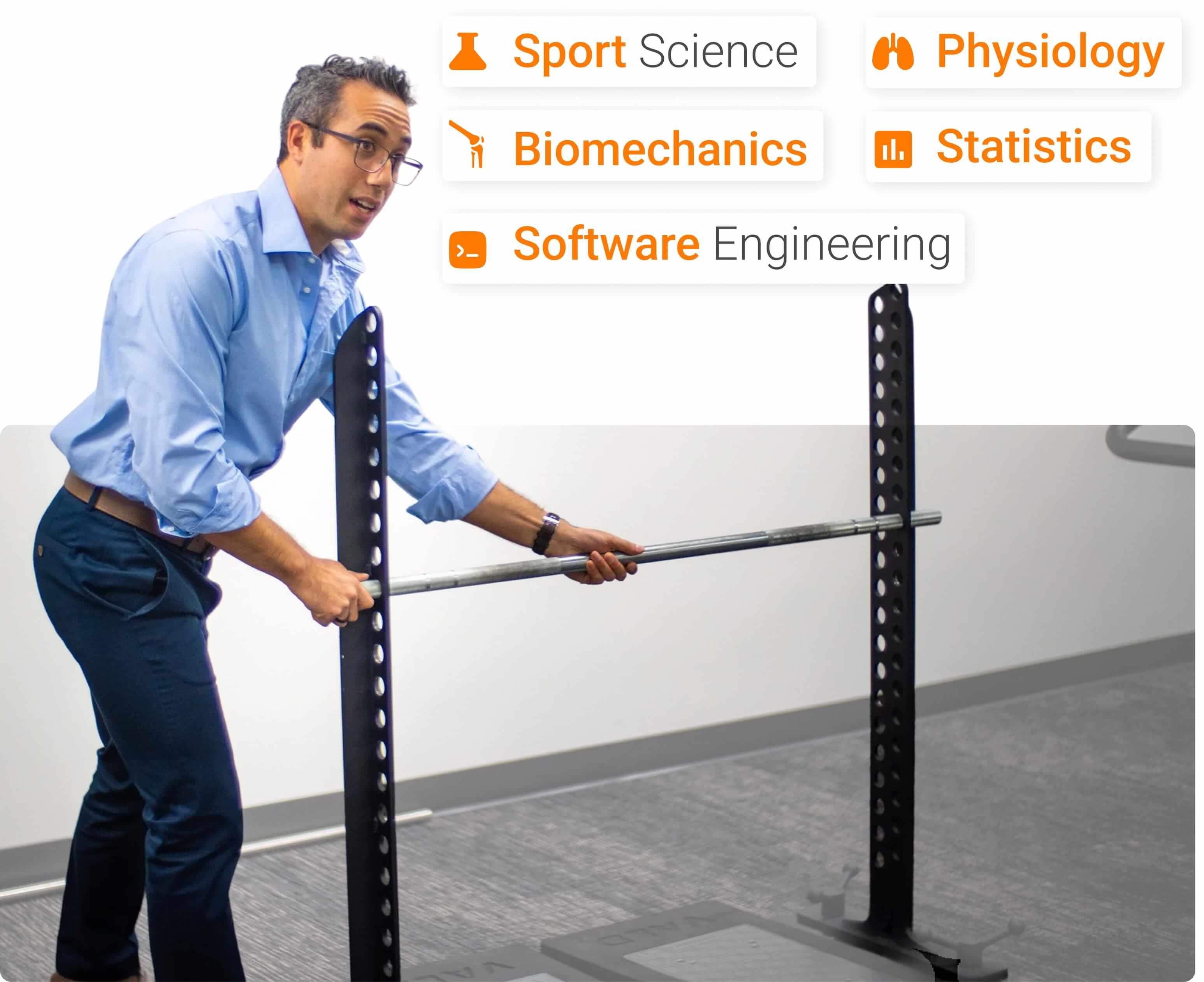
Dr. Jacob Goodin demonstrating the use of ForceDecks to a group of students.
Throughout this program, our goal is to develop practitioners who can critically interpret data and apply it in real-world performance settings. With the profession increasingly integrating objective measurement technologies into practice, the program is structured to ensure students are prepared to confidently use and interpret these tools in modern performance environments.
…the [PLNU] program is structured to ensure students are prepared to confidently use and interpret [technology] in modern performance environments.
Faculty must balance academic rigor with practical skill development, ensuring students can apply standardized, repeatable methods in real settings. In this context, VALD technology, particularly ForceDecks, has been instrumental in helping us achieve that balance.
Starting With the Fundamentals
We introduce force plate technology in the very first semester, within Evidence-Based Practice (KIN 6010). At this stage, the focus is on foundational principles of data collection and interpretation. Students are introduced to key concepts such as validity, reliability and measurement error, alongside practical considerations for collecting objective performance data in applied settings.
For example, Week 4: Validity and Reliability is built entirely around strength testing and force plate assessments. This gives students a practical framework to become familiar with basic standard operating procedures and commonly used terminology.
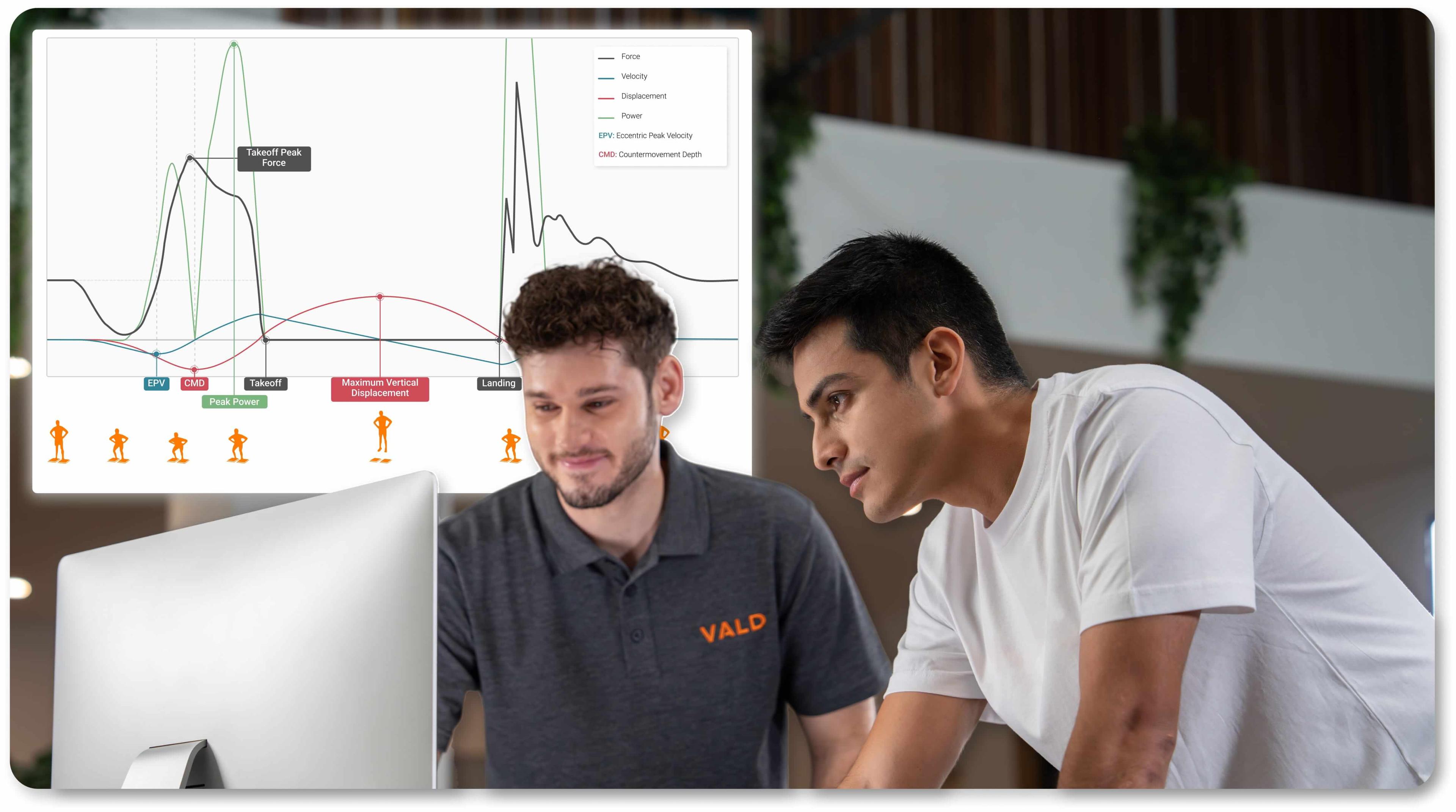
Students learn basic terminology and waveforms from ForceDecks outputs.
ForceDecks is particularly useful in this setting because it allows students to view raw force-time data alongside key calculated metrics in one place. This helps reinforce the importance of standardized testing procedures and gives students a clearer understanding of how data collection influences the outputs they ultimately interpret.
ForceDecks is particularly useful in [education] because it allows students to view raw force-time data alongside key calculated metrics in one place.
Rather than treating metrics as isolated values, students can see how they are derived from the underlying signal and begin to identify where error or inconsistency may occur.
Having key kinetic data displayed simultaneously also improves the learning process. Students can move directly from inspecting force-time curves to interpreting the metrics that come from them, helping build a more practical understanding of how objective data should be collected, reviewed and applied.
Teaching Students What “Meaningful Change” Actually Means
During the first semester, students learn to interpret basic measures of variability and measurement error, including coefficient of variation (CV), standard deviation (SD) and standard error of measurement (SEM). These concepts are essential for understanding whether a change in performance is likely to be meaningful or simply part of normal variation.
This is also where technology becomes especially useful. For example, platforms such as VALD Hub display variability metrics like CVs alongside performance data, helping students connect statistical concepts to the way objective testing is interpreted in practice.
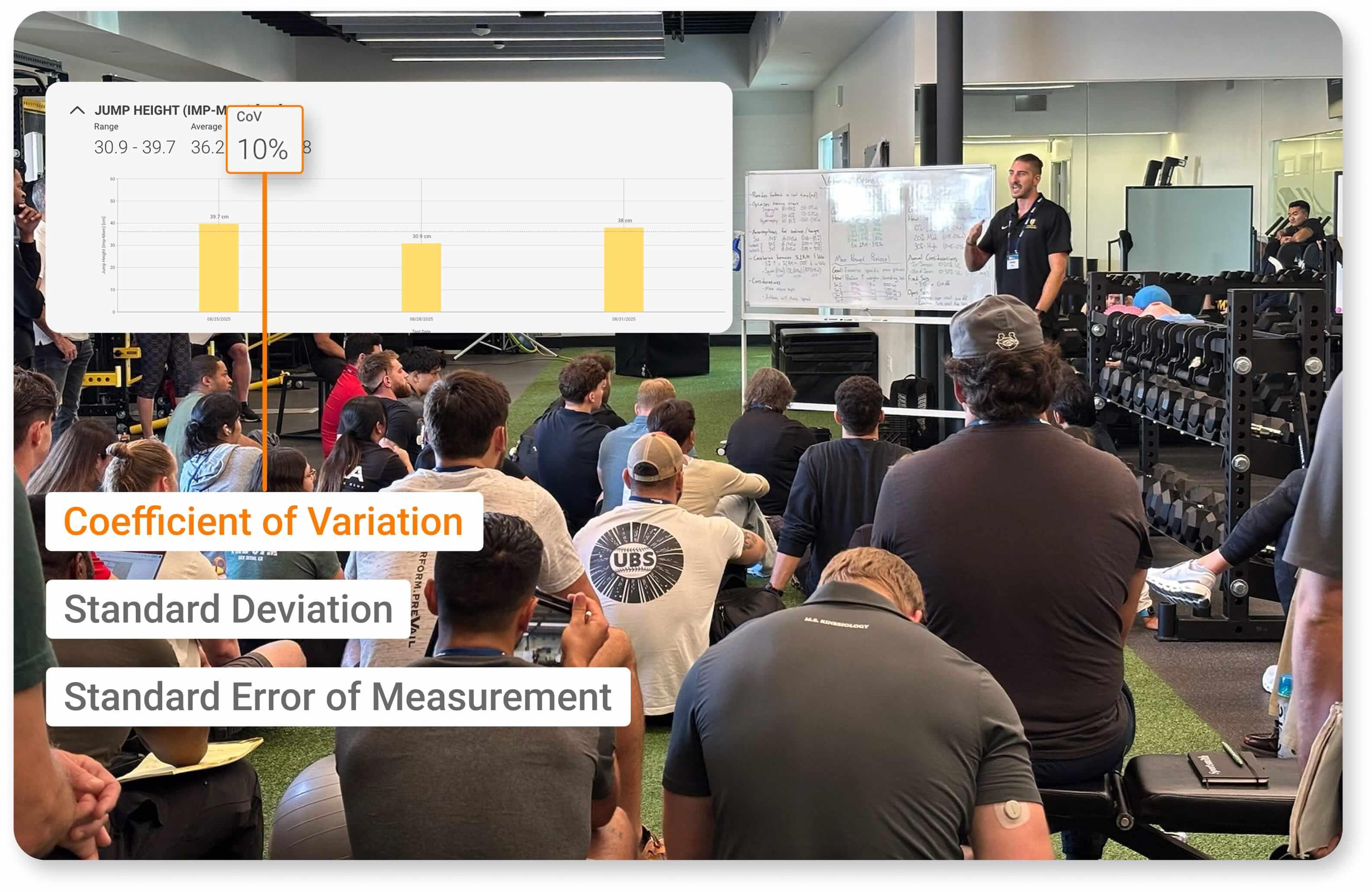
Presentation to PLNU students on meaningful change in performance assessment.
More advanced concepts in statistics and research methodology are also introduced to support later coursework and research projects. Most of our students go on to apply the technology and methods learned in class to their capstone or thesis data collection, giving them the opportunity to develop data collection and analysis skills in both applied and lab settings.
Most of our students go on to apply the technology…to their capstone or thesis data collection, giving them the opportunity to develop data collection and analysis skills…
That integration between research and practice is an important part of preparing future practitioners to use objective data effectively.
Why We Keep Coming Back to the Countermovement Jump
We build our approach to athlete testing from the fundamentals upward. This allows us to integrate technology organically into the curriculum, rather than introducing it sporadically or infrequently in ways that limit student familiarity and competence.
As an introduction to force plate testing, we rely heavily on the countermovement jump (CMJ). Specifically, we use a standardized, hands-on-hips protocol to ensure consistency across testing sessions. The CMJ serves as a cornerstone assessment throughout the curriculum, appearing in multiple courses across the program.
The CMJ serves as a cornerstone assessment throughout the curriculum, appearing in multiple courses across the program.
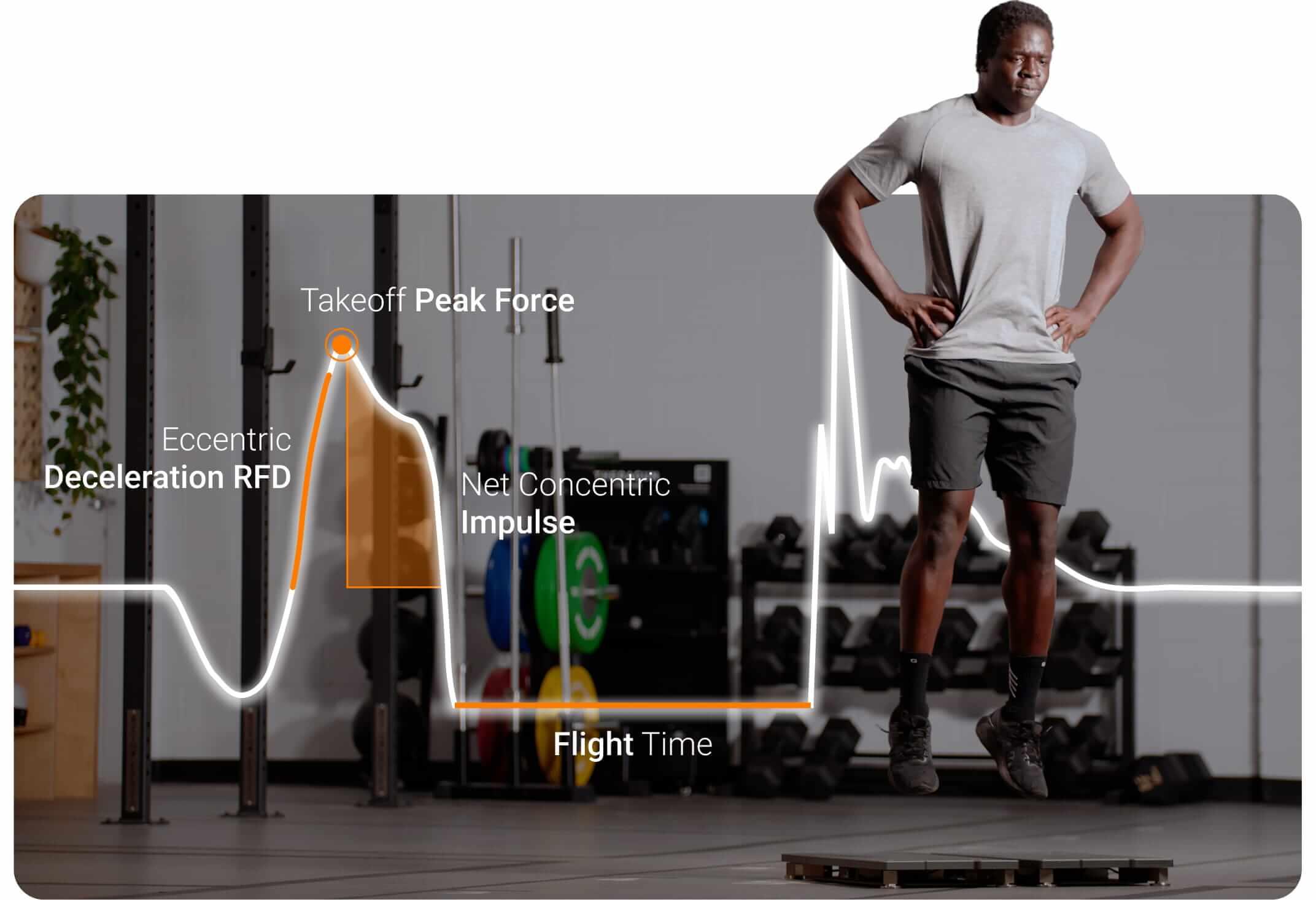
Key concepts in force-time analysis, such as rate of force development (RFD), impulse, peak force and flight time, are taught to students for better performance analysis.
In the first semester, the CMJ is used primarily to introduce data collection and basic interpretation. As students progress, the same test is revisited in more advanced contexts. In Athlete Testing and Monitoring (KIN 6025), the CMJ becomes a primary tool for athlete monitoring. Later, in Advanced Strength and Conditioning (KIN 6050), it is used again to explore aspects of program design such as exercise selection and optimal loading for power development.
As students develop a stronger understanding of the practical applications of different tests, the complexity of the metrics used – and the statistical approach used to interpret them – increases accordingly.
This longitudinal use of a single test is intentional. It allows students to develop a deeper understanding of both the assessment itself and the underlying physiological constructs it represents. More importantly, it reinforces the idea that consistency and context are what make testing useful.
This longitudinal use of a single test is intentional…it reinforces the idea that consistency and context are what make testing useful.
From Classroom Concepts to Applied Practice
By the time students begin interning or volunteering with PLNU Athletics, they are prepared to test athletes on a regular basis. Those seeking additional experience in sport science are introduced to more advanced statistical tools and data visualization techniques, such as valdr and valdrViz, to analyze data collected from daily or weekly CMJ assessments within our teams.
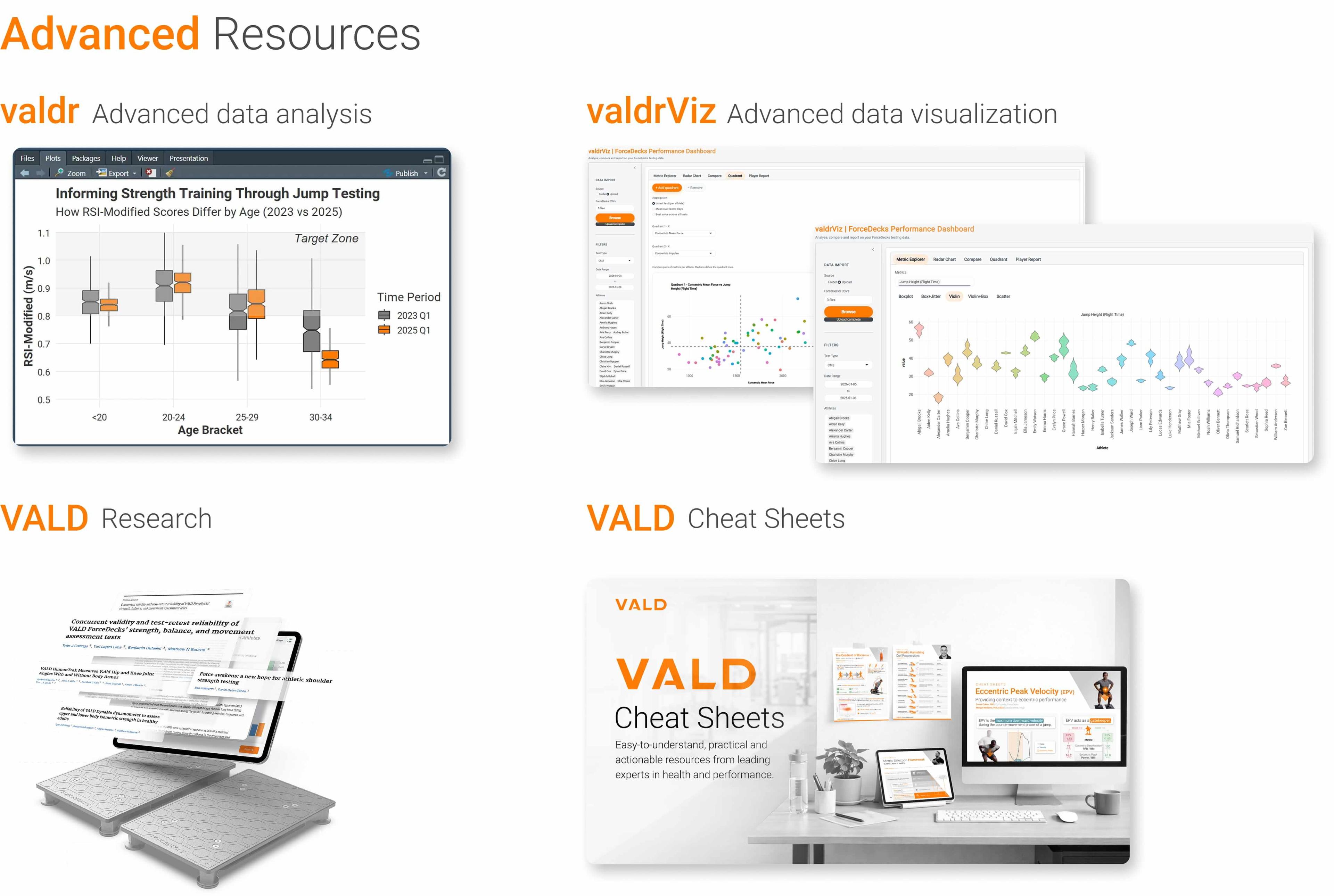
This represents the level of real-world application we believe is necessary to prepare student-practitioners for the workforce after graduation.
Athlete testing and monitoring, with systems like ForceDecks, is a core part of our curriculum. By the time the spring semester begins, students start working with real data. They learn how to establish trends over time and, more importantly, how to identify meaningful changes using concepts such as minimal detectable change (MDC) and SEM.
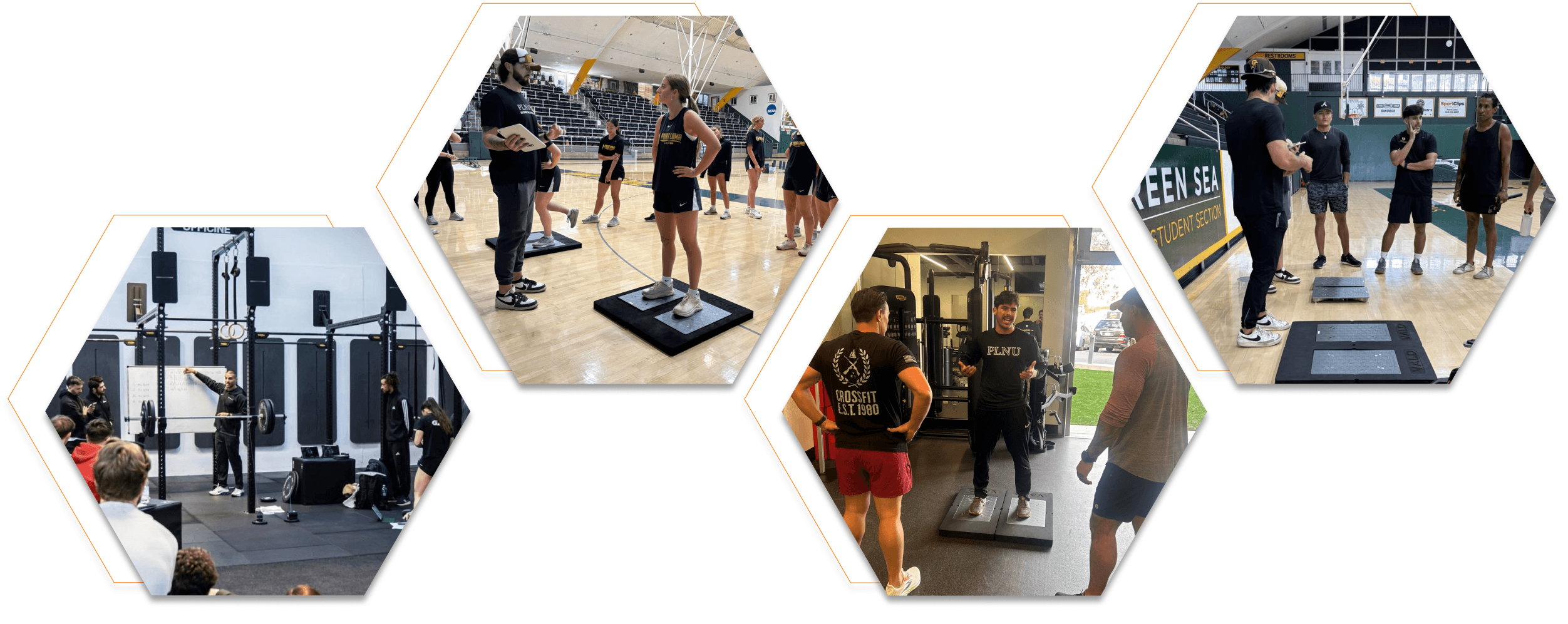
Students learning and performing ForceDecks assessments in the lab and with PLNU Athletics.
Athlete testing and monitoring, with systems like ForceDecks, is a core part of our curriculum.
This is a critical step in their development. Many practitioners struggle to distinguish between normal variability and true performance changes. By working with repeated measures on ForceDecks, our students gain firsthand experience interpreting normal fluctuations in performance data. They begin to understand that not every change is meaningful, and that decision-making must be grounded in both statistics and context.
Building Data Literacy into Strength and Conditioning Education
ForceDecks plays an important role in the data analysis process. The software automatically calculates many of the relevant metrics, allowing students to focus on interpreting the metrics rather than calculating them. At the same time, the ability to export data enables more advanced analysis using external tools such as Python or R.
This flexibility supports a progressive learning model, where students transition from guided projects to an environment that allows independent analysis and self-driven projects. The integration of an application programming interface (API) for data export has been a major advancement in our teaching approach, allowing us to incorporate data analytics into the curriculum and expose students to basic coding and data visualization techniques.
[ForceDecks’] flexibility supports a progressive learning model, where students transition from guided projects to an environment that allows independent analysis…
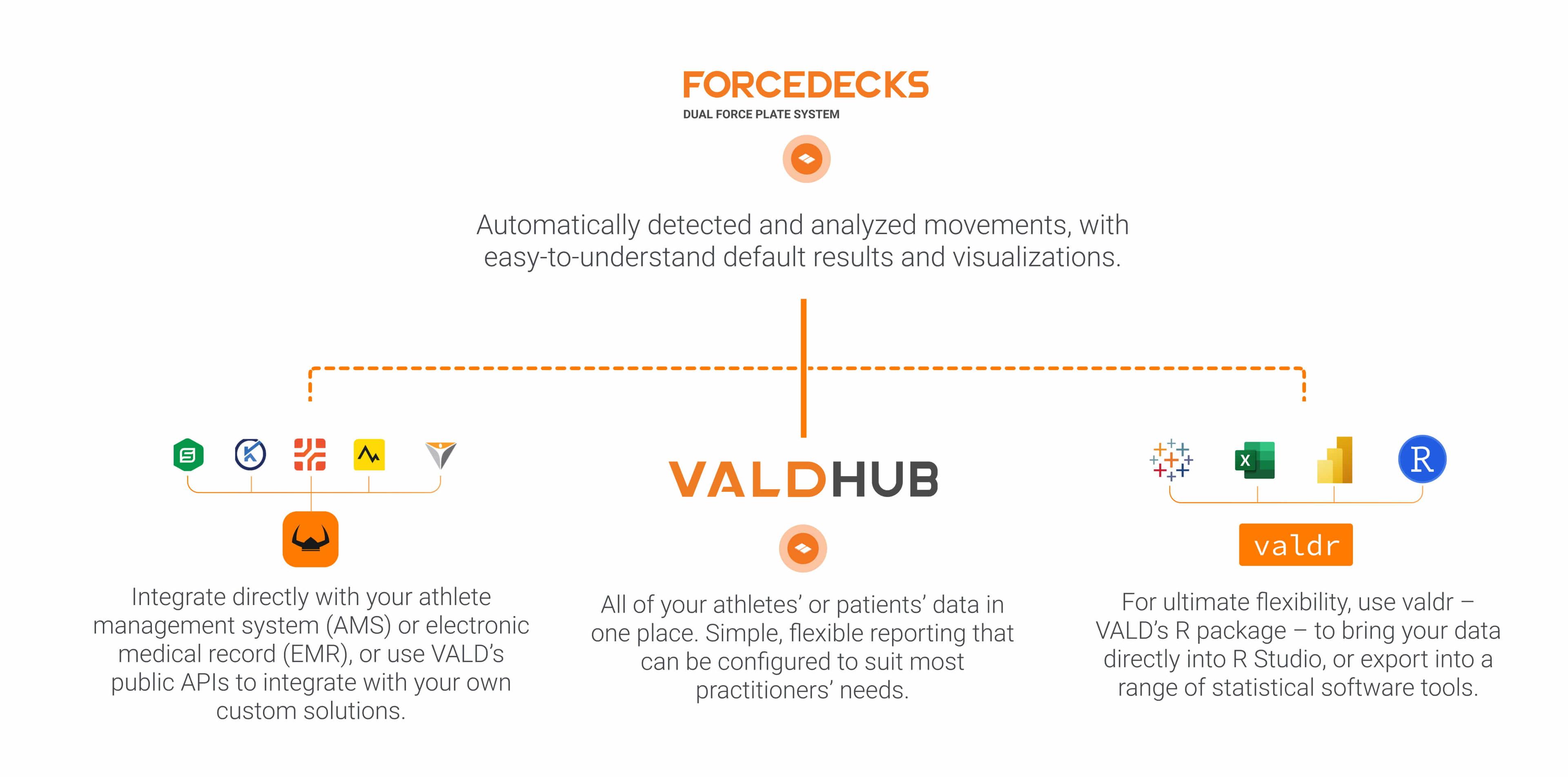
This approach aligns with athlete monitoring at PLNU Athletics, where strength and conditioning staff and sport science graduate assistants regularly collect data from student-athletes and bring it into the classroom.
Under faculty supervision, students work with these datasets to develop skills in data processing, visualization and interpretation, including building dashboards, identifying trends and communicating actionable insights. Embedding this into the curriculum allows sport science concepts to be applied within an existing strength and conditioning framework without adding unnecessary complexity.
Preparing Students for the Demands of Practice
The goal is to prepare students for the demands of professional practice. Technology helps replicate high-performance environments, where students learn not only how to collect data but also how to interpret, communicate and apply it within the training process. ForceDecks has played a key role in this progression, reinforcing the importance of data-informed decision-making while ensuring students understand both the value and limitations of objective measurement.
If you would like to learn more about how ForceDecks can support strength and conditioning education through objective testing, data interpretation and applied learning, get in touch with our team.
