Building a Coaching Business Around Client Experience
Available in:
EN
Opening a new performance facility requires strong coaching, an understanding of clients’ needs, quality communication strategies and a clear mission to deliver an experience that keeps them engaged throughout training. At Principle Sports Performance, we have centered our philosophy on delivering thoughtful, memorable service that drives quality results. Technology, including systems like ForceDecks, has been key to this philosophy.
Building the Foundations
One of the biggest lessons I took from working across commercial fitness and private performance centers, such as Athletes Authority, was the importance of clearly communicating the value of strength and conditioning to the general public. We understand performance training because we work in the industry, but for the average client, it is still relatively unfamiliar.
When we opened Principle Sports Performance, we needed to be clear about what we do, how we do it and the problems we are trying to solve. In many ways, education became the central theme of how we marketed the business.
In many ways, education became the central theme of how we marketed the business.
Our website was a good example of that. It went through multiple iterations during our first few months, as conversations with prospective clients helped us better understand where our messaging was clear and where we needed to explain the service differently. This process is constantly evolving to deliver the best product possible, with iterations and changes happening nearly every month.
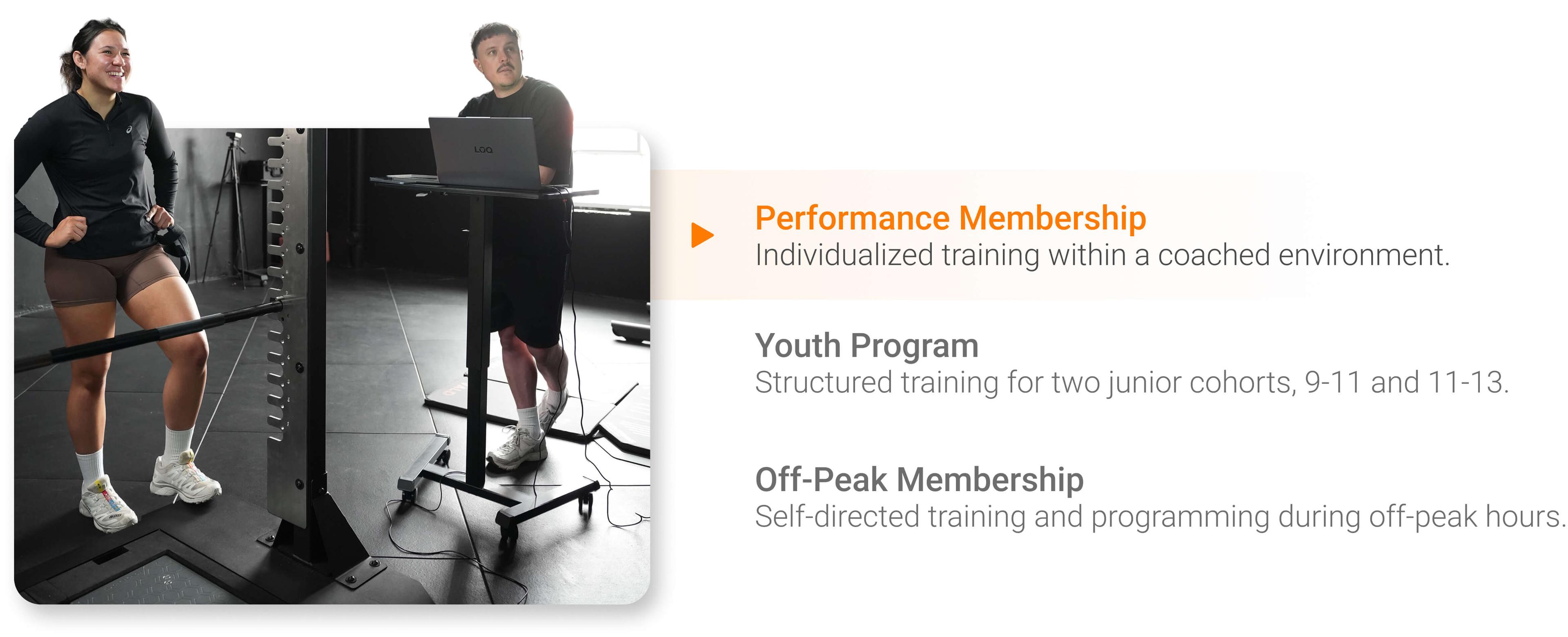
We also identified the key groups we wanted to work with and considered the different problems each group might be trying to solve. We could deliver a largely consistent service across those groups and adjust how we positioned and explained it depending on who we were speaking to. Those groups ultimately helped shape our three key offerings:
Designing Services Around the Coaching Experience
For our Performance Membership, we wanted to create a structure and flow that allow clients to follow their own programs, move through the room seamlessly and be coached effectively, similar to the experience of a collegiate weight room.
Clients train in small groups while following individualized programs, and coaches move throughout the floor to provide instruction and feedback as needed. The facility was designed to make that flow intuitive for clients while creating an environment that reflects the standards and organization that experienced coaches expect.
The facility was designed to make that flow intuitive for clients while creating an environment that reflects the standards and organization that experienced coaches expect.
Maintaining an appropriate coach-to-client ratio has been equally important. We currently cap each session at 10 clients, allowing coaches to move throughout the floor while still providing the individual attention expected from one-on-one coaching. As the business continues to evolve, we remain open to refining that model based on coach and client feedback to ensure the training experience remains consistent.
Consistency also shapes how we define value. We want clients to feel they benefit from their membership every week, not only when training is going well.
Injuries, work, school and other life commitments will inevitably affect consistency, but we aim to help clients keep progressing through those periods. By continuing to provide guidance, support and accountability, clients know they still have a team in their corner regardless of how often they can train. That ongoing support contributes to the value they feel they receive from an individualized approach to training.
Support also extends to how we assess and monitor our clients. Standardized assessments, including testing with ForceDecks and NordBord, give us repeatable checkpoints that can be applied across clients and over time. Rather than relying solely on how they feel or what a coach observes during a particular session, we can collect objective data under consistent conditions, track changes and use that information to help guide programming.
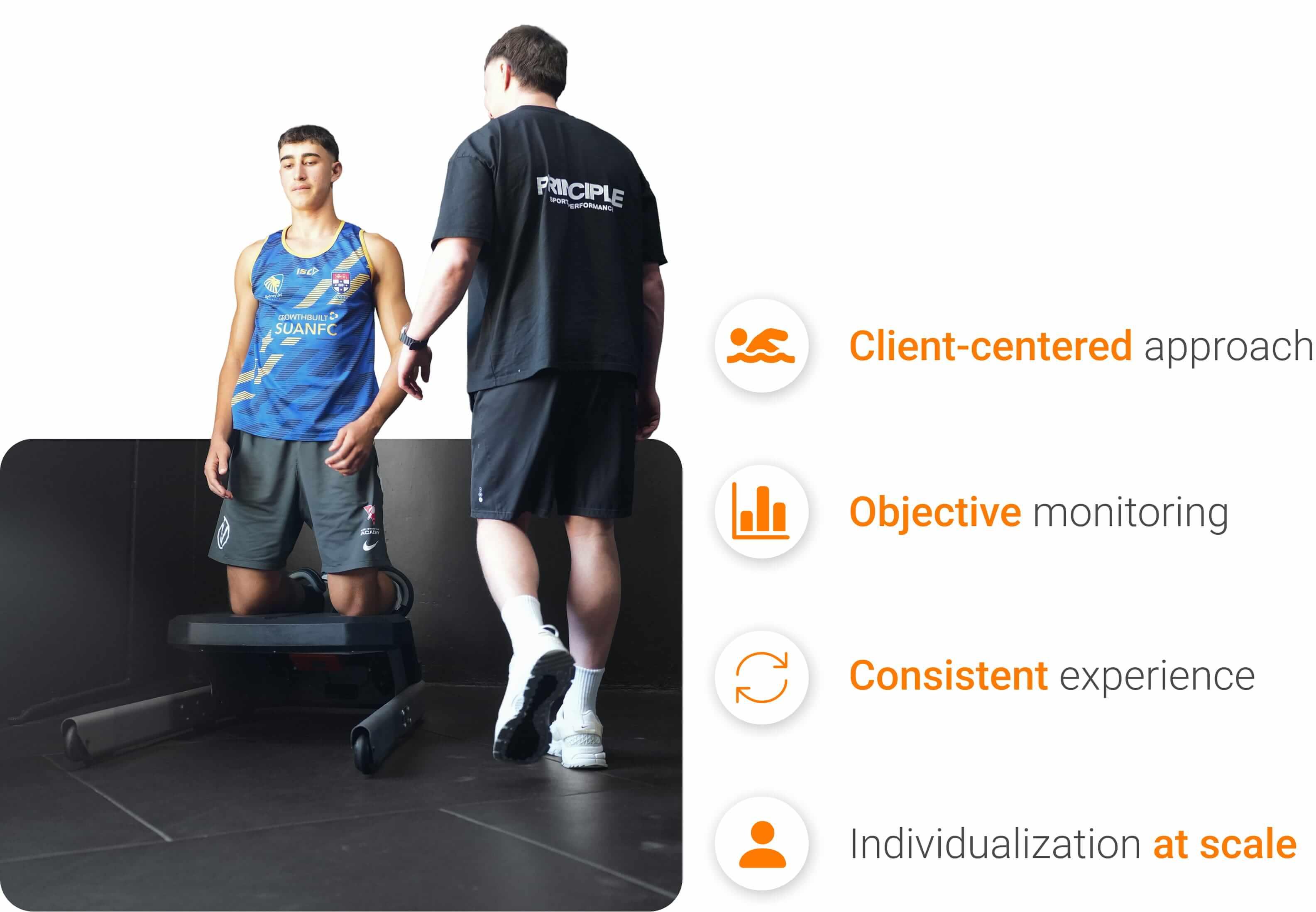
It also means that, regardless of which coach is working with a client, they have access to a shared set of information to understand where the client is and how they are progressing.
Establishing Consistency from Day One
Except for our youth pathway, every new client starts with the same onboarding process. Before they come in, we send out our intake forms to learn more about their training goals, injury history, previous training experience and personal preferences. Our coaches review those details before the first session because they give us valuable context about the client we are about to work with.
For example, if a client tells us what they enjoyed or disliked about a previous coaching experience, we want to refer to that when they walk through the door. It shows that we have listened and gives us a better starting point for the first conversation and their program.
Every client then completes a one-on-one onboarding session that combines their intake information with objective assessment. While each assessment follows a consistent framework, the battery can be modified based on factors such as injury history, training background and performance goals.
HumanTrak provides objective insight into movement quality and range of motion, while ForceDecks, ForceFrame and NordBord assess qualities including lower-body power and strength. Together, these assessments help us build a more complete understanding of each client before programming begins.
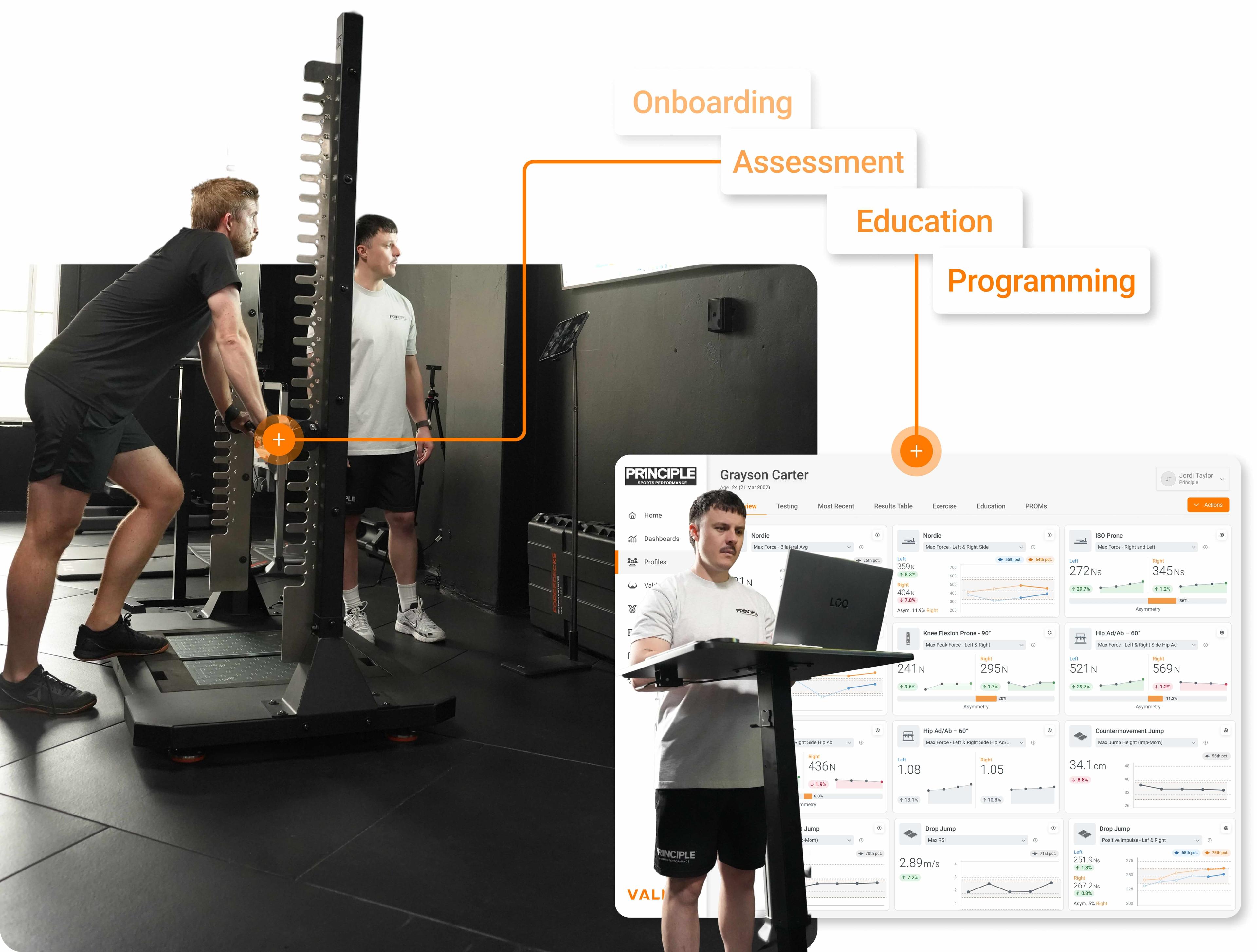
Together, [VALD technology helps] us build a more complete understanding of each client before programming begins.
The assessment process also creates valuable opportunities for client education. Movement quality can be difficult to explain through observation alone, but objective data and visualizations make those conversations more meaningful. Reviewing results together helps clients understand how they move, why specific findings matter and how those findings influence the decisions made within their program.
Building Education into Objective Measurement
Investing in education early helps clients understand why specific exercises, assessments and training decisions appear in their program. It also provides the context needed to interpret future testing as training progresses. Rather than repeating a comprehensive assessment battery each time, we can use ForceDecks, ForceFrame and NordBord to select targeted assessments based on the qualities we want to monitor, whether related to performance, health or rehabilitation.
Our focus is on tracking trends over time rather than interpreting individual test results in isolation. Outside of onboarding, clients may complete assessments with VALD systems multiple times throughout a training phase, depending on the feedback we receive from the client and their observed progress. This structure enables coaches and clients to stay on top of performance trends and helps inform future training changes.
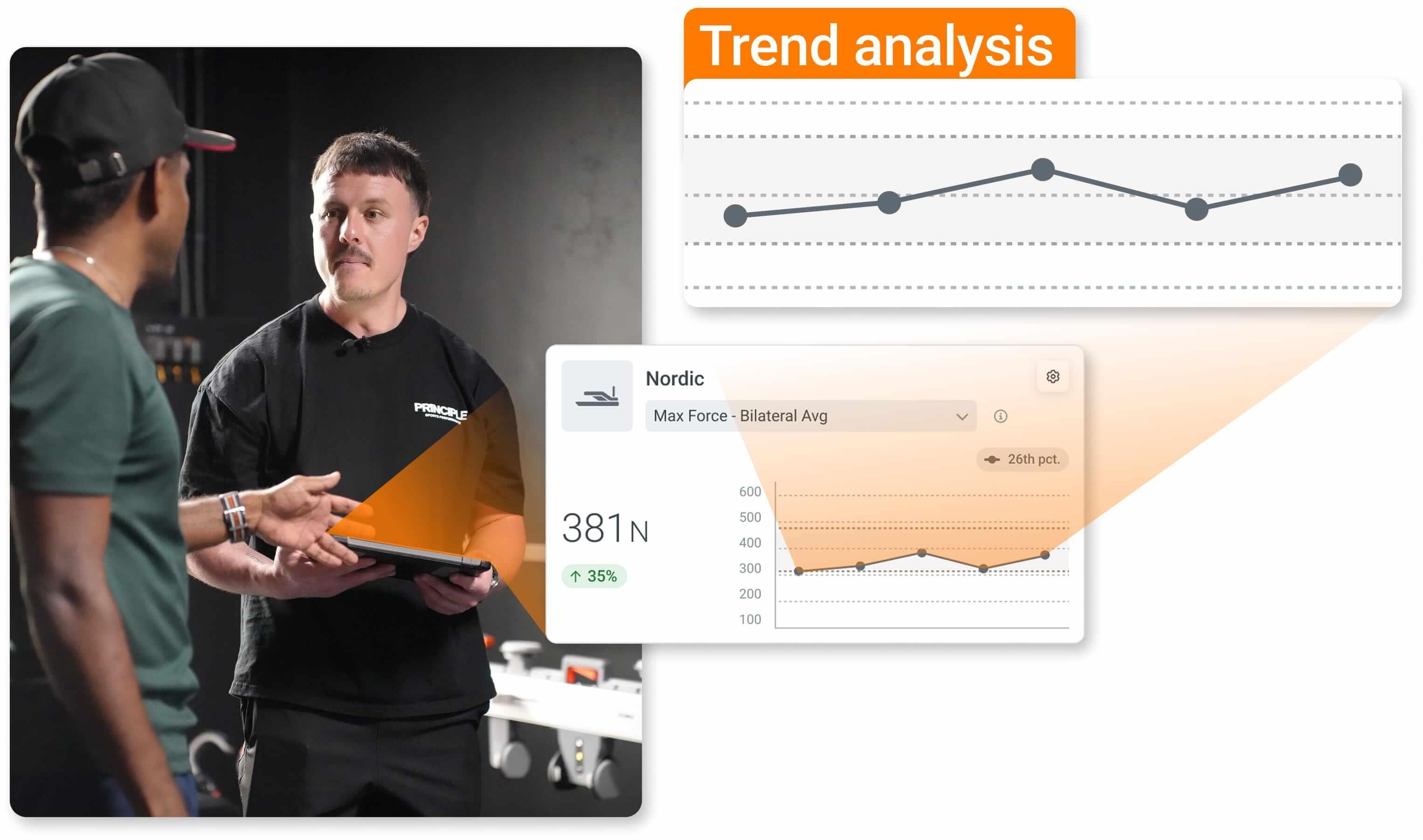
Clients are educated on testing protocols so they can complete many of these assessments independently while maintaining consistent data collection. Results are centralized in VALD Hub, giving our coaches access to longitudinal data that supports ongoing monitoring across training blocks. At the same time, each assessment provides another opportunity to continue the education that began during onboarding, helping clients understand what is being measured, why it matters and how their results are changing over time.
…each assessment provides another opportunity to continue the education that began during onboarding, helping clients understand [the training process]…
Creating an Engaging and Informed Training Experience
Making objective testing information accessible has also played an important role in client engagement. At a private facility, every client invests financially in their training, so education, communication and visible progress are important parts of the overall experience. During our first year, we saw strong client retention, which we believe was supported by integrating objective data throughout the training process rather than treating testing as a standalone event.
Ultimately, our goal is for technology to feel like a natural part of the coaching process. By combining consistent assessment, individualized programming and ongoing education, we can help clients better understand their progress and the decisions guiding their training. This helps create an experience where clients feel informed, engaged and confident in the process.
If you would like to learn more about how VALD technology can help you integrate objective assessment into your coaching process, guide individualized programming and support client education, get in touch with our team.
