Knee-Flexion Angle Alters Hamstring Muscle Strength
Available in:
EN
Study Information
Taylor, J. M., Pallotta, H., Smith, P., Short, W., Wright, M. D., & Chesterton, P. (2025). The effect of knee-flexion angle on peak force and muscle activation during isometric knee-flexor strength testing using the NordBord device in soccer players. Science and Medicine in Football, 1–8.
https://doi.org/10.1080/24733938.2025.2471316
Reviewer: Prof. Hugh Fullagar
Purpose of the Study
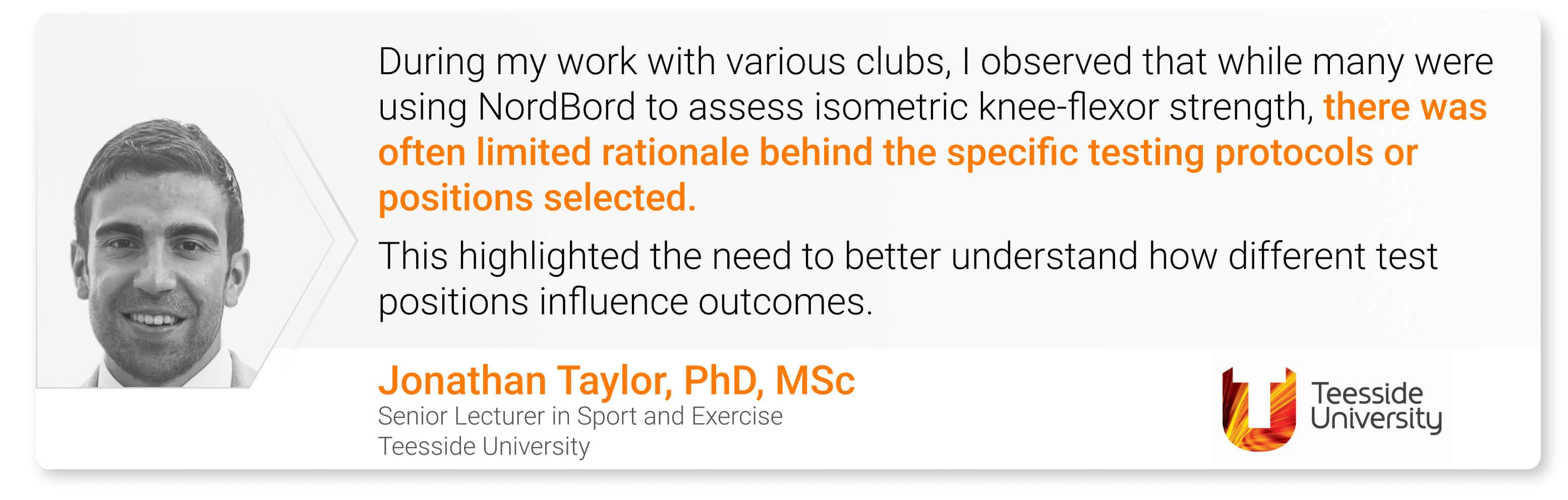
Hamstring strain injuries continue to rise in elite soccer, increasing reliance on field-based isometric knee-flexor strength testing to support monitoring, rehabilitation and injury risk management (Ekstrand et al., 2022). Despite widespread use, there remains little consensus on knee-flexion angle during testing, limiting consistency and interpretation across players and settings.
To address this, the study examined how knee-flexion angle influences force output and muscle activation during isometric hamstring testing, aiming to determine whether commonly used test positions provide comparable or distinct strength information.
Methods
43 well-trained soccer players completed ISO 30 and ISO Prone tests using NordBord. Peak force was compared between positions and muscle activation was assessed to determine whether differences in output were driven by test setup rather than neuromuscular recruitment.
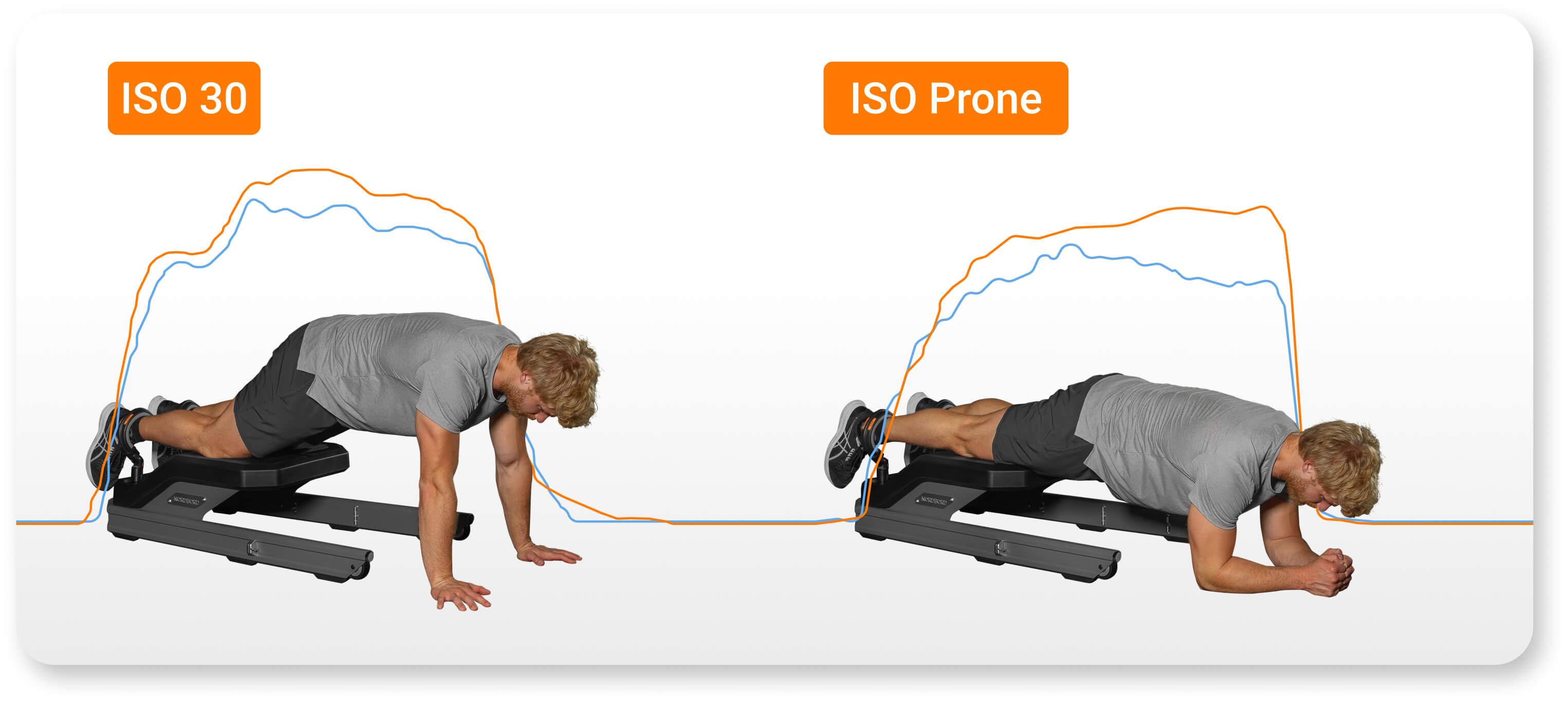
Test positions for the ISO 30 and ISO Prone, replicated from Taylor et al. (2025).
Key Findings
Peak force was significantly higher in the ISO 30 position, averaging ~50N greater per limb than ISO Prone. Despite moderate correlations between tests (r = 0.55-0.64), the results indicate that the two positions assess distinct strength qualities and should not be used interchangeably for monitoring isometric knee-flexor strength.
Peak force was significantly higher in the ISO 30 position, averaging ~50N greater per limb than ISO Prone.
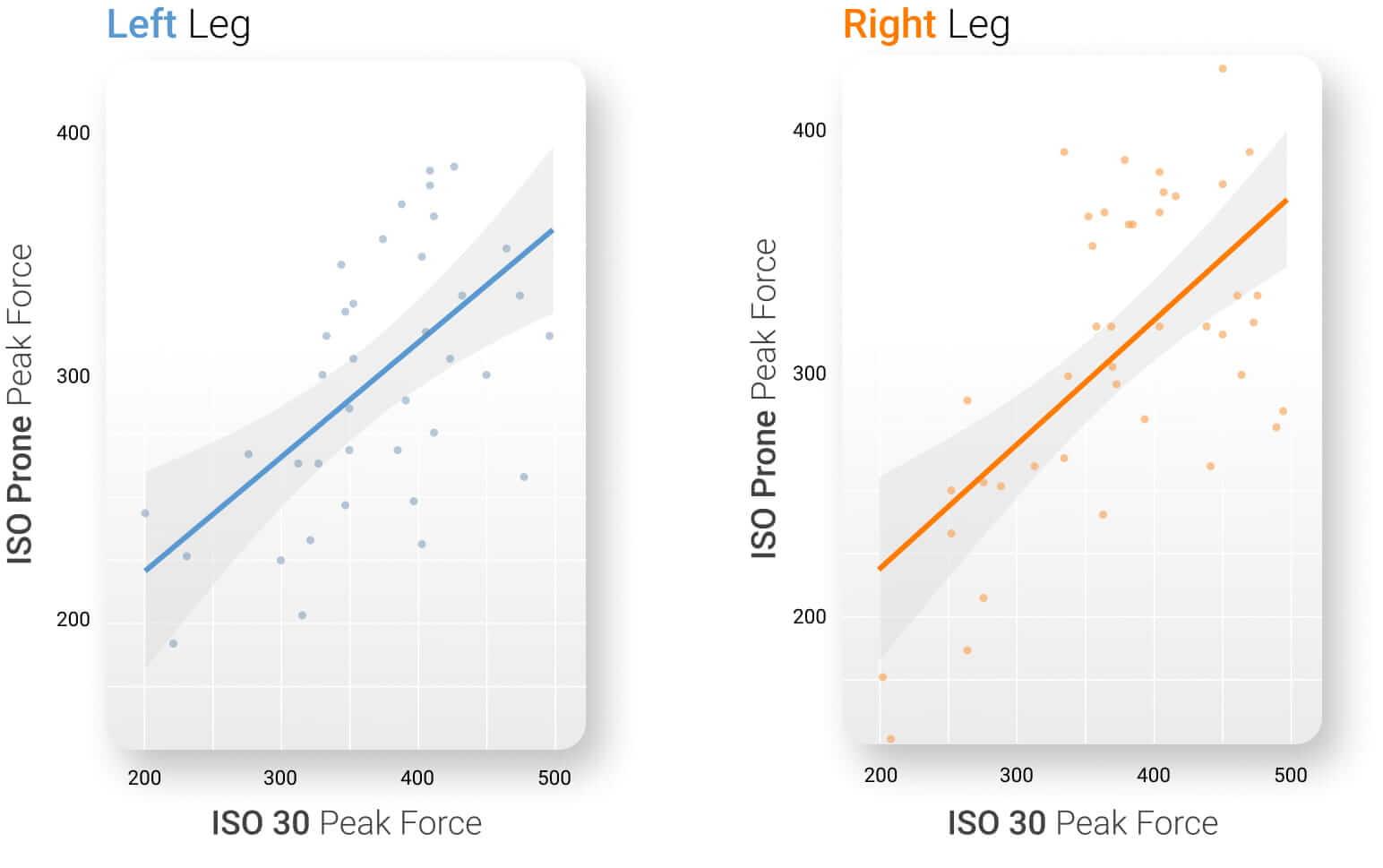
Association between peak force in ISO 30 and ISO Prone for left (blue) and right (orange) limbs, with 95% confidence intervals (CI), replicated from Taylor et al. (2025).
| ISO 30 (Mean ± Standard Deviation) | ISO Prone (Mean ± Standard Deviation) | Mean Difference (95% CI) | p Value | |
| Left Peak Force (N) | 351 ± 73.3 | 294 ± 55.9 | 56.4 (36.8-75.9) | <0.0001 |
| Right Peak Force (N) | 367 ± 80.0 | 314 ± 60.9 | 52.9 (33.7-72.3) | <0.0001 |
Descriptive statistics and mean differences in peak force between tests, replicated from Taylor et al. (2025).
Large prediction errors indicated that performance in one test position cannot reliably estimate performance in the other, reinforcing the need for test-specific interpretation.
No differences in muscle activation were observed between positions, suggesting that force differences are more likely driven by biomechanical factors, such as joint position or length-tension relationships, rather than changes in muscle recruitment.
Take-Home Messages
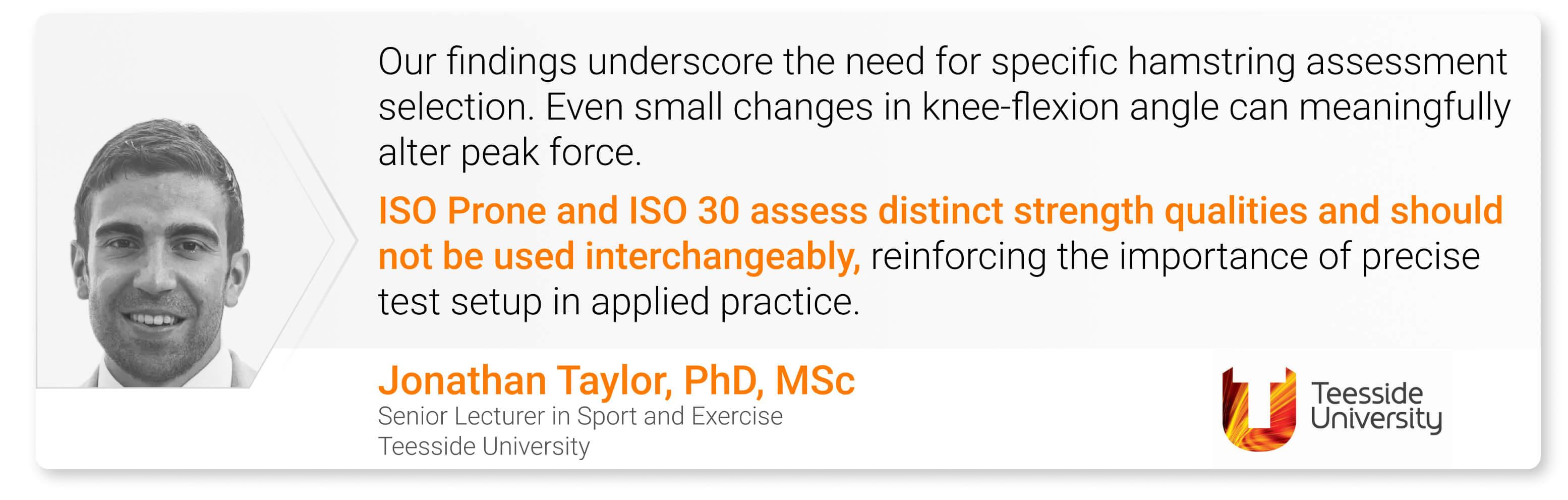
- Knee-Flexion Angle Matters: Small changes in knee-flexion angle can meaningfully influence peak force output. Precise control of test position and consistent setup are essential for reliable interpretation over time.
- ISO 30 and ISO Prone Are Not Interchangeable: Different strength qualities are assessed and should be selected deliberately based on the specific performance or rehabilitation objective. The 30° position may better reflect early stance mechanics in sprinting and facilitate higher force production.
- Standardization Improves Confidence: Variability in testing execution reinforces the need for clearer, standardized protocols to improve consistency and confidence in isometric hamstring strength assessment.
If you would like to learn how VALD’s NordBord system can support standardized hamstring strength testing and consistent test positioning, download our Practitioner’s Guide to Hamstrings or get in touch with our team.
References
- Ekstrand, J., Bengtsson, H., Waldén, M., Davison, M., Khan, K. M., & Hägglund, M. (2022). Hamstring injury rates have increased during recent seasons and now constitute 24% of all Injuries in men’s professional football: The UEFA elite club injury study from 2001/02 to 2021/22. British Journal of Sports Medicine, 57(5), 292–298. https://doi.org/10.1136/bjsports-2021-105407
