Isometric Belt Squat: A practical alternative for lower-body strength testing
Available in:
EN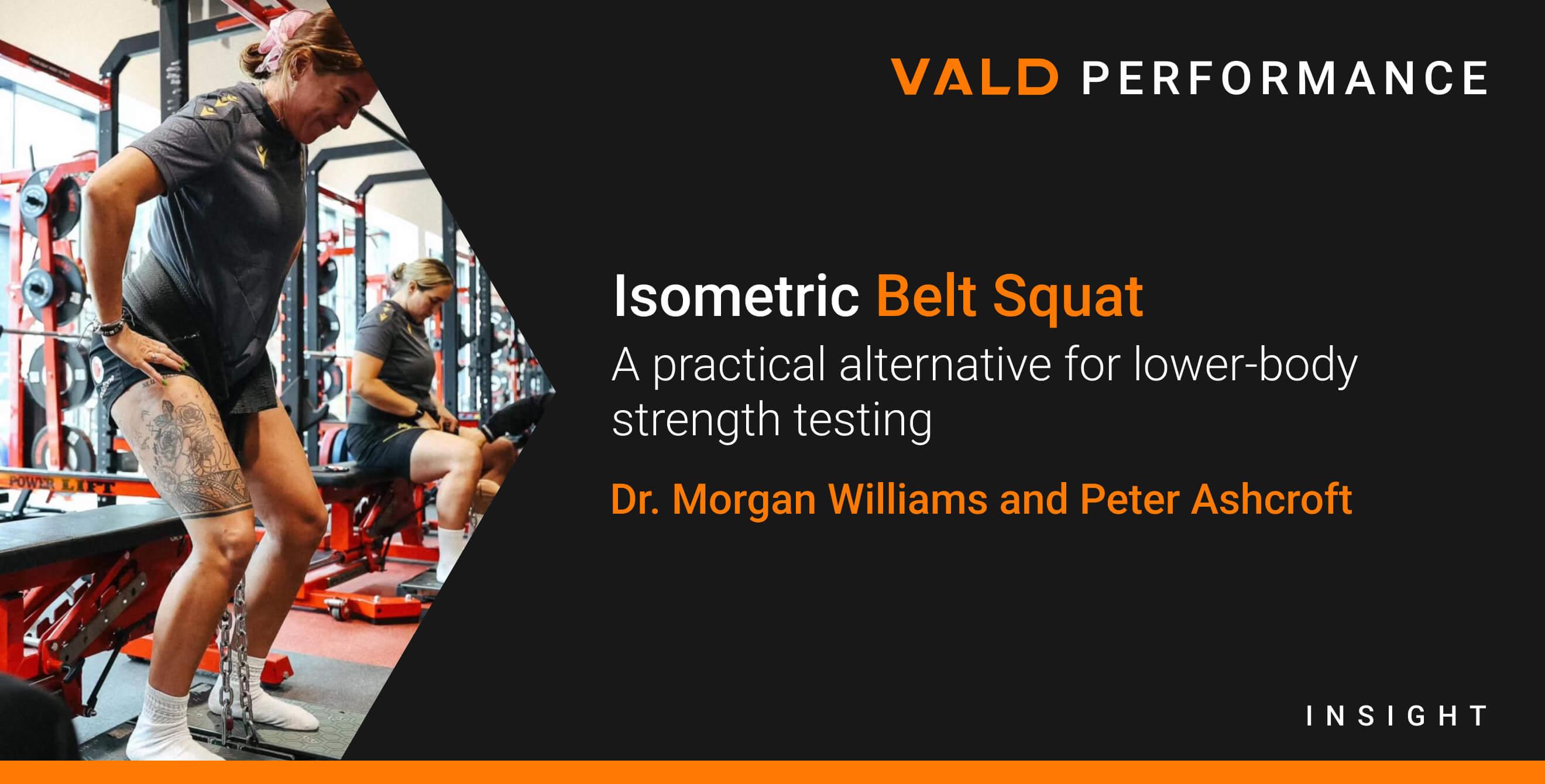
About the Authors
Peter Ashcroft is a Lecturer in Sport at the University of South Wales and an experienced strength and conditioning coach working in rugby union and high‑performance netball. He has supported professional and international teams through performance testing and physical profiling, and his research focuses on the strength and power characteristics of rugby union players.
Dr. Morgan Williams is a Data Scientist at VALD, an Adjunct Associate Professor at Griffith University’s School of Allied Health, Sport and Social Work and an external affiliate member of the Australian Centre for Precision Health and Technology (PRECISE). As part of the VALD Data Science Team, he uncovers new insights into VALD data and how it can be used to enhance practice.
Testing Lower‑Body Strength
Maximal lower-body strength has traditionally been assessed using dynamic resistance exercises such as the back squat, most commonly through repetition maximum (RM) tests (e.g., 1RM or 3RM). While these methods are well established, they are not always practical or appropriate for every athlete or setting.
While [RM tests] are well established, they are not always practical or appropriate for every athlete or setting.
RM testing is physically demanding and time-consuming (up to 30 minutes per athlete), often making it impractical. This article introduces the isometric belt squat as an emerging alternative assessment.
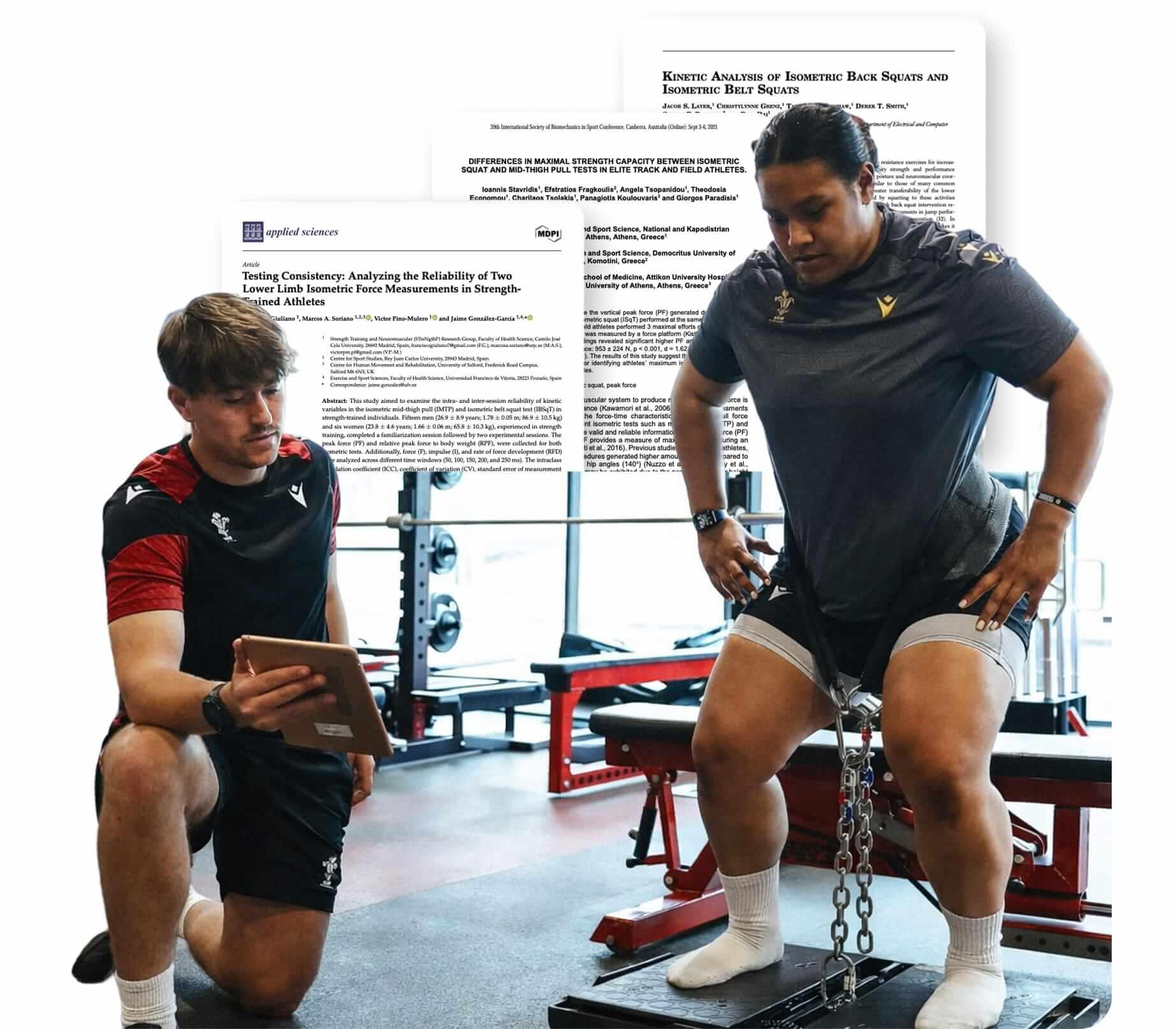
The isometric belt squat is increasingly supported by academic literature for assessing maximal lower-body force capacity.
Expanding Test Options with Technology
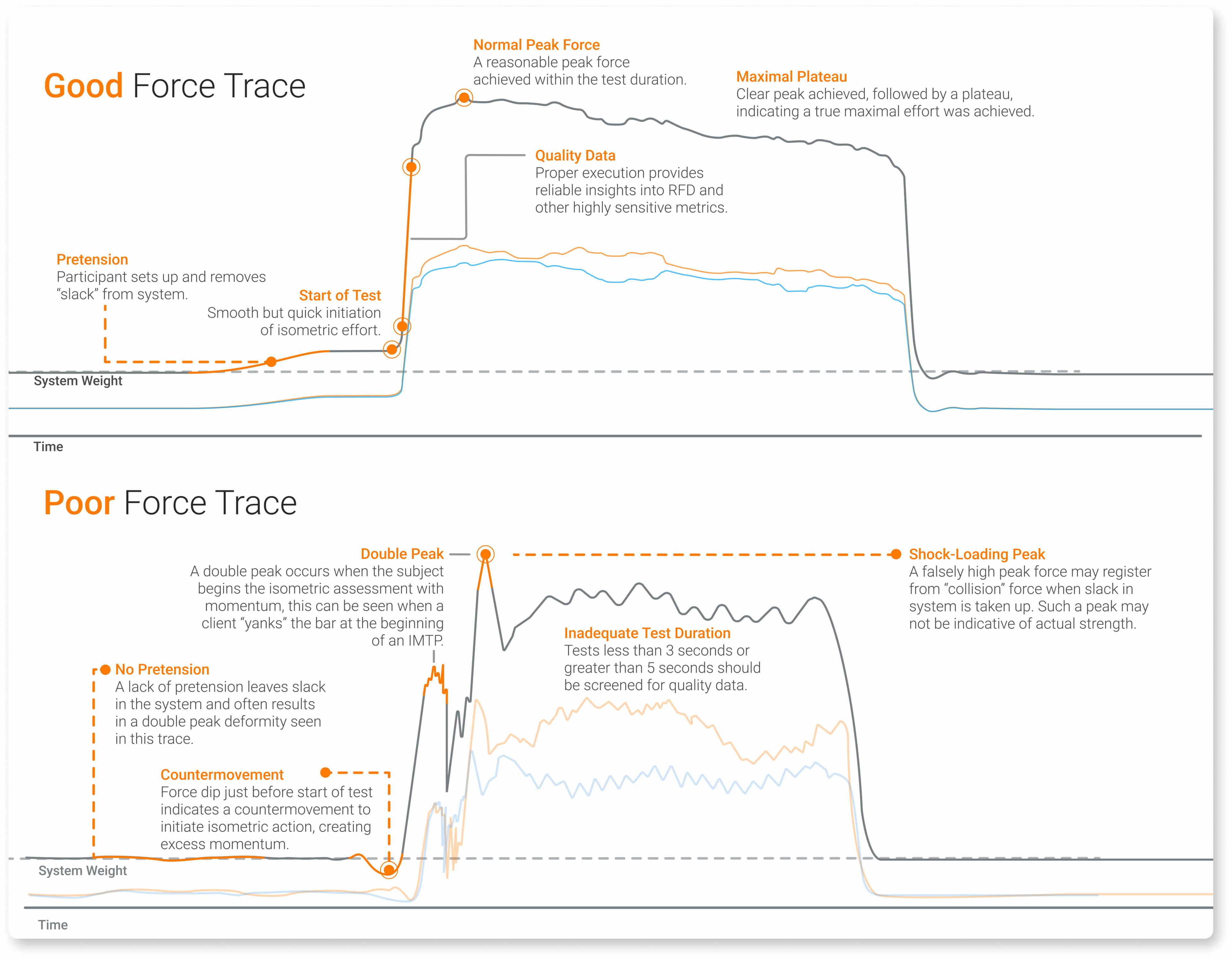
Isometric testing provides a controlled, low-fatigue and time-efficient alternative to RM-based assessments. Instead of lifting a maximal load, athletes push or pull maximally against an immovable object for a brief effort, typically 2-5 seconds.
These tests are commonly performed using force plates (e.g., ForceDecks) or fixed-frame dynamometers (e.g., ForceFrame and NordBord), though handheld dynamometers such as DynaMo Max can also be used.
The isometric belt squat is a maximal-effort isometric strength assessment, providing practitioners with a simple, objective indicator of an athlete’s maximal strength capabilities. If deeper insight is required, additional metrics such as force at specific time points, rate of force development (RFD) and time to peak force can all be analyzed within the ForceDecks app or through cloud-based analytics platforms such as VALD Hub.
The isometric belt squat is a maximal-effort isometric strength assessment, providing…a simple, objective indicator of an athlete’s maximal strength capabilities.
Practitioners can also integrate isometric belt squat data with other tests to provide a broader understanding of an athlete’s strength profile.
For example, the dynamic strength index (DSI), popularized by comparing peak force from a countermovement jump (CMJ) to peak force from an isometric mid-thigh pull (IMTP), is intended to compare maximal isometric strength to maximal dynamic strength.
Instead, isometric squat (Iso Squat) variations, such as the isometric belt squat, have gained more traction as they offer a more representative assessment of maximal force capacity in a loaded, upright position.
Common Isometric Tests
The two most widely featured isometric ForceDecks tests in the VALD Data Lakehouse are IMTP and the Iso Squat.
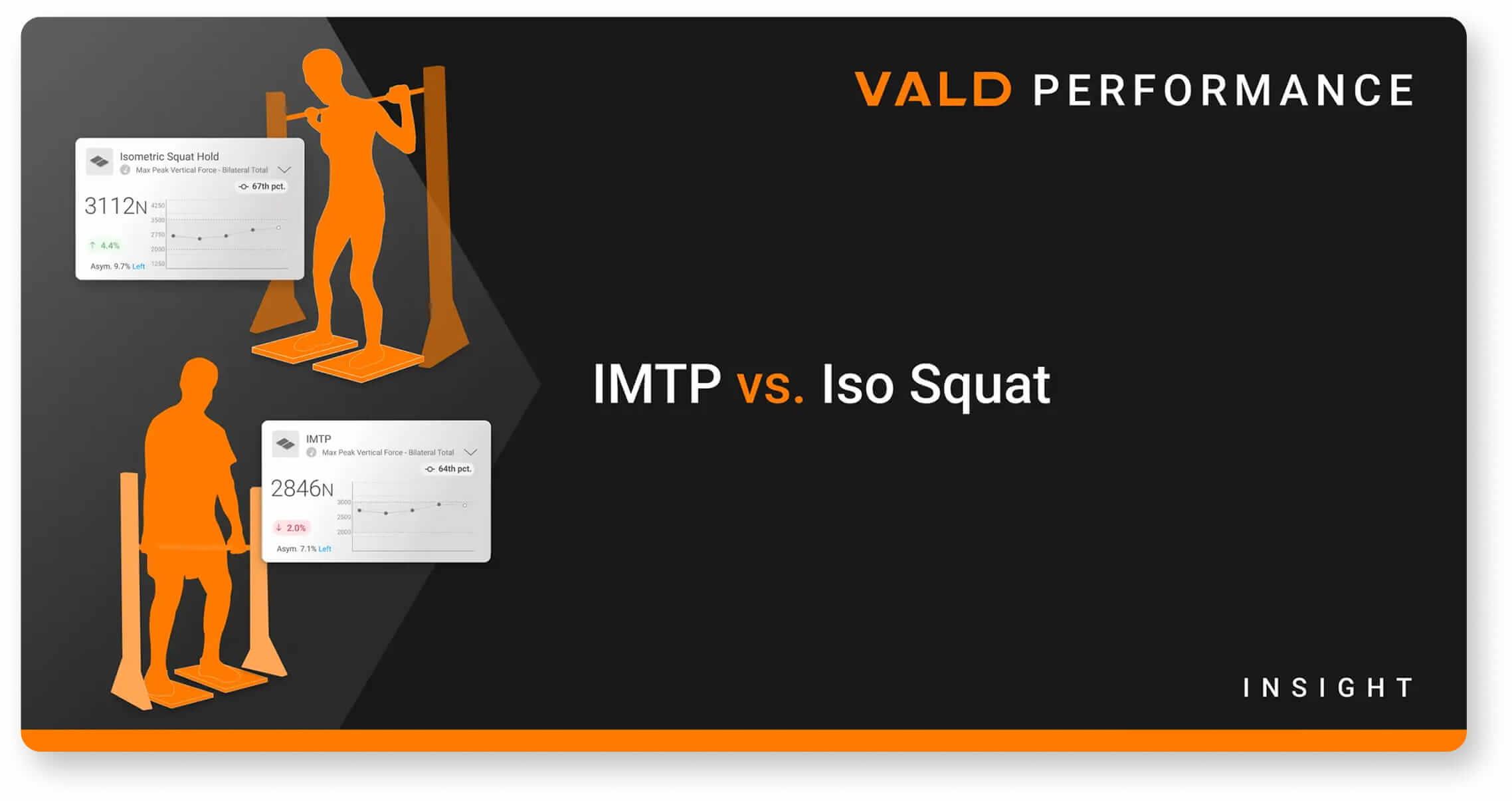
Despite strong research support, both tests have practical limitations, as shoulder or hand discomfort, grip limitations and upper-body fatigue can restrict maximal effort during either test. For athletes managing back, shoulder or wrist injuries, these tests may also be unsuitable or difficult to perform.
| Test | Limitation | Impact of Assessment |
| Iso Squat | High spinal and shoulder stress | Elevated spinal loading (Layer et al., 2018) and shoulder discomfort can discourage athletes from giving a maximal effort. This increases injury risk, particularly during explosive, rapid force protocols. |
| IMTP | Grip and upper-body constraints | IMTP performance is constrained by grip and upper-body strength rather than leg drive. This disproportionately affects female athletes who typically possess 40-60% less grip strength (Nuzzo, 2023). |
| Force output leaks | IMTP peak force values can be between 10-40% lower than those of the Iso Squat, with an even greater deficit observed in females (Brady et al., 2018; Nuzzo et al., 2008; Silva et al., 2020; Stavridis et al., 2021). | |
| Lack of isolation | IMTP functions as an excellent “global” measure of total-body strength but confounds attempts to isolate and accurately profile lower-body capacity. |
Research consistently shows that removing constraints, such as discomfort and grip strength, enables higher force outputs. For example, peak force values during isometric belt squat testing have been reported up to 18% higher than those observed during the Iso Squat (Layer et al., 2018) and up to 74% higher than those reported for the IMTP (Giuliano et al., 2025).
Research consistently shows that removing constraints, such as discomfort and grip strength, enables [up to 74%] higher force outputs.
These findings may raise questions about the utility of the IMTP and Iso Squat as true measures of maximal force capacity.
The Case for Isometric Belt Squat Testing
The isometric belt squat addresses many of the limitations of traditional dynamic and isometric strength tests. The setup demonstrates similar reliability and repeatability to the IMTP and Iso Squat. However, force is applied directly from the lower body via a padded hip belt connected to a fixed anchor beneath the platform.
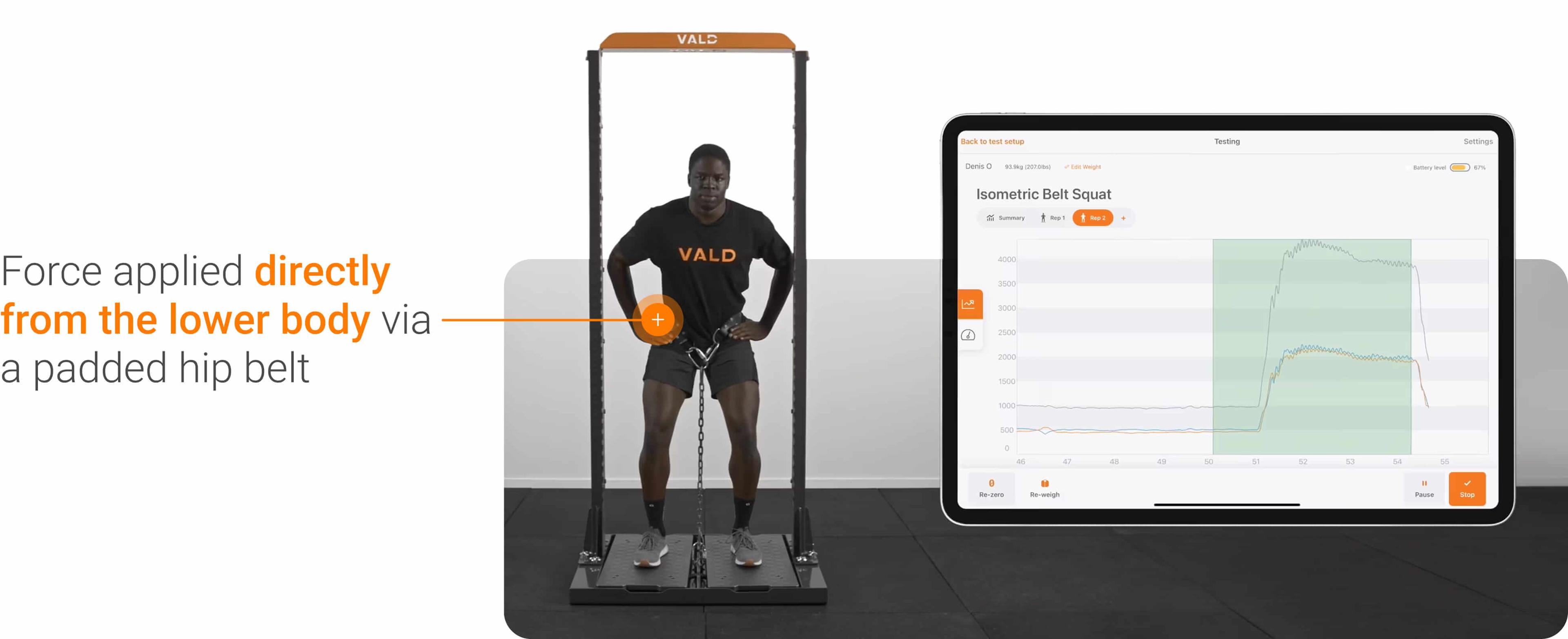
This configuration isolates lower-body force production and removes upper-body constraints. As a result, the isometric belt squat commonly produces higher force values and provides a more isolated measure of lower-body extension strength, unaffected by grip or upper-body capacity.
…the isometric belt squat…provides a more isolated measure of lower-body extension strength, unaffected by grip or upper-body capacity.
These advantages make the isometric belt squat a strong option for assessing lower-body strength across athlete development pathways, from youth to elite. The following table compares common lower-body strength assessments to the isometric belt squat.
| Assessment | Technical Demand | Risk | Lower-Body Isolation | Force Potential | Warm-Up and Test Duration | Fatigue Cost |
| 1RM Back Squat | High | Moderate–high | Moderate | Low | ~30 minutes | High |
| IMTP | Low | Low | Moderate–low | Moderate | <10 minutes | Low |
| Iso Squat | Low | Moderate | High | High | <10 minutes | Low |
| Isometric Belt Squat | Very low | Very low | Very high | Very high | <10 minutes | Low |
Testing Protocol
Over the past three years, more than 1,000 rugby union athletes have been profiled using the isometric belt squat at the University of South Wales. With the test now embedded across a rugby union pathway, it is used from regional and national squads to senior professional teams and the national women’s program.
…[the isometric belt squat] is used from regional and national squads to senior professional teams and the national women’s program.
The following list outlines the testing protocol and execution standards based on findings from over 1,000 isometric belt squat assessments:
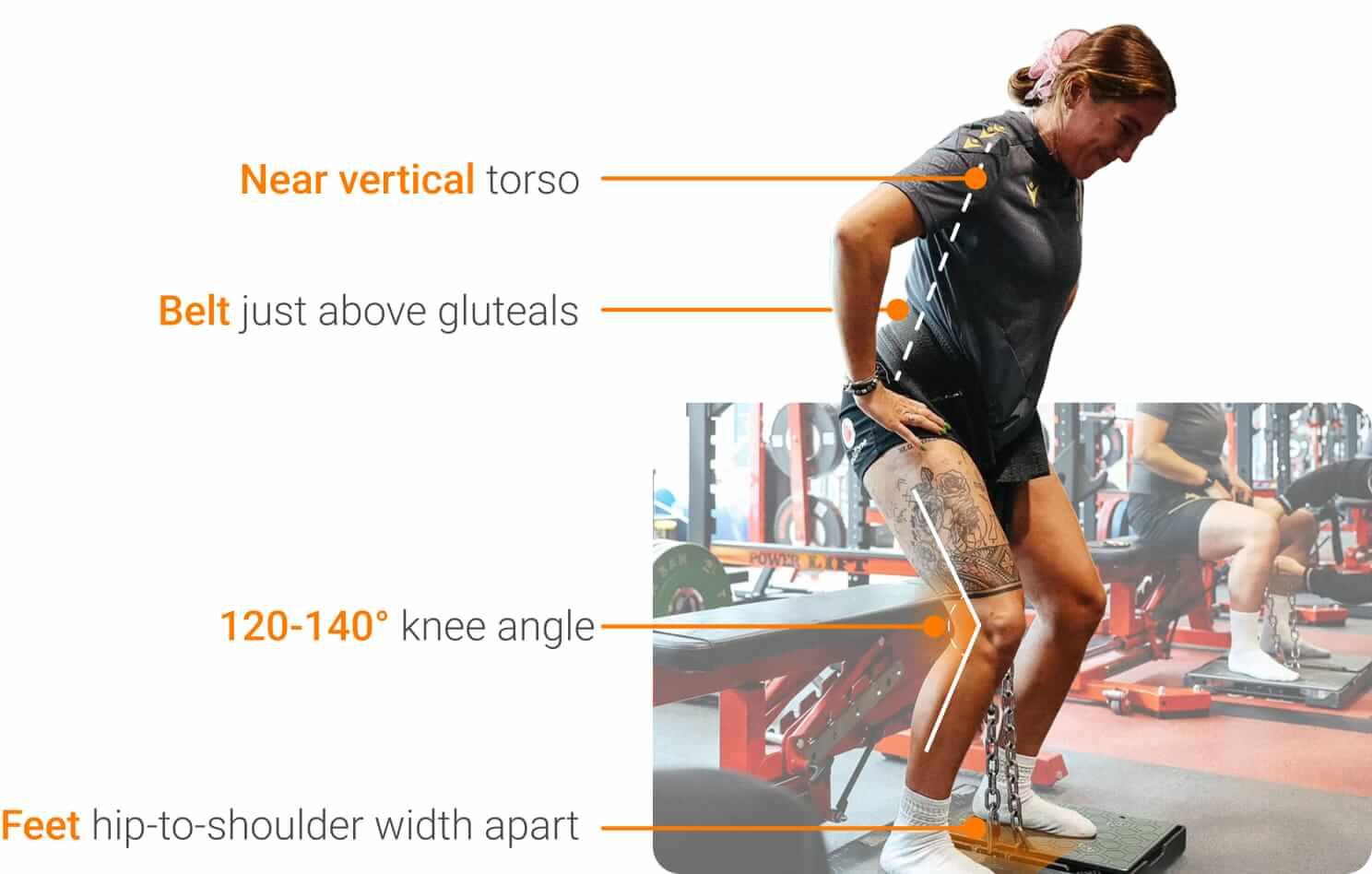
- Setup: Place the belt low across the hips (just above the gluteals) and ensure load-rated carabiners connect the belt, chain and ground anchor. Place a bench behind the athlete so they can sit between trials without disconnecting.
- Position: The athlete stands hip-width to shoulder-width apart with the forefoot aligned with the anchor attachment. Knee angle should be between 120-140° with an upright torso. (Note: Ensure the knee angle remains consistent between tests; changes within the 120-140° range may introduce excessive variability).
- Execution: Perform three repetitions to ensure maximum effort while minimizing fatigue. Allow 2 minutes between trials (Brady et al., 2018). Cueing should be consistent and reflect the quality of interest, such as peak force or RFD.
- Metrics: Peak force is the most commonly collected metric. However, peak force net of body weight (BW) is a common metric for practitioners comparing athletes and tracking changes over time, because changes in BW can affect total force production without reflecting true changes in athlete strength.
To ensure data integrity, each repetition must be screened against specific quality control standards. Use the following criteria to determine whether a trial is valid or needs to be discarded and retested.
Reference Data
Reference and normative data provide important context, allowing practitioners to benchmark athletes, identify meaningful deficits and guide training or rehabilitation decisions. The following tables present peak vertical force (net of BW) and peak vertical force / body mass (BM) data collected over the last three years across a range of sports.
Peak Vertical Force (Net of BW) [N]
| Percentiles | |||||||
| Sport | Level | Sex | 5th | 25th | 50th | 75th | 95th |
| Netball | Super League | Female | 1,833 | 2,170 | 2,913 | 3,293 | 4,921 |
| Rugby | International | Female | 3,253 | 3,842 | 4,695 | 5,766 | 6,455 |
| Soccer | League 2 | Male | 3,043 | 3,519 | 4,043 | 4,889 | 5,798 |
| Rugby | U18 Schools and Colleges | Male | 2,630 | 3,529 | 4,271 | 5,177 | 6,197 |
| U18 Regional Academy | Male | 3,602 | 4,733 | 5,704 | 6,707 | 8,072 | |
| Senior Professional | Male | 3,887 | 5,144 | 6,302 | 7,374 | 9,277 | |
Peak Vertical Force / BM [N/kg]
| Percentiles | |||||||
| Sport | Level | Sex | 5th | 25th | 50th | 75th | 95th |
| Netball | Super League | Female | 36.2 | 41.0 | 44.4 | 48.6 | 65.0 |
| Rugby | International | Female | 51.6 | 57.5 | 66.3 | 77.7 | 92.8 |
| Soccer | League 2 | Male | 46.9 | 53.8 | 63.2 | 72.8 | 76.0 |
| Rugby | U18 Schools and Colleges | Male | 42.2 | 51.3 | 59.6 | 69.1 | 88.0 |
| U18 Regional Academy | Male | 52.2 | 63.2 | 73.6 | 84.6 | 98.2 | |
| Senior Professional | Male | 47.7 | 60.1 | 70.5 | 82.6 | 96.6 | |
Key Takeaways
Maximal lower-body strength underpins performance, resilience and long-term development, yet traditional assessments do not always offer an efficient or valid measure of true force capacity.
The isometric belt squat isolates lower-body force production while minimizing technical and spinal constraints, allowing athletes to express higher and more representative force outputs. When implemented with a standardized setup and protocol, it provides a reliable and sensitive tool for ongoing strength monitoring.
To learn more about implementing isometric lower-body testing or integrating the isometric belt squat into your testing battery, get in touch with our team.
References
- Brady, C. J., Harrison, A. J., Flanagan, E. P., Haff, G. G., & Comyns, T. M. (2018). A comparison of the isometric midthigh pull and isometric squat: Intraday reliability, usefulness, and the magnitude of difference between tests. International Journal of Sports Physiology and Performance, 13(7), 844–852. https://doi.org/10.1123/ijspp.2017-0480
- Giuliano, F., Soriano, M. A., Pino-Mulero, V., & González-García, J. (2025). Testing consistency: Analyzing the reliability of two lower limb isometric force measurements in strength-trained athletes. Applied Sciences, 15(1), 303. https://doi.org/10.3390/app15010303
- Layer, J. S., Grenz, C., Hinshaw, T. J., Smith, D. T., Barrett, S. F., & Dai, B. (2018). Kinetic analysis of isometric back squats and isometric belt squats. Journal of Strength and Conditioning Research, 32(12), 3301–3309. https://doi.org/10.1519/JSC.0000000000002854
- Nuzzo, J. L. (2023). Narrative review of sex differences in muscle strength, endurance, activation, size, fiber type, and strength training participation rates, preferences, motivations, injuries, and neuromuscular adaptations. The Journal of Strength and Conditioning Research, 37(2), 494–536. https://doi.org/10.1519/jsc.0000000000004329
- Nuzzo, J. L., McBride, J. M., Cormie, P., & McCaulley, G. O. (2008). Relationship between countermovement jump performance and multijoint isometric and dynamic tests of strength. Journal of Strength and Conditioning Research, 22(3), 699–707. https://doi.org/10.1519/JSC.0b013e31816d5eda
- Silva, J. R., Sideris, V., Chrismas, B. C., & Read, P. J. (2020). Optimizing athlete assessment of maximal force and rate of development: A comparison of the isometric squat and mid-thigh pull. BioRxiv. https://doi.org/10.1101/2020.04.17.046359
- Stavridis, I., Fragkoulis, E., Tsopanidou, A., Economou, T., Tsolakis, C., Koulouvaris, P., & Paradisis, G. (2021). Differences in maximal strength capacity between isometric squat and mid-thigh pull tests in elite track and field athletes. ISBS Proceedings Archive, 39(1), 340. https://commons.nmu.edu/isbs/vol39/iss1/87/
