From Innovation to Paralympic Success
Available in:
EN
Samuel Gardner is a strength and conditioning coach with the United States Olympic & Paralympic Committee (USOPC). His work integrates problem-solving with technology to transform athlete care across elite sport. As part of the Applied Performance Sciences team at the USOPC, Samuel utilizes tools and technology in areas where traditional testing approaches often require significant adaptation, providing a unique perspective on athlete testing and monitoring.
What differences in injury patterns do you see between Paralympic athletes and able-bodied athletes?
Our injury surveillance across two Olympic cycles showed that Paralympic athletes were four to five times more likely to sustain shoulder injuries in competition compared to their able-bodied counterparts in the same sports.
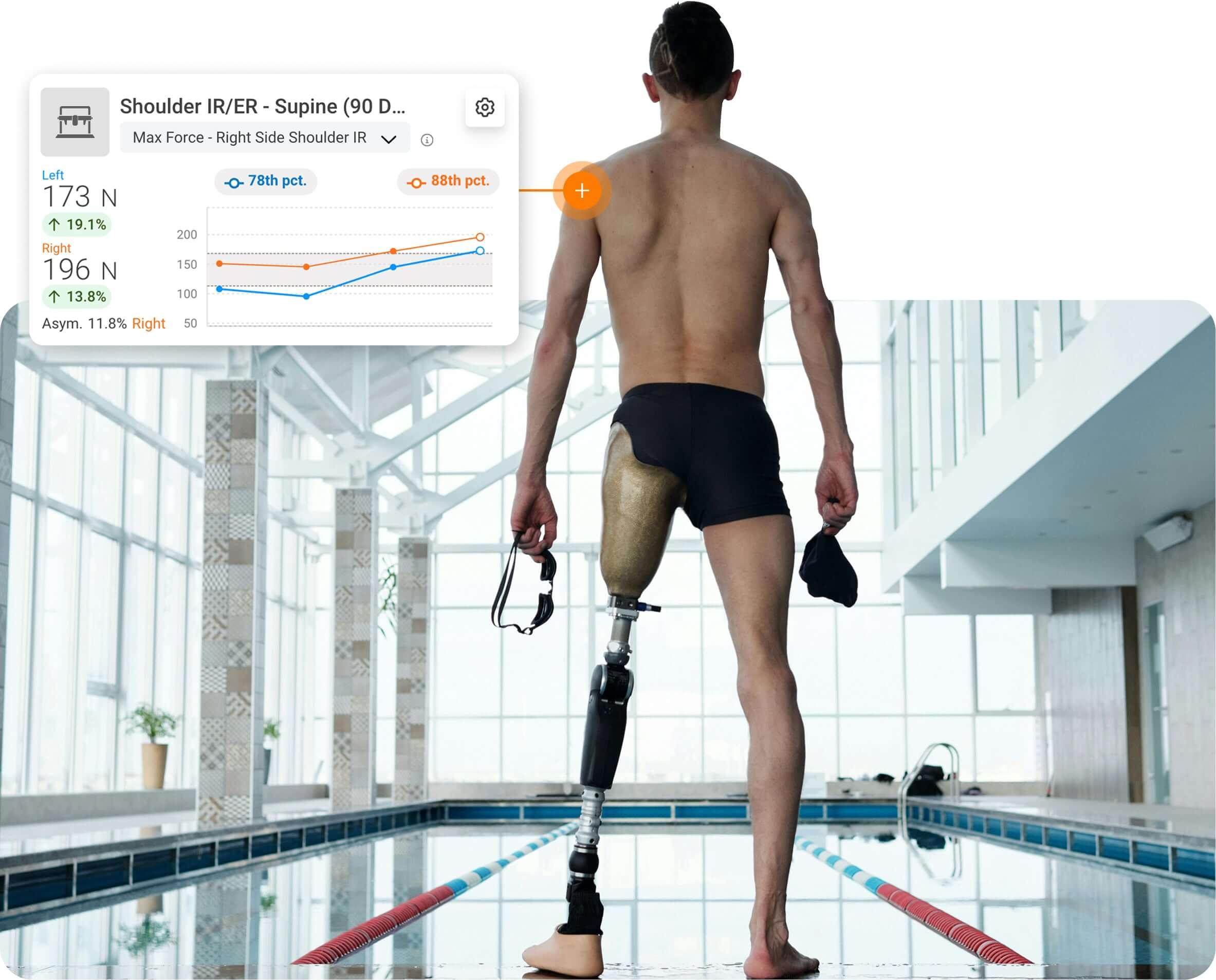
Shoulder internal and external rotation (IR/ER) strength results used to identify asymmetry in Paralympic swimmers.
…Paralympic athletes were four to five times more likely to sustain shoulder injuries in competition compared to their able-bodied counterparts in the same sports.
What surprised many people was that this wasn’t just wheelchair athletes using their shoulders for locomotion – it was across all Paralympic classifications, including ambulatory, visually impaired and prosthetic-using athletes. When we saw those numbers, it became clear that better ways to assess shoulder health and asymmetry were needed.
How did you develop your shoulder assessment protocol?
In 2018, ForceFrame – then known as GroinBar – was recognized primarily for assessing isometric hip abduction (Abd) and adduction (Add) strength. By rotating the crossbar and modifying athlete positioning, our team introduced a shoulder-specific testing application that extended the system’s use beyond its original design.
That same year, an internal validation study compared our adapted testing setup to traditional assessment methods, ensuring protocols met individual athlete needs and expanding access to sensitive, technology-enabled testing.
Since then, ForceFrame’s versatility has grown significantly. The system now supports simple and effective assessment of the shoulder, knee, ankle and even isometric neck assessments, reflecting a complete evolution from a single-purpose tool to a multi-joint testing platform.
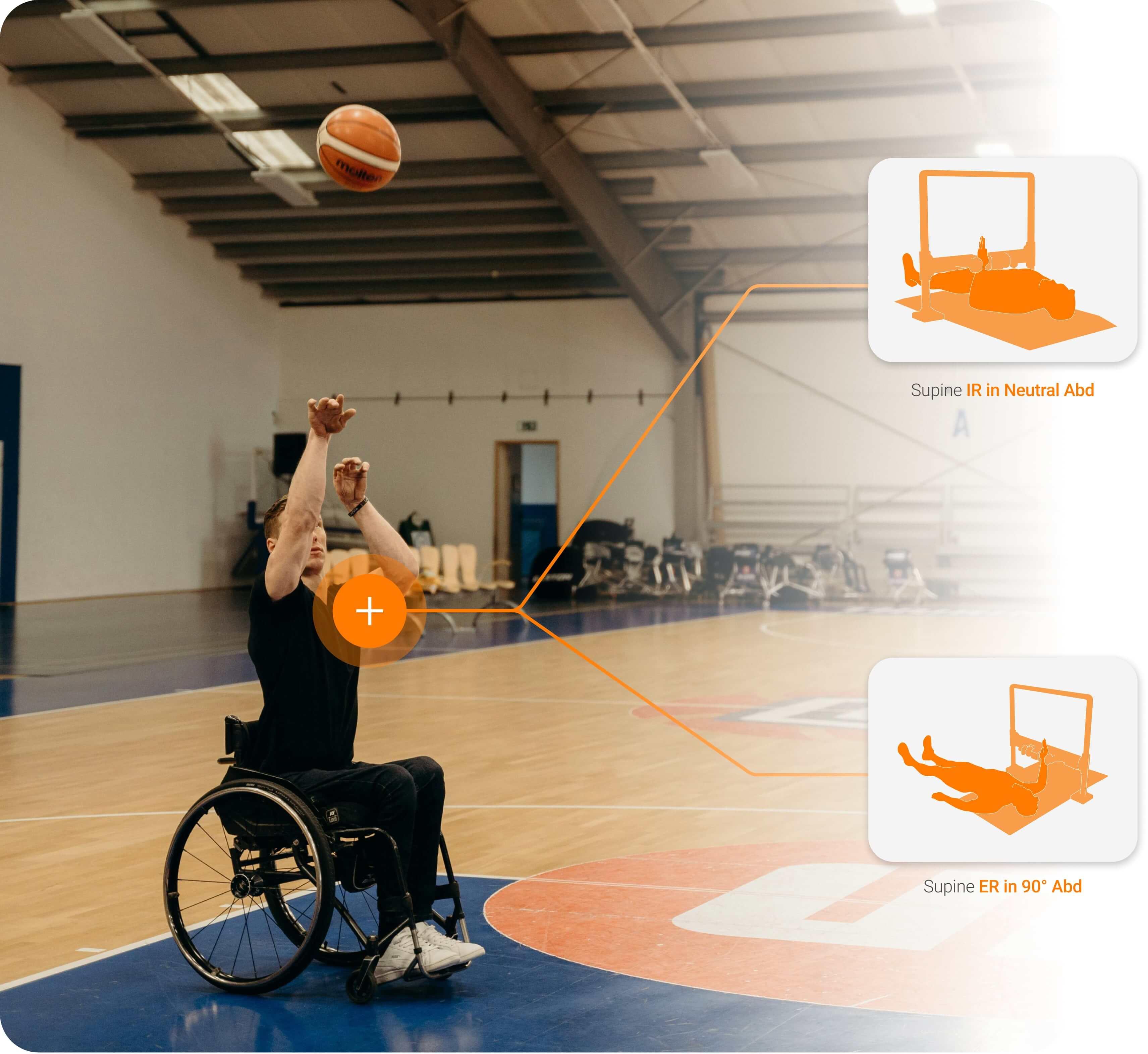
Early ForceFrame assessments integrated within para sport.
[VALD’s] ongoing support helps practitioners build confidence and refine their approach without stepping away from day-to-day clinical work.
Now that VALD has built a strong foundation of practitioner education – through guides, online resources and in-person events – we’re better equipped to interpret and apply best assessment practices for our unique athlete population. This level of ongoing support helps practitioners build confidence and refine their approach without stepping away from day-to-day clinical work.
What challenges occurred during the technology-adoption journey?
COVID-19 isolation protocols made collaboration between medical and performance staff more challenging, but they also created new opportunities. During this time, the sports medicine team incorporated shoulder asymmetry assessments into station warm-ups for the para swim and paratriathlon programs.
Research shows that swimmers often experience decreases in rotator cuff strength and increases in asymmetry over a competitive season (Batalha et al., 2013; Ramsi et al., 2004). To combat this, we implemented heavy pulling, velocity-focused work and multi-plane movements, ultimately improving shoulder strength and reducing asymmetry throughout the season.
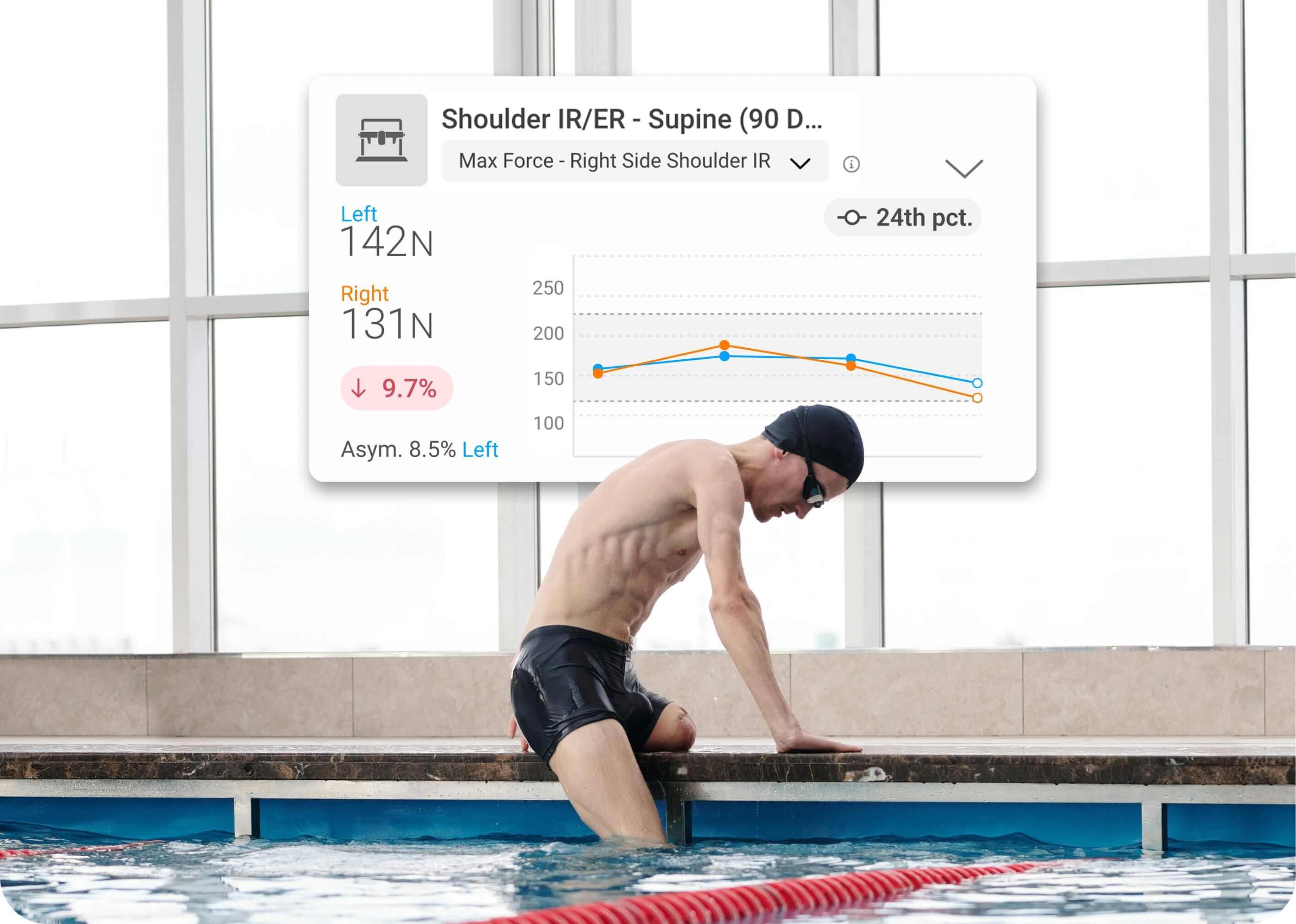
Periodic assessment of a swimmer showing decreasing force production over the season.
Pull-ups, bench pulls, bent-over pullovers and single-joint isometrics all ensured shoulder strength was well-rounded and relevant to the sport. Athletes were progressively loaded and trained across different velocities, with objective data from ForceFrame providing the evidence needed to guide informed programming discussions with coaches.
…[with decreased asymmetries and improved strength,] the para swimming team went on to win 28 medals…one of the most successful results in the center’s history.
Not only did asymmetries decrease, but overall strength and endurance improved throughout our Tokyo Olympic and Paralympic preparation. The para swimming team went on to win 28 medals at the Games – one of the most successful results in the center’s history.
How has your assessment approach evolved since the Tokyo Paralympic Games?
By integrating a ForceDecks-compatible isometric rig, we opened new possibilities to adapt our isometric assessments across multiple joints and planes to meet the demands and capabilities of Paralympic athletes.
By 2023, ForceDecks Max systems were installed across all facilities. The larger plate size proved essential for visually impaired athletes and those with neurological impairments, who often land in different positions from where they take off. Modified push-up protocols were also developed for seated athletes, allowing wheelchair users to participate in force plate assessments for the first time.
Modified push-up protocols were also developed for seated athletes, allowing wheelchair users to participate in force plate assessments for the first time.
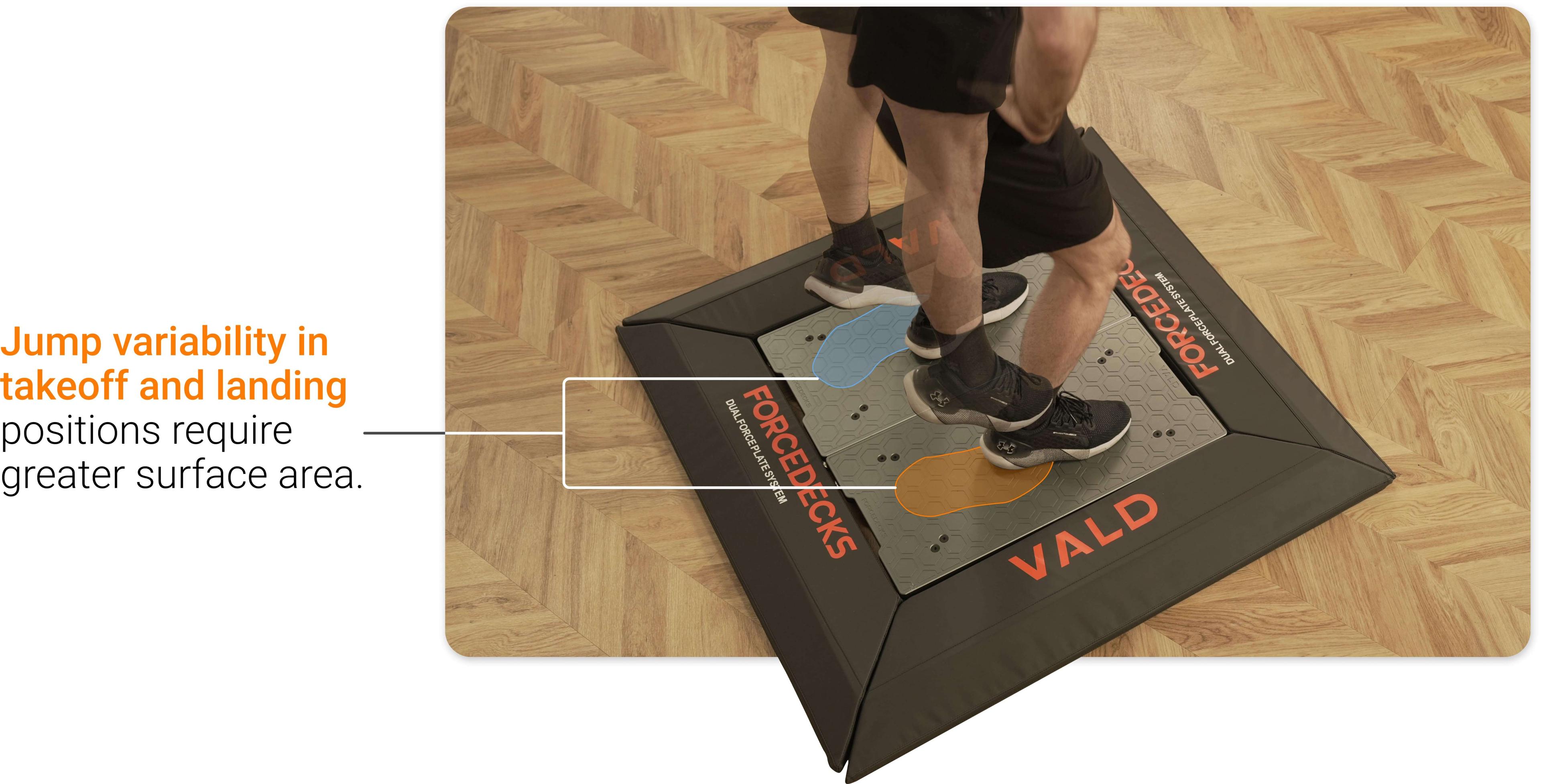
The ForceDecks range comes in different sizes to accommodate a variety of setups and athlete needs.
What does your current assessment framework look like?
We’ve profiled athletes from 13 different Paralympic sports, including both seated and standing disciplines. Building on force-velocity profiling principles, we developed protocols to assess maximal isometric, fast dynamic and reactive strength across ambulatory and wheelchair populations.
For Paralympic athletes, where accessibility and settings vary, [DynaMo’s] portability and data quality [are] invaluable.
DynaMo has also become an essential tool for traveling coaches, enabling strength, range of motion and trunk rotation assessments in any environment – from local facilities to national camps. For Paralympic athletes, where accessibility and settings vary, this blend of portability and data quality is invaluable.
What advice would you give practitioners working with diverse athletic populations?
Working with Paralympic athletes demands creativity and flexibility in adapting traditional testing approaches to suit varying functional capabilities. Comparisons begin within the individual, extend to teammates with similar impairment profiles and progress to benchmarks from sports with comparable classifications. While technology enables these comparisons, interpreting what is meaningful for each athlete remains a critical practitioner skill.
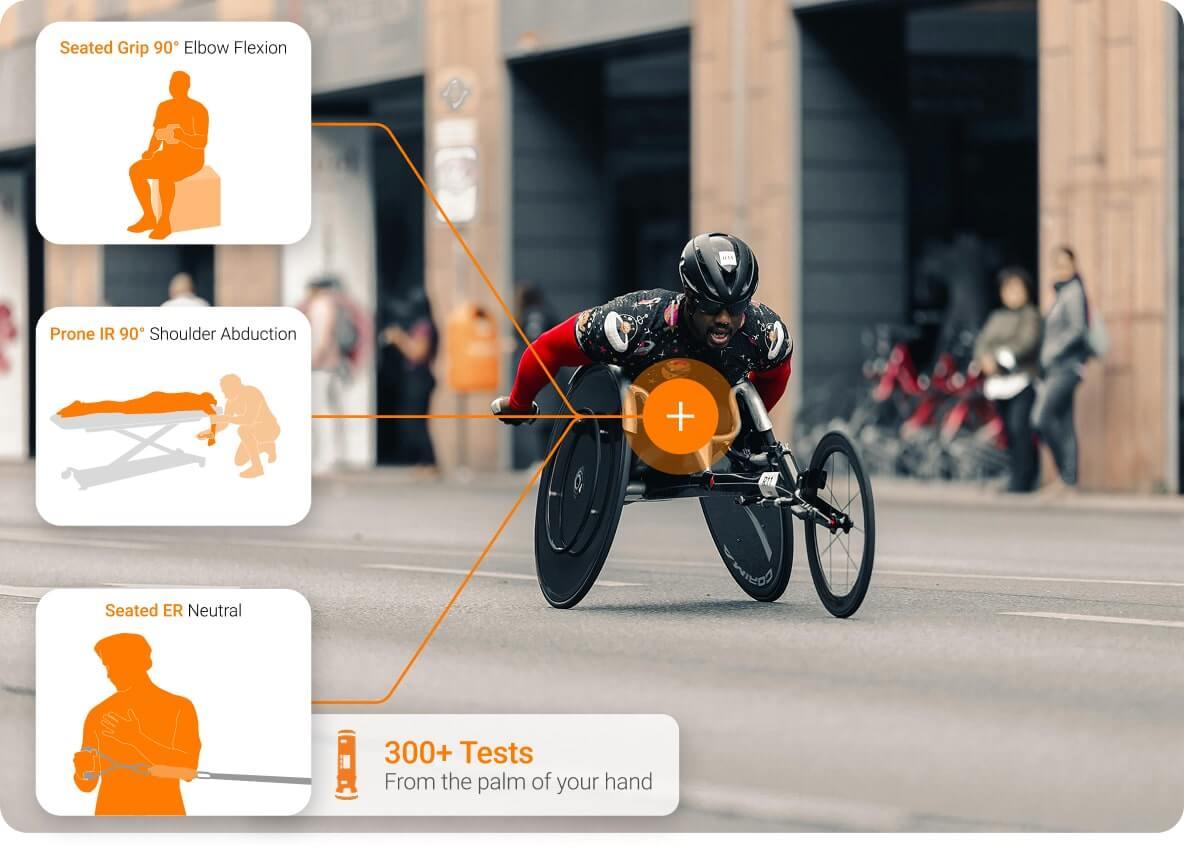
Testing options for Paralympic athletes using DynaMo.
Principles are key regardless of the athlete we work with. Adaptive protocol design, individualized baselines and close collaboration between medical and performance teams are equally valuable across all athletic environments, helping our teams communicate testing results and better understand technology’s role in athlete performance.
What’s next for Paralympic sport assessment?
We’re working on creating standardized education across our training centers so that all medical and performance practitioners use consistent protocols. We’re also exploring how to better classify and organize data within VALD Hub to enable meaningful normative comparisons across Paralympic populations while respecting the uniqueness of different impairment classifications.
When working with unique populations, it is critical to ensure that both assessment and training are modified to suit the needs of the athlete. From there, standardizing any modifications made and building a robust (often unique) sample size from which to draw interpretations becomes key.
If you are looking to refine your assessment protocols, adapt testing for diverse athletes or integrate VALD technology into your performance workflow, get in touch with our team.
References
- Batalha, N. M., Raimundo, A. M., Tomas-Carus, P., Barbosa, T. M., & Silva, A. J. (2013). Shoulder rotator cuff balance, strength, and endurance in young swimmers during a competitive season. Journal of Strength and Conditioning Research, 27(9), 2562–2568. https://doi.org/10.1519/JSC.0b013e31827fd849
- Ramsi, M., Swanik, K. A., Swanik, C., Straub, S., & Mattacola, C. G. (2004). Shoulder-rotator strength of high school swimmers over the course of a competitive season. Journal of Sport Rehabilitation, 13(1), 9–18. https://doi.org/10.1123/jsr.13.1.9
