Bringing Structure to Elite Tactical Assessment
Available in:
EN

Jabai Performance is a tactical-focused performance organization that assists rural first responder agencies across Northeast Texas. These departments often operate with limited resources, minimal staffing and high physical demands, making both workforce readiness and long-term health a priority.
To support these needs, Hussien travels across Texas conducting periodic performance assessments using ForceDecks. These assessments establish baseline performance, identify injury risk factors and provide actionable insights to improve operational readiness. In this interview, Hussien discusses how objective testing is being implemented within the fire service and how performance data is helping inform workforce health and readiness.
Are physical fitness assessments required within the fire service?
Physical performance assessments are not consistently required across fire departments, despite strong recommendations from national standards. The physical demands of firefighting require sufficient strength, power and endurance. However, structured fitness testing protocols are not consistently adopted across fire departments, despite NFPA 1580 recommendations.
The physical demands of firefighting require sufficient strength, power and endurance.
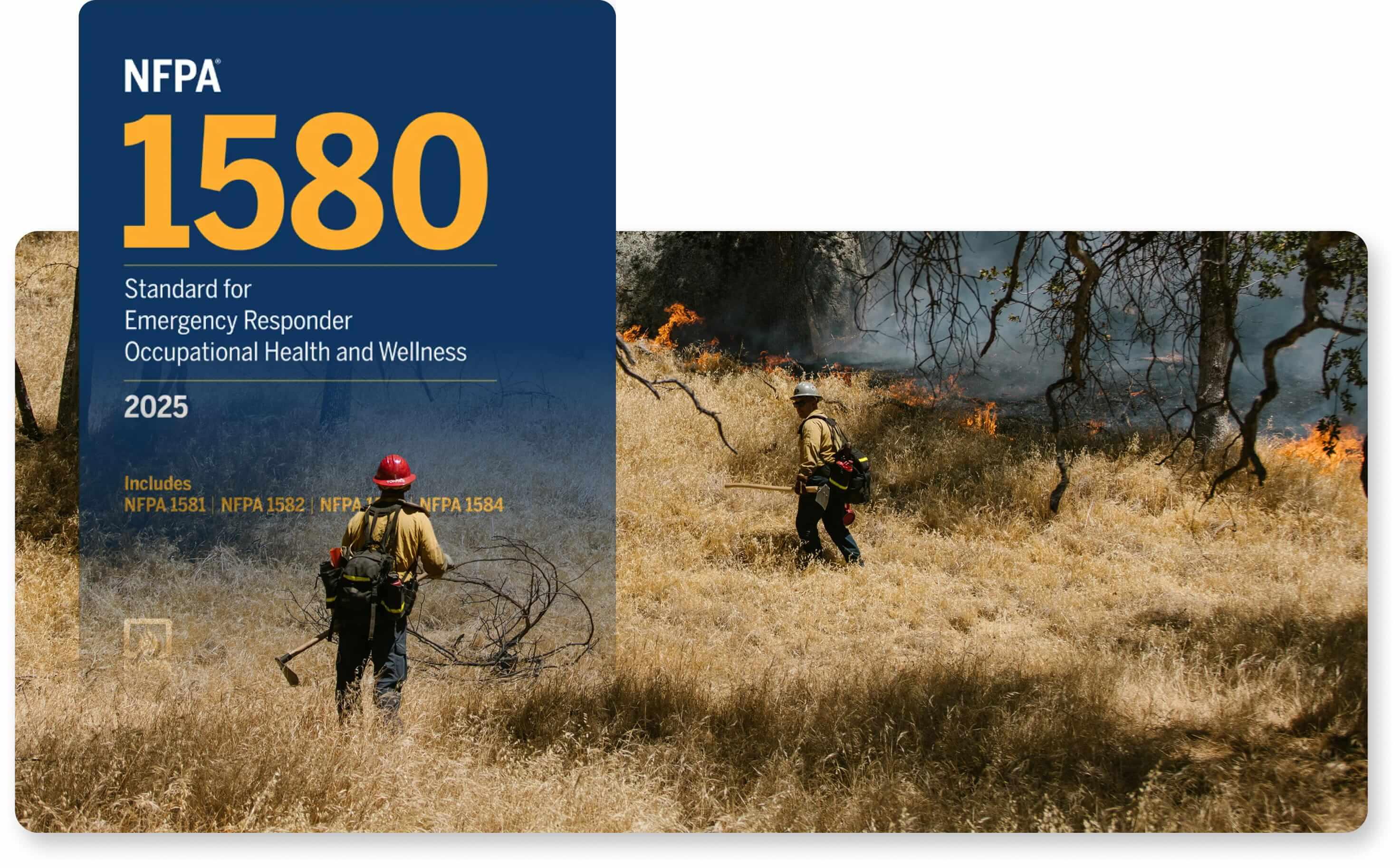
NFPA 1580 emphasizes structured monitoring and assessment, recommending medical, aerobic capacity and strength monitoring to establish a firefighter’s baseline measures and compare them against recognized standards and norms.
This gap extends to the recruit level, where entry standards are often met without ongoing evaluation to monitor progress, identify limitations or detect injury risk. Given the demands of academy training and early career exposure, periodic assessment provides useful insight into readiness, fatigue and injury mitigation.
Despite this knowledge, implementation remains inconsistent, particularly in rural and volunteer departments with limited resources. As a result, many rely on informal methods, creating an opportunity for objective testing to better quantify workforce capability, track trends over time and guide targeted interventions.
What are the benefits of periodic physical fitness assessments?
Although not mandated in most jurisdictions, regular testing is widely encouraged, and Jabai Performance typically focuses on strength, power, endurance and flexibility assessments. From a strategic standpoint, periodic assessments provide departments with a significant amount of information.
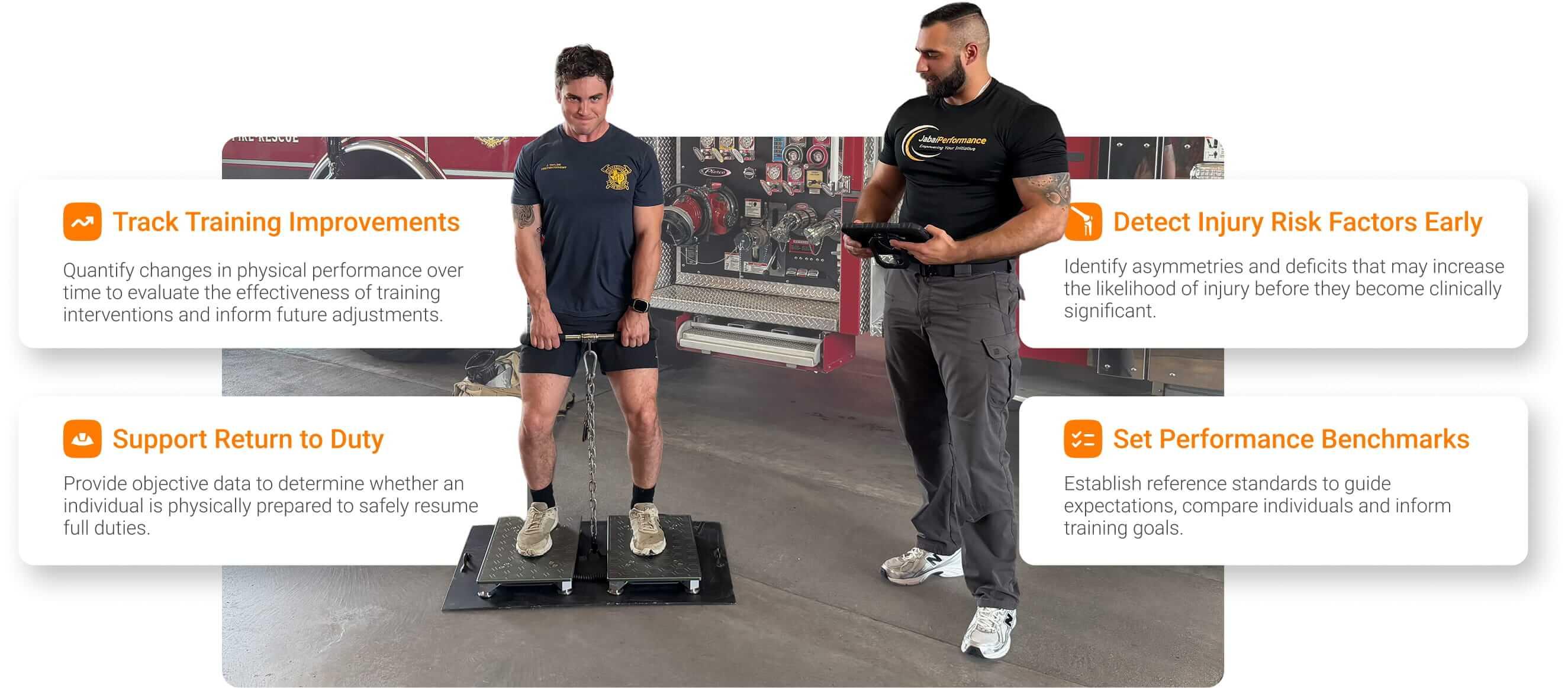
For rural departments, this is particularly important. Unpredictable workloads and limited access to structured training make it difficult to consistently maintain physical preparedness. Objective testing provides a repeatable way to quantify readiness, identify gaps early and guide efficient use of training time, supporting better decision-making and long-term workforce health.
Objective testing provides a repeatable way to quantify readiness, identify gaps early and guide efficient use of training time…
How can technology enhance firefighter assessment?
Objective technologies, such as ForceDecks, introduce a quantitative, research-grade layer to traditional fitness testing. While many assessments rely on time or repetition, ForceDecks provide deeper insight into biomechanics and neuromuscular function.
Force plate technologies can assess a range of physical qualities, including:
- Force Production: Quantifies the amount of force generated, relevant to tasks such as victim drags, carries and forcible entry.
- Rate of Force Development (RFD): Measures how quickly force is produced, important for rapid reactions and stabilization.
- Movement Asymmetry: Assesses how force is distributed between each limb to highlight phase-specific imbalances.
- Power Output: Reflects the ability to generate force quickly and efficiently.
For more information about how force plates work and how to use them, check out the Practitioner’s Guide to Force Plates.

These measures provide early insight into limitations that may not be apparent with traditional testing. For example, two firefighters may achieve similar jump heights but differ in landing forces, eccentric control, asymmetry or RFD – factors that may influence both performance and injury risk.
Interpreting these underlying characteristics allows practitioners to move beyond general programming and target specific limitations, aligning training interventions more closely with both performance demands and injury risk reduction.
…[ForceDecks testing] allows practitioners to move beyond general programming and target specific limitations…[for] performance demands and injury risk reduction.
How do you structure your testing for tactical athletes?
Recently, we conducted an internal study to examine performance characteristics and their differences between incoming recruits and established firefighters (incumbents). Testing was conducted across two firefighter training academies and six rural fire departments, with participants ranging from recruits to battalion chiefs (ages 18-61).
Participation was voluntary, and departments involved in the study either lacked a formal physical performance testing and training program or were in the process of implementing standardized annual assessment protocols.
In addition to individual assessments, we compared performance profiles between recruits and incumbents. The secondary aim of this study was to integrate standardized performance assessments to help support more objective approaches to performance management over time.
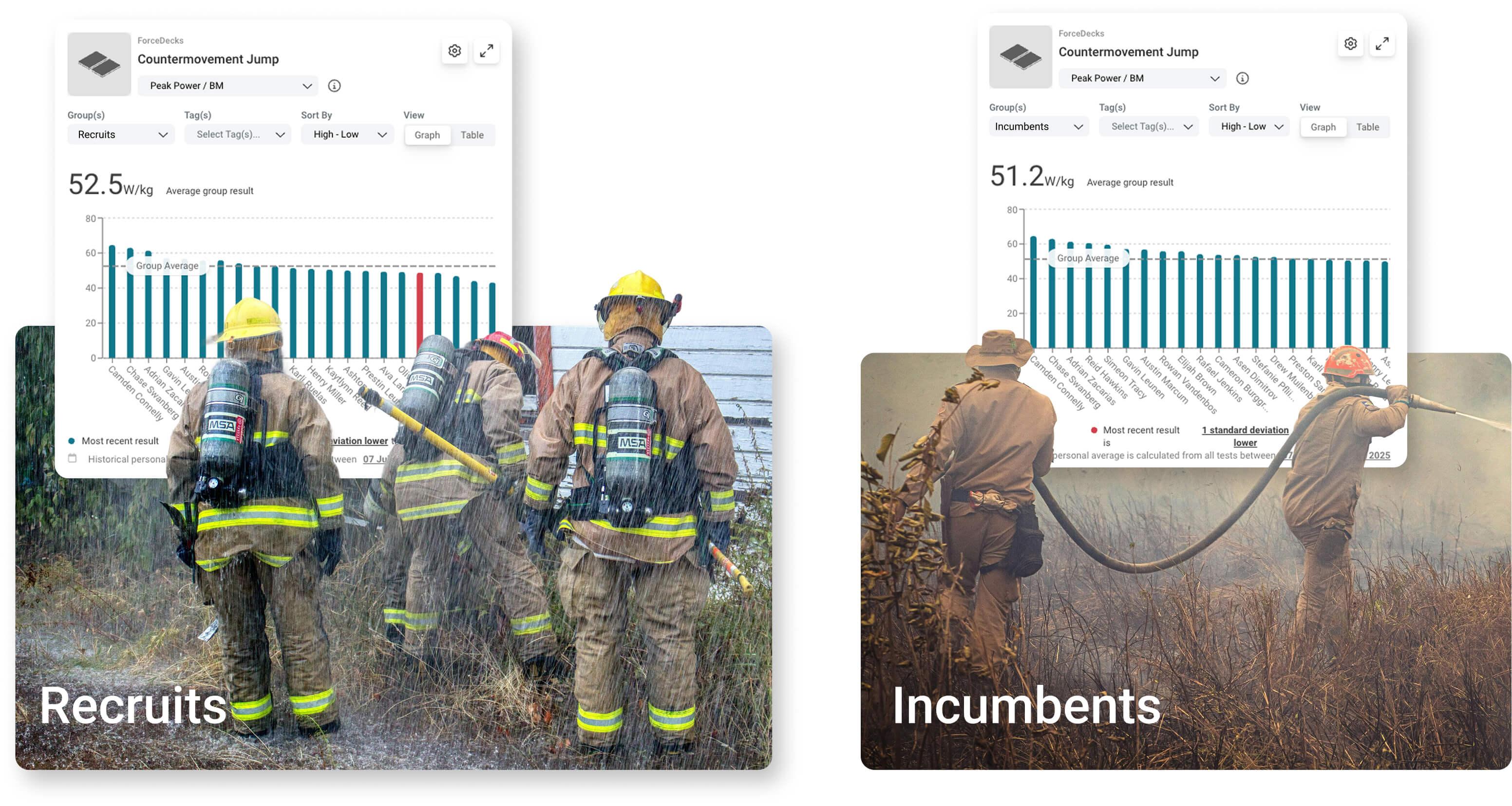
Sampling differences in performance characteristics between recruits and incumbents.
What was the assessment protocol?
We implemented a streamlined, field-ready protocol using ForceDecks to deliver insights to stakeholders without significantly increasing testing time or burden. The assessment protocol included:
- Countermovement jump (CMJ)
- Isometric mid-thigh pull (IMTP)
- Land and hold (LAH) (only recruits have been tested at this time)
These tests were selected for their minimal fatigue impact, high reliability, simplicity of assessment and relevance to occupational performance.
…tests were selected for their minimal fatigue impact, high reliability, simplicity of assessment and relevance to occupational performance.
Testing was conducted within station bays using a minimal setup to avoid operational disruption. For multi-station departments, participants rotated through a centralized location coordinated by leadership. Median results from the assessment protocol are summarized below.
| Tests | Metrics | Recruits | Incumbents |
| Anthropometrics | Weight (kg) | 85.4 (187.88lb) | 99.75 (219.45lb) |
| CMJ | Jump height (cm) | 32.62 | 28.71 |
| Concentric peak force (N) | 2059 | 2123 | |
| Concentric peak force asymmetry (%) | 7.72 | 6.63 | |
| Concentric peak velocity (m/s) | 2.77 | 2.48 | |
| Peak power (W) | 4302 | 4177 | |
| Peak landing force asymmetry (%) | 12.89 | 15.16 | |
| IMTP | Peak vertical force (N) | 2873 | 2900 |
| Net force (N) | 1865 | 1789 | |
| Force (lb) | 419 | 402 | |
| LAH | Peak drop landing force (N) | 5766 | – |
| Peak drop landing force asymmetry (%) | 13 | – | |
| Time to stabilization (s) | 0.845 | – |
In general, recruits demonstrated slightly higher CMJ performance than incumbents, with lower body mass, greater jump height and higher concentric velocity and peak power. Incumbents produced slightly higher absolute force outputs in both the CMJ and IMTP, likely influenced by greater body mass, but this did not translate into superior explosive performance.
…recruits demonstrated slightly higher CMJ performance…with lower body mass, greater jump height and higher concentric velocity and peak power…
Additionally, higher CMJ landing force asymmetry in incumbents suggested potential differences in movement strategy or accumulated exposure that may warrant further monitoring.
Only recruits have undergone LAH assessments. On average, recruits experienced forces exceeding six times body weight upon impact but required less than a second on average to stabilize when dropping from just under 24 inches, the required drop landing height set by the NFPA. Interestingly, landing force asymmetries in the LAH were almost identical to the same metric value in the CMJ.
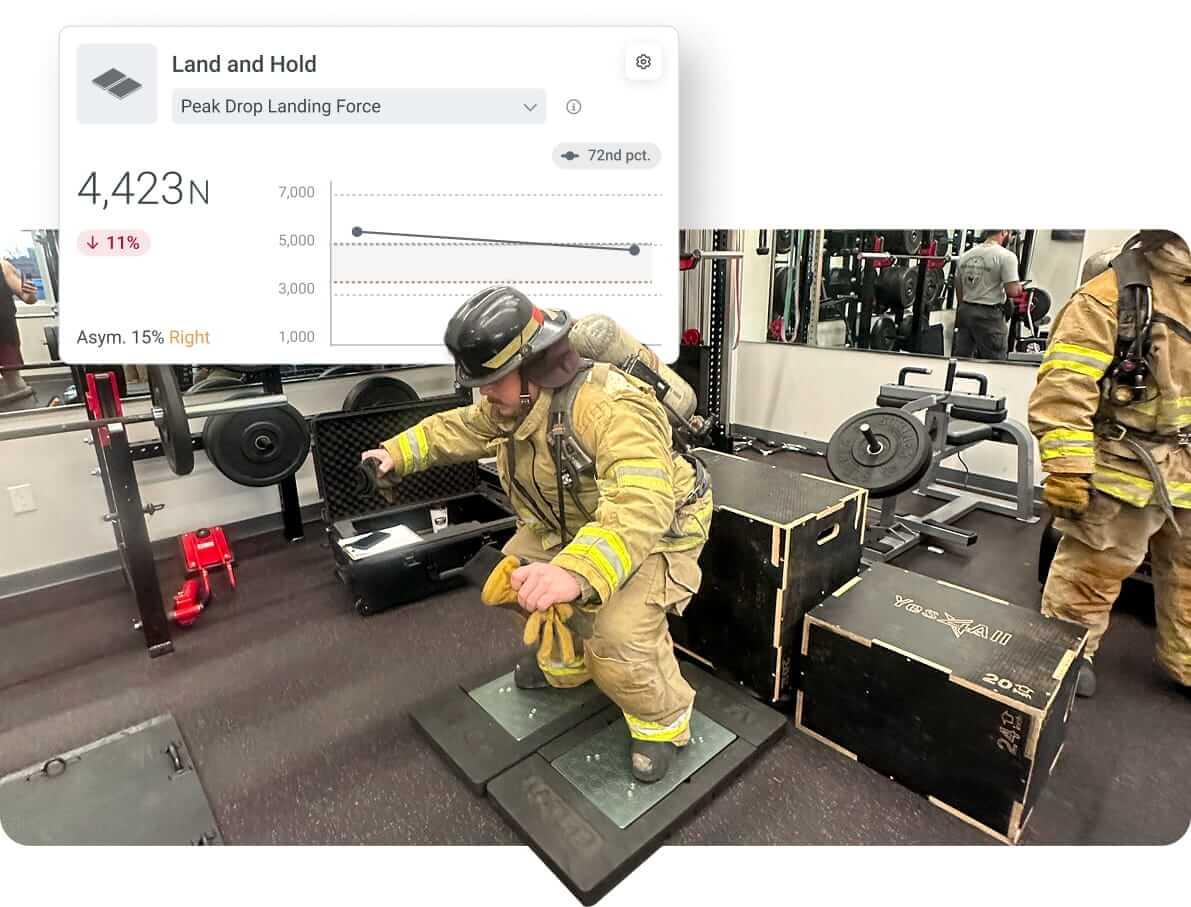
LAH assessment performed as part of the firefighter testing protocol.
How can practitioners and agencies leverage VALD technology and translate data into action?
Technologies such as ForceDecks highlight asymmetries, quantify force characteristics that are often missed in traditional testing and enable consistent monitoring of neuromuscular performance. This allows practitioners to track trends over time, identify performance limitations and better understand the physical qualities underpinning job performance.
Following analysis, all data was centralized in VALD Hub to allow for consistent tracking and group comparisons. Individualized overview reports were then generated, highlighting key deficiencies and pairing them with targeted feedback and practical corrective exercise recommendations. At the command level, summary reports provided a clear overview of department-wide trends, strengths and areas of concern.
Individualized overview reports…[highlighted] key deficiencies and [paired] them with targeted feedback and practical corrective exercise recommendations.
This approach ensures that data is not only collected but also translated into clear, actionable insights that support performance improvement at both the individual and organizational level.
What value can ForceDecks provide for departments?
Adding systems like ForceDecks represents a shift toward prioritizing long-term health, performance and operational readiness. The value of high-quality systems lies in standardizing assessments, improving data collection and establishing objective performance benchmarks.
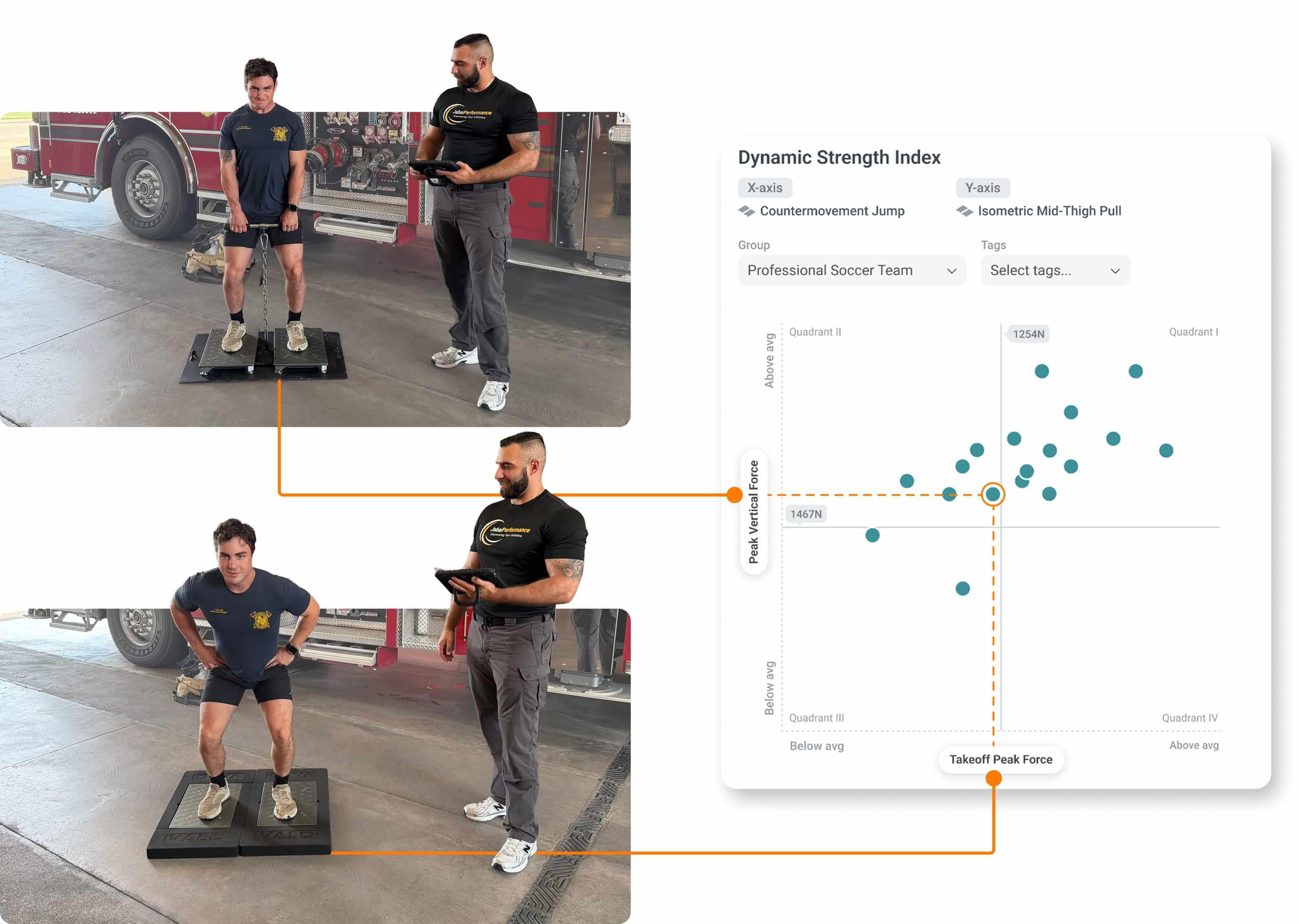
ForceDecks testing and Group and Quadrant Reports help departments assess physical capacity and compare performance across groups.
This infrastructure supports identification of at-risk individuals, informs return-to-duty decisions and enables departments to justify training strategies with measurable data. Over time, this approach can contribute to reduced injury risk, improved performance outcomes and enhanced workforce sustainability.
[ForceDecks] supports identification of at-risk individuals, informs return-to-duty decisions and enables departments to justify training strategies with measurable data.
More importantly, it connects physical performance data to job demands, providing a clearer understanding of what drives success in the field.
How can tactical assessments continue to evolve?
The next step is integration – linking force plate metrics to job-specific tasks such as stepping off apparatus, victim drags, stair climbs and hose advancement. This creates an opportunity to better understand which physical qualities drive performance in real-world environments.
Continued progress will rely on shared data, collaborative research and consistent testing practices across agencies. Practitioners collecting this data are well positioned to help strengthen the evidence base and more clearly connect performance testing with occupational readiness.
To learn more about how VALD’s human measurement technology, including ForceDecks, can support tactical assessment, workforce readiness or return-to-duty decision-making, get in touch with our team.
